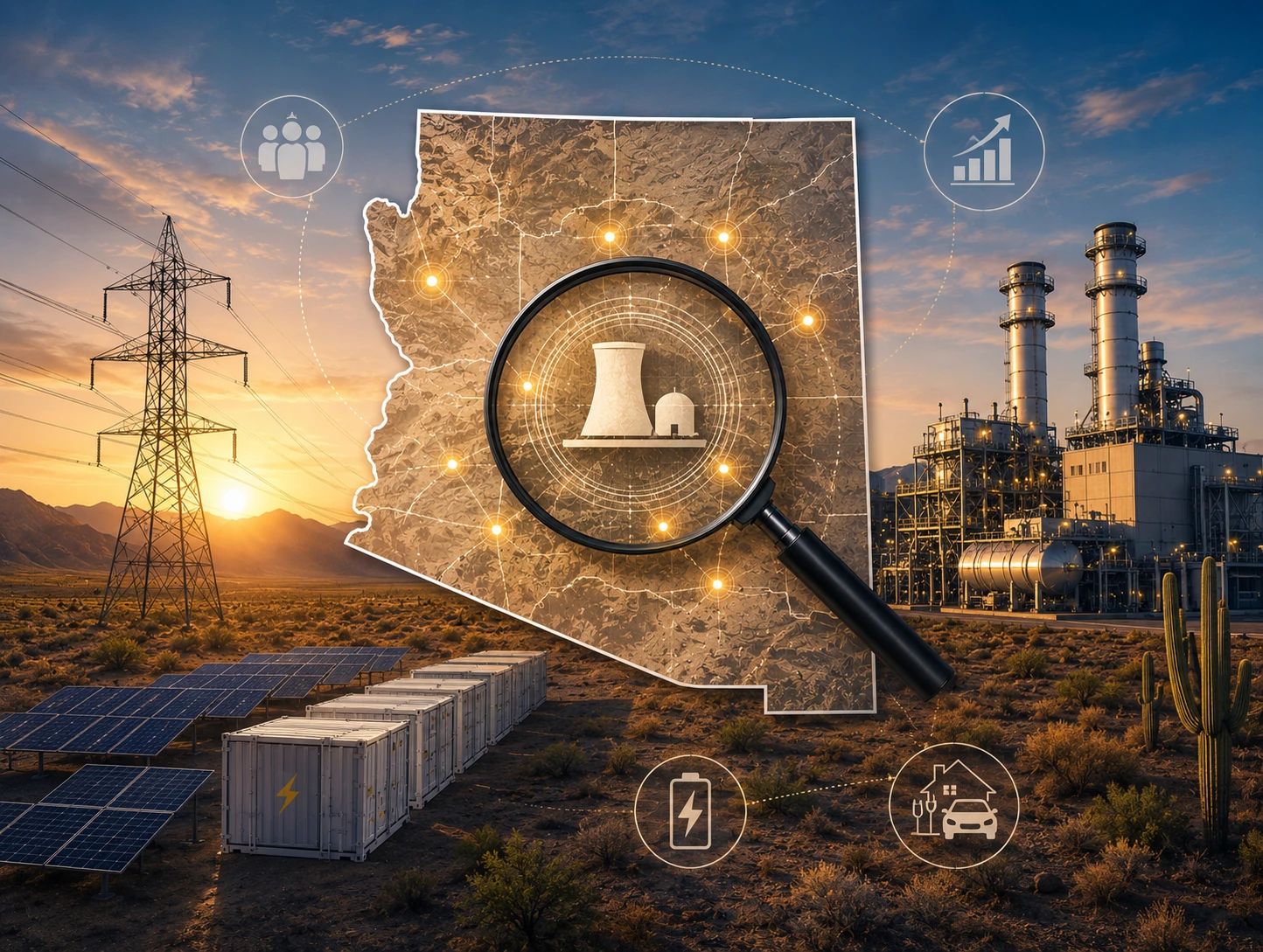
PINAL COUNTY, AZ — Salt River Project, Arizona Public Service, and Tucson Electric Power are evaluating potential locations for an Arizona nuclear plant site. The preliminary statewide study is now underway, according to a June 24 SRP press release. However, the utilities have not selected a site or chosen a technology, and no decision has been made to build a plant. For Pinal County residents, that means the utilities have not publicly identified any candidate location in the county or elsewhere.
The release describes a phased screening process that narrows areas across the state to a short list of leading candidates before settling on a preferred site. Meanwhile, the utilities are evaluating locations throughout Arizona, including sites that have been used for coal-fired power generation. They expect to complete the study within six months of the June 24 announcement.
Arizona nuclear plant site search faces timeline and funding hurdles
New nuclear generation takes time to develop, the utilities said, which is why they began the work now. Decisions on technology, permits, and construction would all follow the siting study.
Funding is one near-term hurdle. The three utilities disclosed in the release that they were not awarded a U.S. Department of Energy grant they applied for in early 2025. As a result, they plan to continue exploring future funding opportunities to help offset evaluation costs.
Technology selection is another open question. Both small modular reactors (SMRs) and conventional larger reactor designs are still on the table, the release said. In the long term, the utilities say they will prioritize nuclear technologies that the release describes as “commercially proven as reliable,” “safely and successfully deployed elsewhere,” and from suppliers with “strong operational records and demonstrated commercial viability.”
Community meetings planned near potential sites in late 2026
Stakeholder engagement and community outreach will begin as part of the site selection process, the release said. In late 2026, the utilities plan to hold meetings in communities near potential sites to share details and gather public input.
Why Arizona utilities are exploring nuclear now
Population growth and economic expansion are pushing Arizona’s electricity demand higher. According to the release, APS, SRP, and TEP all set peak-demand records in 2025. Therefore, the utilities say the grid must keep pace with rising demand while maintaining safe and reliable service.
How Arizona reviews and permits new nuclear plants
Beyond the utility-led siting study, any new nuclear plant in Arizona would face state and federal regulatory review. The Arizona Corporation Commission’s Power Plant and Transmission Line Siting Committee, established by the Legislature in 1971, has jurisdiction over proposed plants of 100 megawatts or more. According to the ACC, a utility must apply for a Certificate of Environmental Compatibility, and the Committee holds public hearings before forwarding a recommendation to the full Commission for a vote.
At the federal level, the U.S. Nuclear Regulatory Commission issues Early Site Permits that approve specific sites for 10 to 20 years, independent of any construction or reactor design decision. According to the SRP release, after the siting study, the utilities would weigh technical, financial, and other factors before deciding whether to develop an Early Site Permit application. If they prepare one, they would then decide whether to submit it to the NRC for approval.
Hobbs vetoes bill that would have eased SMR siting
Recent state legislation attempted to ease those rules for small modular reactors, one of the technology types under review in the SRP-led study. Senate Bill 1418 would have prohibited counties from blocking SMRs colocated with large industrial energy users that are properly zoned and permitted, and raised the threshold for Siting Committee jurisdiction from 100 to 200 megawatts. Counties with 500,000 or more residents would have been exempt from the zoning prohibition. Pinal County’s most recent population estimate from the Arizona Office of Economic Opportunity put it at 502,071 residents as of July 1, 2025.
Governor Katie Hobbs vetoed SB1418 on June 19, 2026. In her letter to Senate President Warren Petersen, Hobbs wrote that “deploying such a catch-all approach for an emerging technology, as laid out in this bill, is irresponsible.” She added she remains open to developing “a responsible regulatory framework for small modular reactors that encourages innovation while protecting public safety.”
Other energy projects advancing in Pinal County
While the Arizona nuclear plant site search is in its early stages, several energy projects are moving forward in Pinal County. For example, on June 9, EDP Renewables and SRP completed Flatland Energy Storage, a 200-megawatt, 800-megawatt-hour battery system in Coolidge. The project can power roughly 44,500 Arizona homes during peak demand.
In Florence, the Town Council on June 16 approved a land use change for a 33.5-acre battery research site within SRP’s Copper Crossing Energy and Research Center. The change cleared one of two non-lithium long-duration battery pilots planned at the site; the other was already allowed under existing zoning. The technologies aim to deliver longer storage windows, reduced fire risk from non-flammable electrolytes, supply chains that avoid lithium and cobalt, and largely recyclable components. Both are expected online by December 2027.
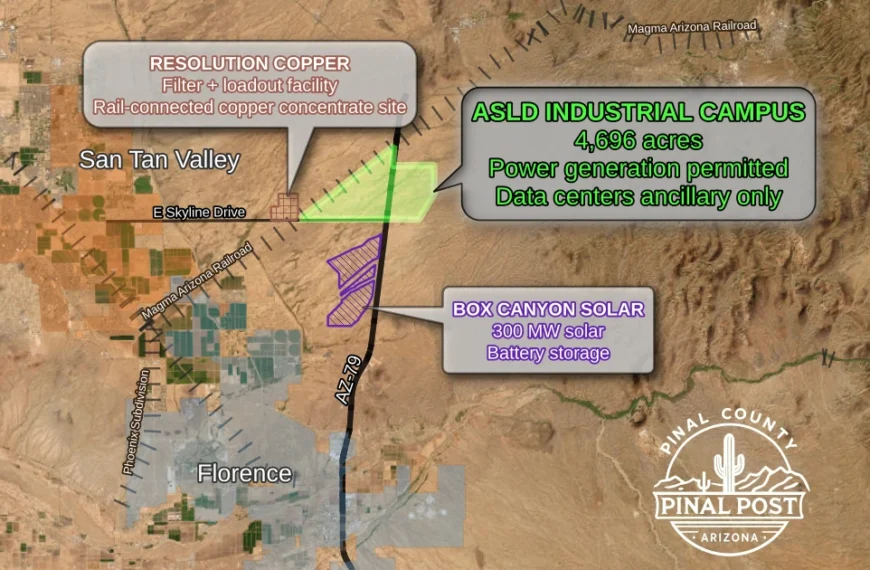
On June 17, the Pinal County Board of Supervisors approved the Copper Basin battery storage project in San Tan Valley. Plus Power is developing the 250-megawatt, 2,000-megawatt-hour facility on a 25-acre site, with commercial operation targeted for 2031.
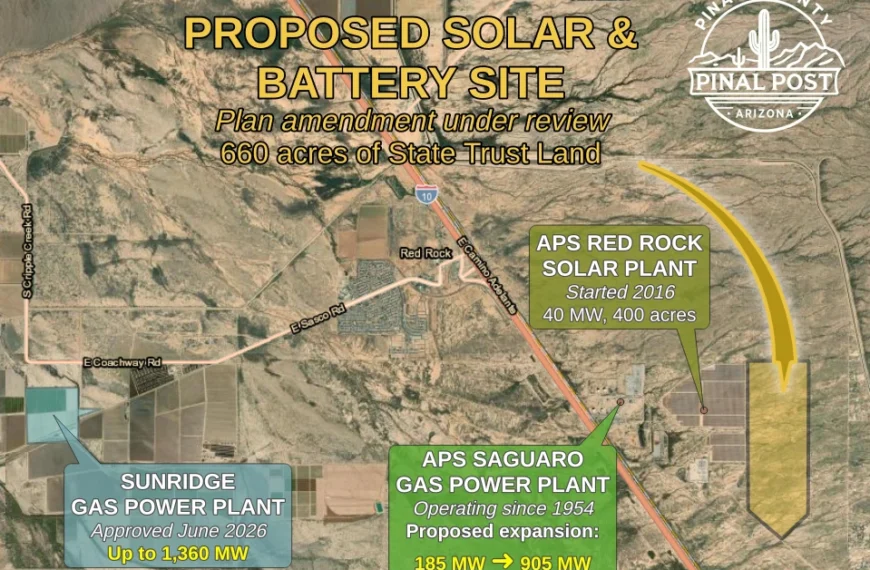
The board also approved an Industrial Use Permit that day for the Sunridge Power natural gas plant southwest of Red Rock. Developer Kindle Energy plans a combined cycle facility that could generate up to 1,360 megawatts. Construction is expected to start in 2028, with commercial operation targeted for the third quarter of 2032, pending a long-term contract to sell the plant’s power.
When residents will hear more on Arizona nuclear planning
Residents who want to follow the nuclear planning process should watch for the late 2026 community meetings. The siting study should finish around the same time. Its results will help the utilities decide whether to pursue a federal Early Site Permit application.