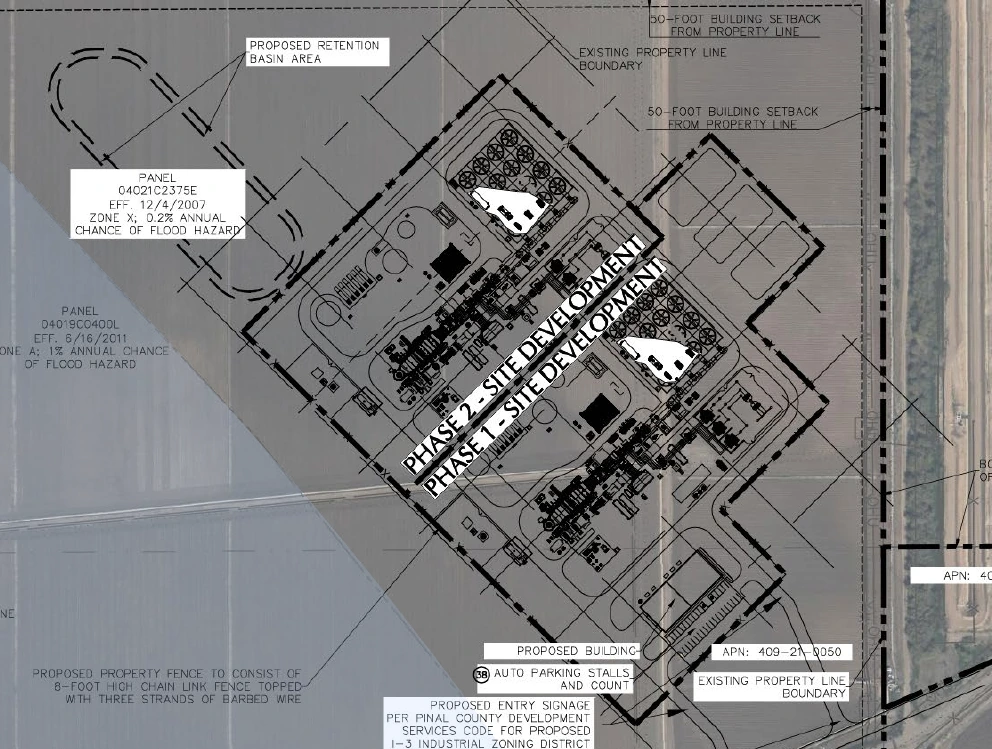
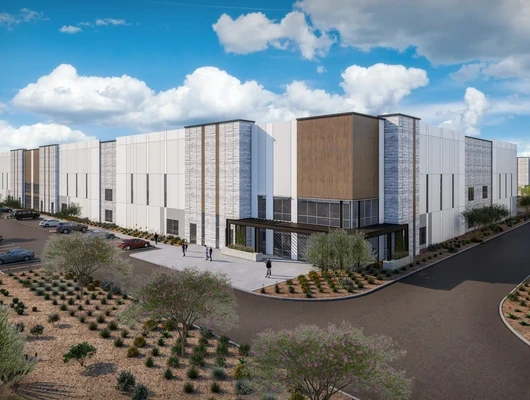
RED ROCK, AZ — The Pinal County Board of Supervisors voted on June 17 to approve an Industrial Use Permit for the Sunridge Power natural gas plant, a combined cycle facility that could generate up to 1,360 megawatts of electricity southwest of Red Rock. Phase 1 covers a 680-megawatt unit; a potential 680-megawatt Phase 2 expansion would depend on market demand and would undergo staff review for consistency with the approved permit, and could require an amendment if the Community Development Director determines one is necessary. The applicant expects construction to start in 2028, with commercial operation targeted for the third quarter of 2032, dependent on execution of a tolling agreement — the long-term contract under which the plant’s output would be sold to Arizona Electric Power Cooperative (AEPCO).
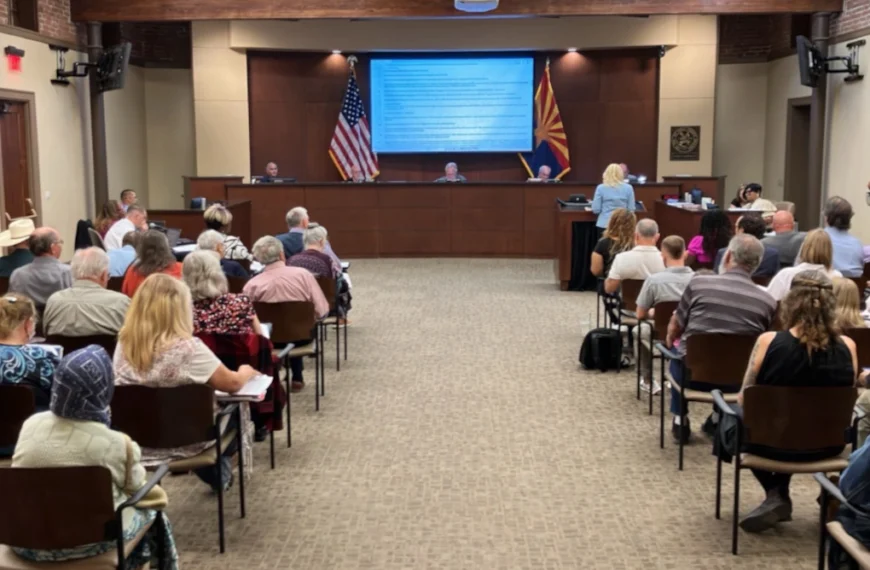
The four supervisors present — Chairman Jeff McClure, Vice-Chairman Jeff Serdy, Mike Goodman, and Rich Vitiello — voted in favor. Supervisor Stephen Miller was absent.
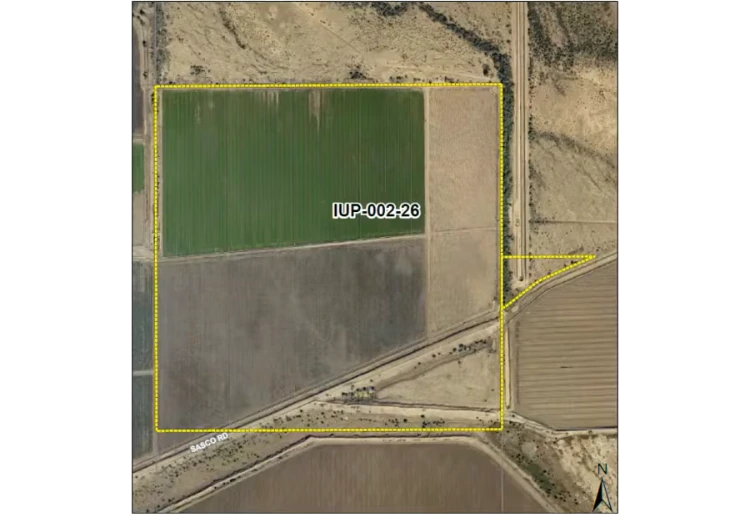
The 164-acre site sits southwest of the intersection of Sasco Road and Coachway Road on land owned by D&S Land & Cattle LLC. It has been zoned for industrial use since 1966. Sunridge Power LLC, a project entity of New Jersey–based developer Kindle Energy, has agreed to purchase the parcels under an agreement signed in November 2025.
For project background and the Planning and Zoning Commission’s earlier 9-0 recommendation on May 21, see Pinal Post’s previous coverage.
Why the Site Was Chosen
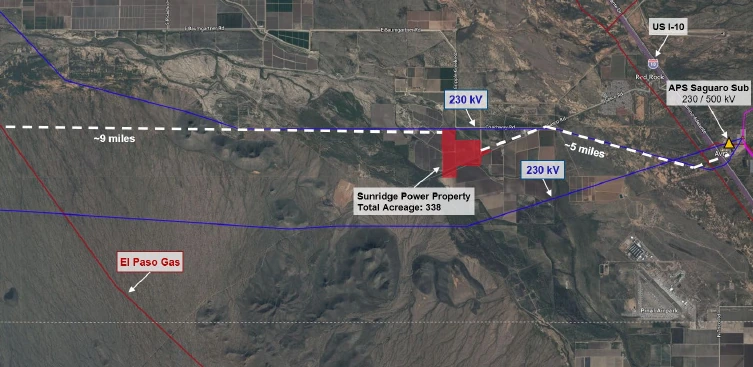
Tom Flexon, vice president of development at Kindle Energy, told supervisors the parcels were chosen for their proximity to two key pieces of energy infrastructure: natural gas service and high-voltage transmission. The applicant plans to interconnect with the El Paso Natural Gas pipeline to the west and run a dedicated transmission line to a substation east of Interstate 10. Flexon described the property as “uniquely positioned between natural gas pipelines and electrical transmission.” The site sits within an area zoned primarily for industrial use, and grandfathered groundwater rights are tied to the land.
Why Sunridge Power Says Arizona Needs the Plant
Flexon told the board the project responds to growing demand and declining supply in Arizona. “Arizona is experiencing 3.7% annual load growth statewide, one of the highest rates in the country,” he said.
That growth, he said, is being driven by new industries, advanced manufacturing, population gains, and electrification across the greater Phoenix region. Flexon also pointed to the following data points:
- APS, SRP, and TEP all topped their peak demand forecasts last year.
- About 2.1 gigawatts of Arizona’s older coal capacity is set to retire by 2032, per the applicant’s presentation.
- Another 4.3 gigawatts of the state’s gas fleet will be aging past 50 by 2030.
- Combined with continued load growth, those changes would leave Arizona about 4 gigawatts short of demand by 2035, Flexon said.
Sunridge Power plans to sell its output to Arizona Electric Power Cooperative (AEPCO). According to the project narrative, AEPCO members serving Pinal County — including Trico Electric Cooperative and the Southwest Public Power Agency, which represents Electrical Districts 2, 3, and 4 — would each subscribe to a portion of the facility’s energy.
Water Use and Cooling Technology Decisions
Flexon argued the Sunridge Power natural gas plant would lower water use at the property rather than add new demand to the region. “Our water plant actually reduces total consumption compared to the existing agricultural use on the properties being acquired by Sunridge Power,” he said. “For clarity, this is not a new draw on the region’s water supply.”
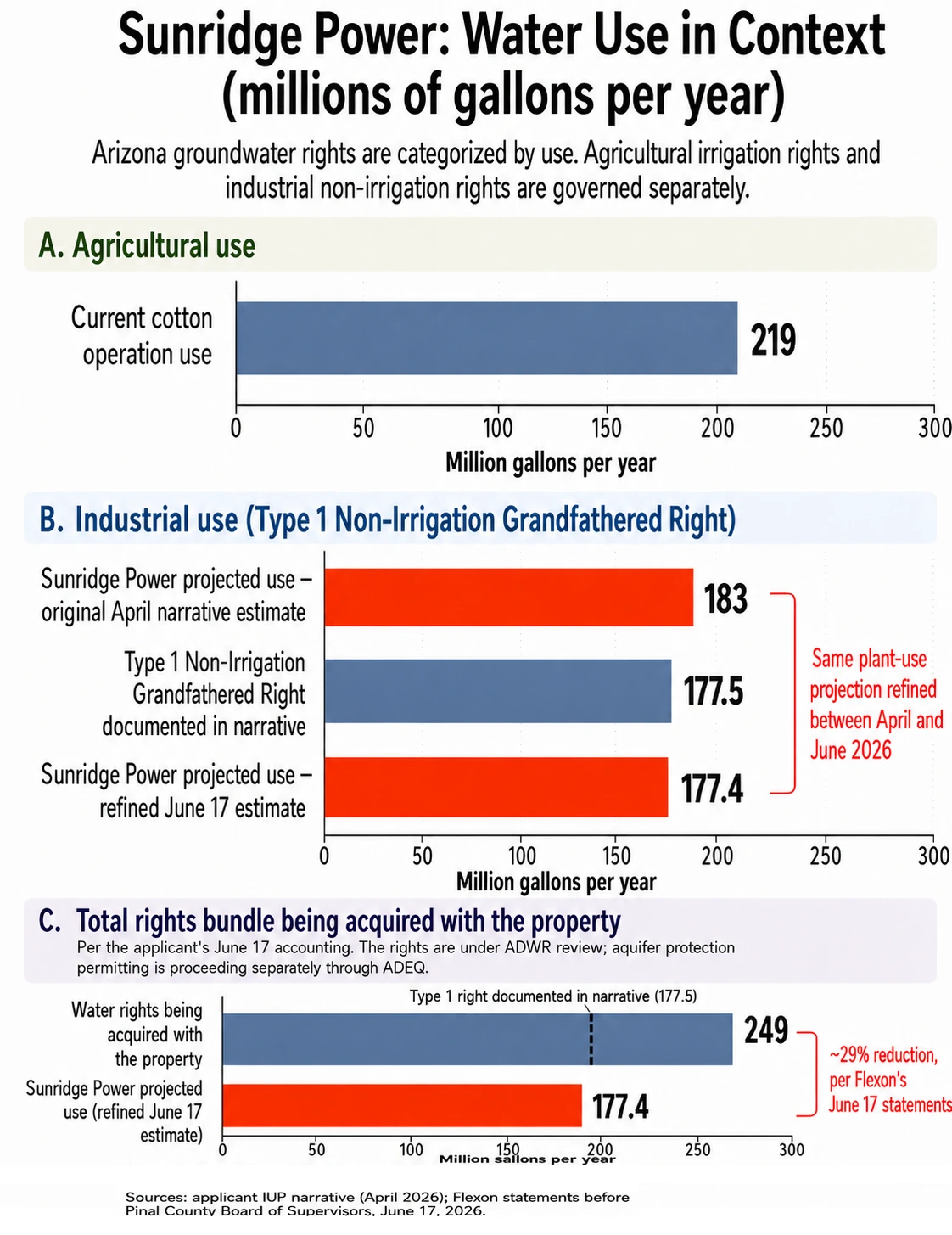
According to the applicant’s narrative, the current cotton operation is estimated to use roughly 219 million gallons of groundwater during the growing season. By comparison, Sunridge Power estimates its two units would consume about 183 million gallons per year — a 16 percent reduction.
At the May 21 P&Z hearing, Flexon told commissioners that “the water rights on the property are even more than what we’re alluding to here” and offered to review the figures. Pinal Post’s earlier coverage cited the Type 1 Non-Irrigation Grandfathered Right documented in the project narrative — about 177.5 million gallons per year (544.81 acre-feet). Under Arizona’s groundwater code, a Type 1 right is an annual allotment of groundwater that can be pumped for non-agricultural uses on land that was previously irrigated.
Flexon returned to the question at the June 17 hearing with a slightly refined plant-use projection — about 177.4 million gallons per year, just under the documented Type 1 cap and down from 183 in the April narrative. The applicant’s own accounting now puts the water rights tied to the property at about 249 million gallons per year, against that projected draw — roughly a 29 percent reduction. The rights themselves remain under Arizona Department of Water Resources review; the project’s aquifer protection permitting is proceeding separately through the Arizona Department of Environmental Quality.
Flexon attributed the lower water use to the project’s choice of cooling technology. Sunridge Power will use air-cooled condensers for the steam cycle and finned-fan coolers for plant auxiliaries instead of traditional wet cooling towers. Development engineer Carlos Campo, with Kindle Energy, explained the difference. “We don’t have cooling towers,” he said. “If we had cooling towers, it would be like 10 times the amount of water.”
Campo also explained how the remaining water demand breaks down. “The biggest water user is the evaporative coolers for the inlet to the gas turbine,” he said. “For instance, on a day like today or hotter, it’ll approach the wet bulb temperature. Here, the low humidity helps tremendously.”
Economic Figures Presented to the Board
According to the applicant’s presentation, the project’s projected economic impact for Pinal County over the life of the project includes:
- Total tax revenue to Pinal County: $175 million to $352 million
- Total economic output: $1.1 billion to $2.3 billion (direct impact)
- Total personal income: $335 million to $771 million (direct)
- Permanent jobs: 24 to 48 positions for 30 or more years
Flexon said construction would employ more than 300 skilled trade workers per phase, and he projected total capital investment of between $1.4 billion and $2.8 billion across real and personal property.
Why an Industrial Permit Was Required
Senior Planner Valentyn Panchenko described the request as procedural. Under the county’s older zoning code, a separate Industrial Use Permit is required for projects like this one. Pinal Post’s previous coverage explains the legacy zoning issue in full.
Noise, Air Emissions, and Local Concerns
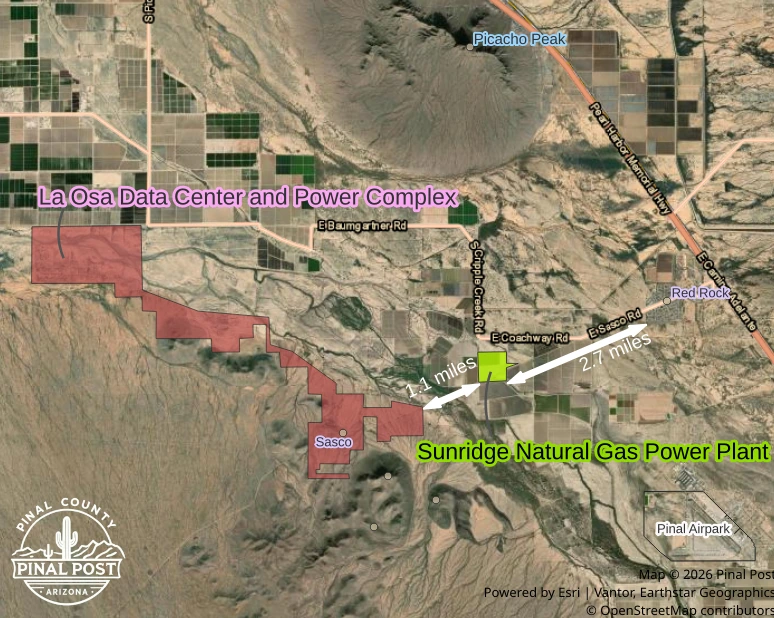
Several board questions concerned the project’s effect on Red Rock, northeast of the site. The applicant cited more than four miles to the community’s central core, though a Pinal Post measurement places the nearest Red Rock homes at under three miles from the property. Chairman Jeff McClure asked specifically about noise. In response, Campo said sound levels would fall within the county’s noise ordinance at the plant boundary and described built-in noise reduction equipment on the cooling fans. He told the board that within 500 feet of the plant, sound would register in the 50-decibel range.
“In terms of bothering the people at Red Rock, no,” Campo said. “They’ll probably get much more noise out of the freeway I-10 than when you get out of the plant.”
Flexon said the 199-foot exhaust stack is sized in part for emission dispersion and that the facility will be equipped with best available emission controls. He said it will burn natural gas only, with processed wastewater disposed of in evaporation ponds.
For background, the April 8 neighborhood meeting at Red Rock Elementary School drew questions about odor, air emissions, soil and groundwater contamination, gas leaks, ammonia storage, hazardous materials, and leukemia. According to the meeting minutes, no dissenting comments were recorded. Additionally, no members of the public addressed supervisors during the June 17 hearing.
Letters of support came from the Greater Phoenix Economic Council, the Central Arizona Irrigation and Drainage District, and Rural Metro Fire Department, which cited the plant’s planned fire safety systems.
About Kindle Energy
Kindle Energy, the developer of Sunridge Power, has operated natural gas-fired power generation across the United States since 2015. Kindle has been identified as a portfolio company of Blackstone in Indiana Utility Regulatory Commission filings from March 2025. A separate Kindle project in West Virginia was described as Blackstone-backed in the firm’s April 2026 announcement. The financing structure for Sunridge Power itself is not specified in the public record. At the May Planning and Zoning hearing, Flexon described Kindle’s parent as one of the world’s largest private equity firms but did not name Blackstone. Additional detail on the company’s portfolio and recent projects appears in Pinal Post’s earlier coverage.
Supervisor Comments on Supply, Demand, and Rates
Before making the motion, Goodman commented on supply and demand. “One thing is a fact, we’ve gotta have more power,” he said. “For us to have the growth and continue the growth, we’ve gotta have the power.”
He then referenced a recent conversation. “It’s supply and demand, but if you’ve got more supply than you have demand, what happens? Rates come down,” Goodman said. “That’s the big key that we need to keep in mind as we continue forward in some of these things.”
Serdy seconded the motion with a brief comment on the resource mix. “I think power without solar is good, and there’s plenty of gas, and it’s almost free in some parts of the country,” he said.
Construction Permits and the Road to 2032 Operation for the Sunridge Power Natural Gas Plant
Approval of the Industrial Use Permit does not authorize construction. Sunridge Power must still complete a formal site plan review, secure building permits, obtain a Class I air quality permit from the Pinal County Air Quality Control District, and receive a Certificate of Environmental Compatibility from the Arizona Corporation Commission. Federal environmental reviews are also underway. Flexon told supervisors he expects all construction permits to be secured within 18 months. If a building permit is not obtained within 10 years, the approval expires unless the Community Development Director approves a single five-year extension.
Residents can track the project’s air permit application through the Pinal County Air Quality Control District’s Industrial Permit Public Notices page, where industrial permit notices appear for public comment when applications reach that stage of review. Flexon said the applicant expects to receive the permit by early 2027.

This is NOT a good place to put this massive power plant and when this whole project was first brought to the Red Rock community, Sunridge Power made it sound like we did not even get to vote on it, that is was just a fact. Well I sure hope the Red Rock Community comes together to get this thrown out. I know you would not like this that close to your house! That is a horrible place to put that massive power plant. You are going to deplete our water supply, create noise, pollute our air, destroy natural habitats and historical facts. Our community is only about 3000 people, why don’;t you find a city area that is already ugly and put it there?