A Mexican vaquero built a ranch on the La Osa land south of Eloy in the early 1900s. Over a century later, a data center bearing that land’s name, once marketed as potentially the country’s largest, is proposed on the same ground.
Part 10 of a Series | Case Nos. 2026-PZ-003-26 and 2026-PZ-PD-003-26
Editor’s note: Guest opinion column by Eirini Pajak of Pinal Unlocked, published in Pinal Post’s Opinion section. Views are the author’s own.
Roughly 10 years ago, Frank Gobea III’s well went dry. Now he hauls his water to his land, two acres just northwest of Red Rock, the only piece left of what his great-grandfather bought more than a century ago and ran as the Santa Cruz Valley Ranches.
On Aug. 26, the Pinal County Board of Supervisors is scheduled to make a final decision on the La Osa Energy Center, a data center and gas plant campus proposed for the property directly adjacent to Frank’s. Opposition has centered on water, flooding, and the desert habitat around it.
From Jalisco to the Santa Cruz Valley
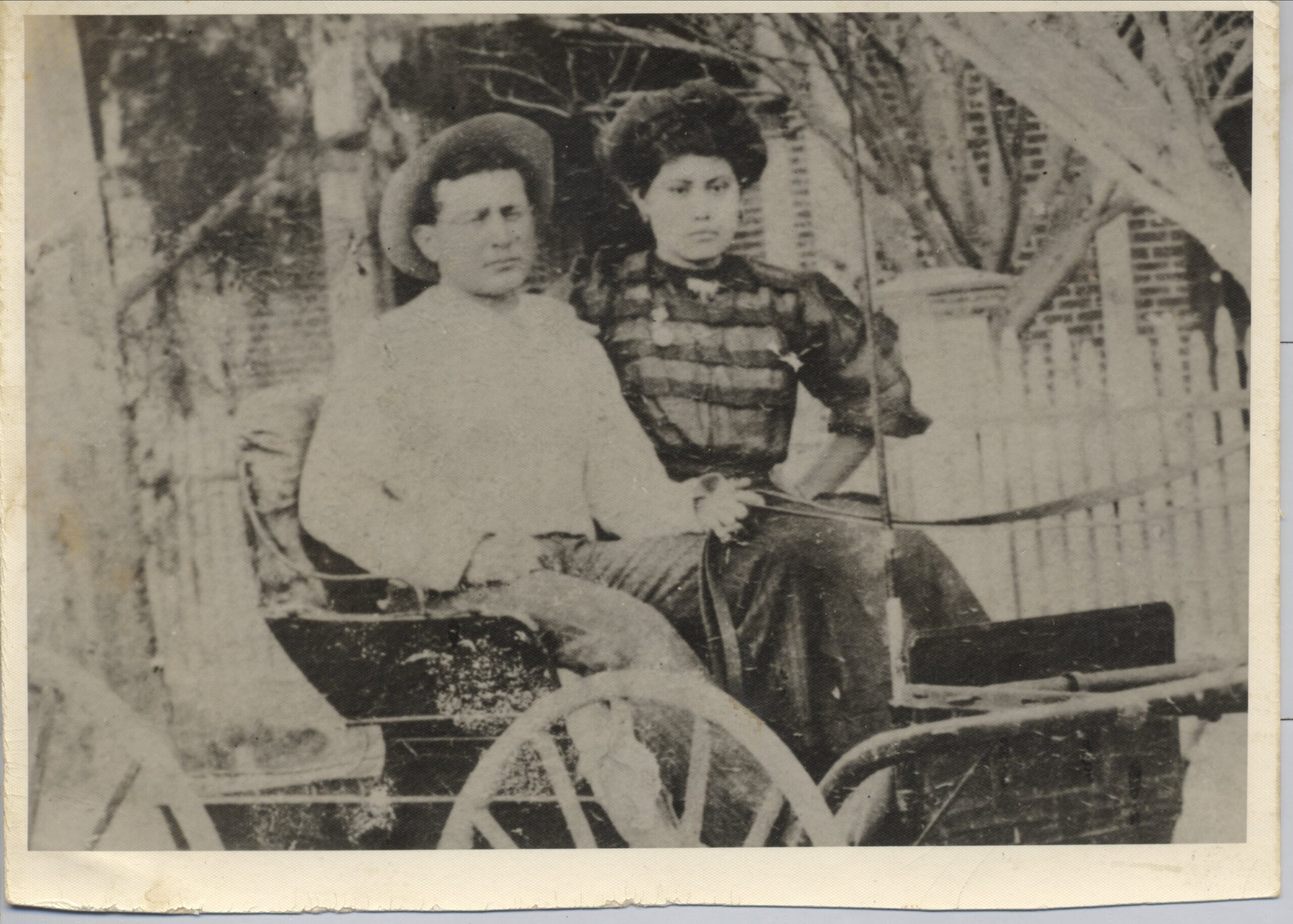
A 1963 profile in the Casa Grande Dispatch says G. H. Gobea, born in December 1880 in Mexico, graduated from a military school at 15, and enlisted in the Mexican Army, where he served as a second sergeant during the campaigns against the Yaqui people in the mountains of Sonora.
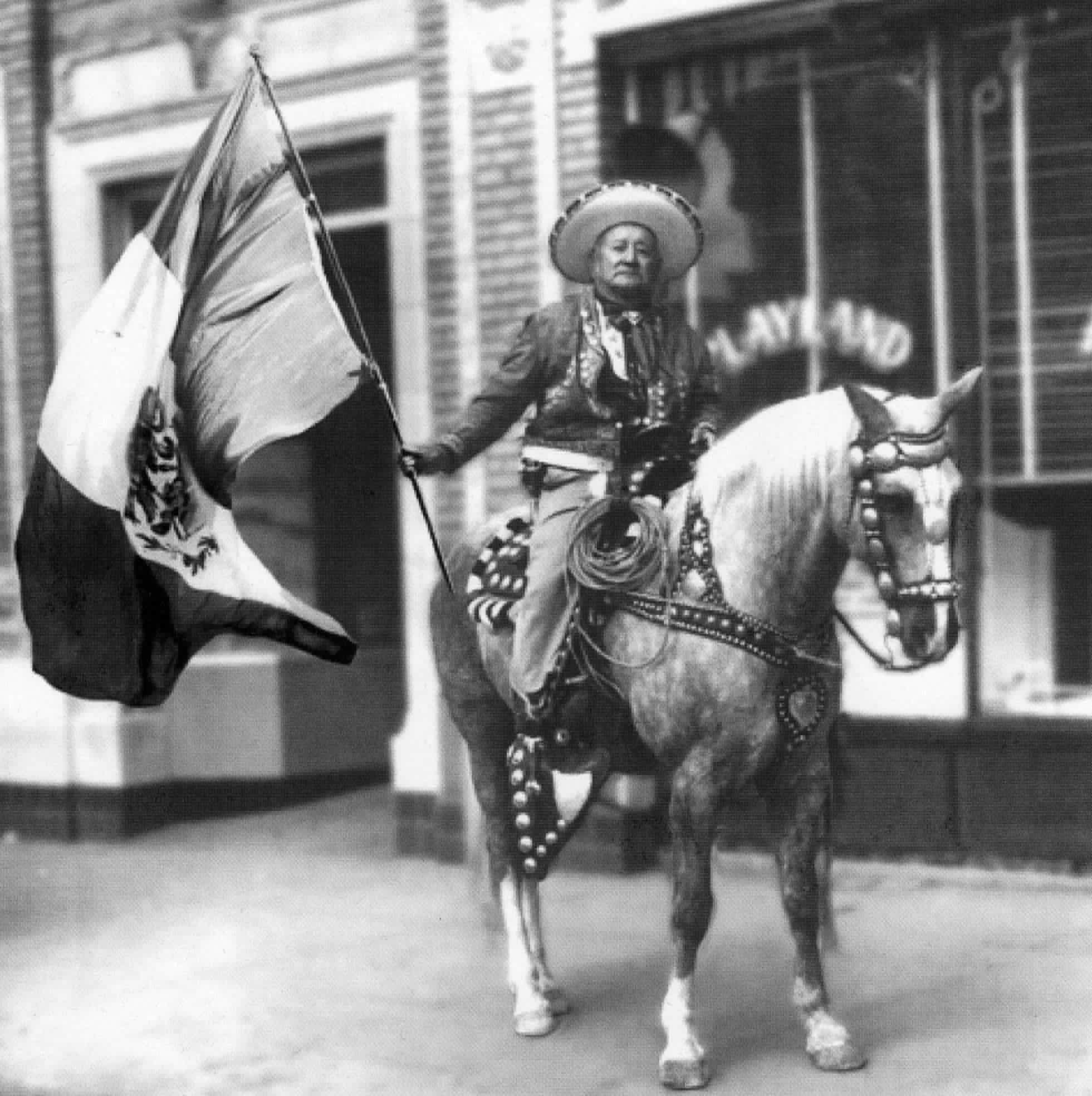
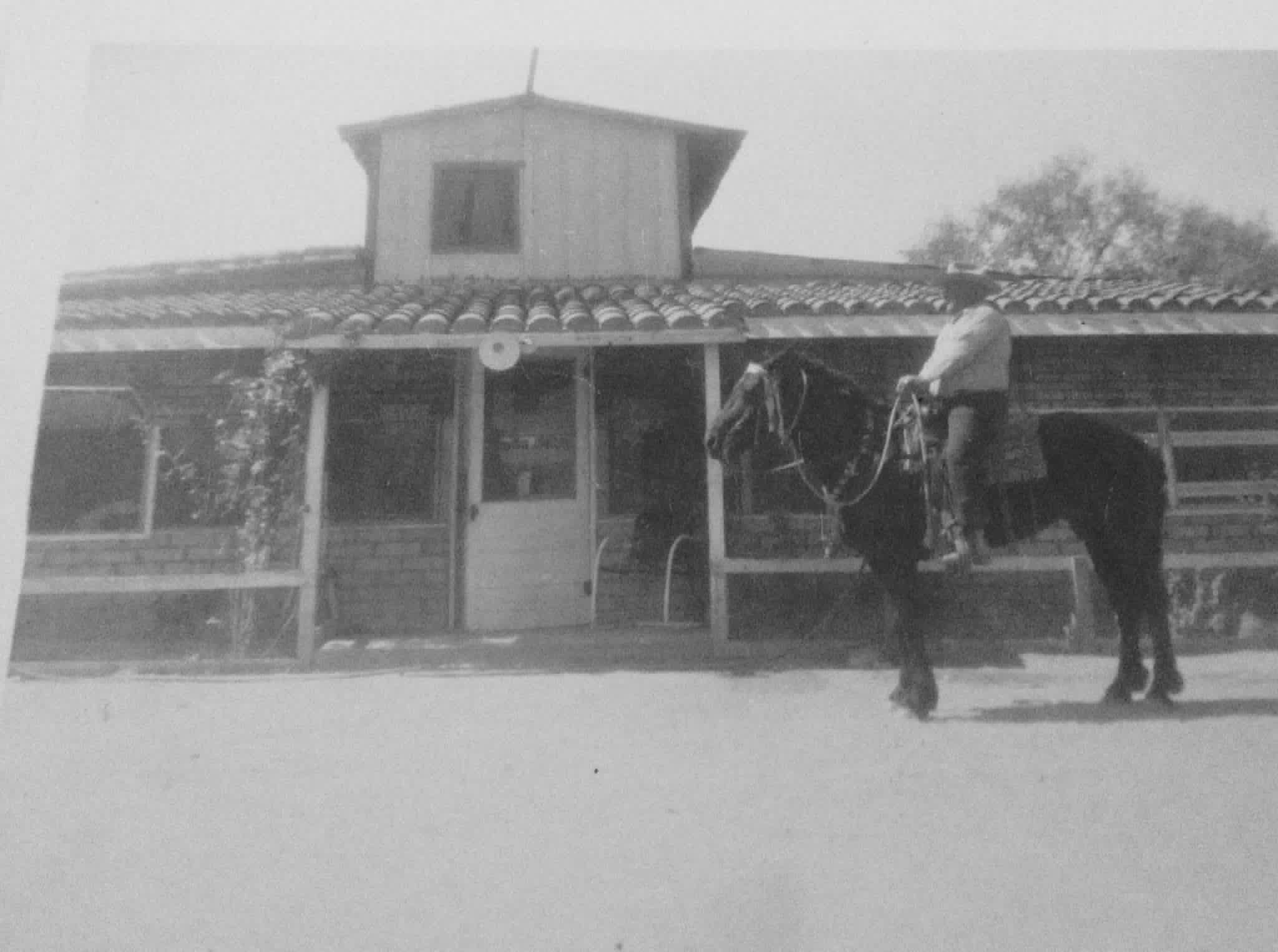
Gobea crossed into Arizona at 17, in 1897. He worked two years as a ranch hand near Nogales for wages the owner never paid, then walked to Tucson with about 45 cents. There, as the Dispatch tells it, he pawned two rings, bought into a poker game, won $200, and used the money for a horse and buggy to sell fruit and vegetables to the mining towns of Mammoth, Silver Bell and Sasco. He met Juanita, a Tucson woman from an old pioneer family, on that route, and the two married in 1908 at St. Augustine’s Cathedral. Over the years he built up more than a thousand acres of ranch land in the desert south of Eloy, near Red Rock.
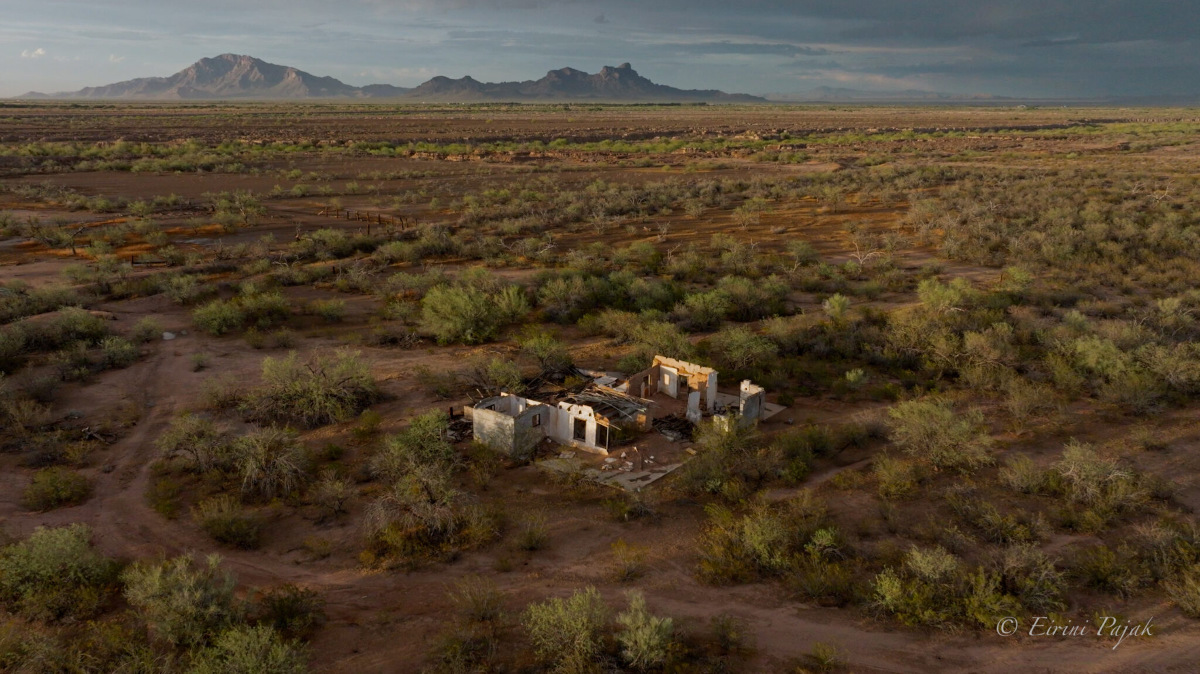
Lucy Gobea, his daughter, recalled that there was no road in at first, so he hired a driver with a caterpillar to cut one, and even then the family had to ford the Santa Cruz River twice, because it branched. At first there was no well. Gobea bought his first tractor in 1941 and planted his first cotton the next year, watering it with flood water he diverted from the Santa Cruz, he told the Eloy Enterprise as he retired in 1969. That crop cleared $9,000, enough to drill a well, and he drilled more as the cotton spread. The ranch also grew a garden of bell pepper, tomatoes, cucumbers and radishes. Lucy put the cost of bringing electricity out from Friendly Corner at about $3,000, and the poles to cross the river in two places at roughly $1,000 each.
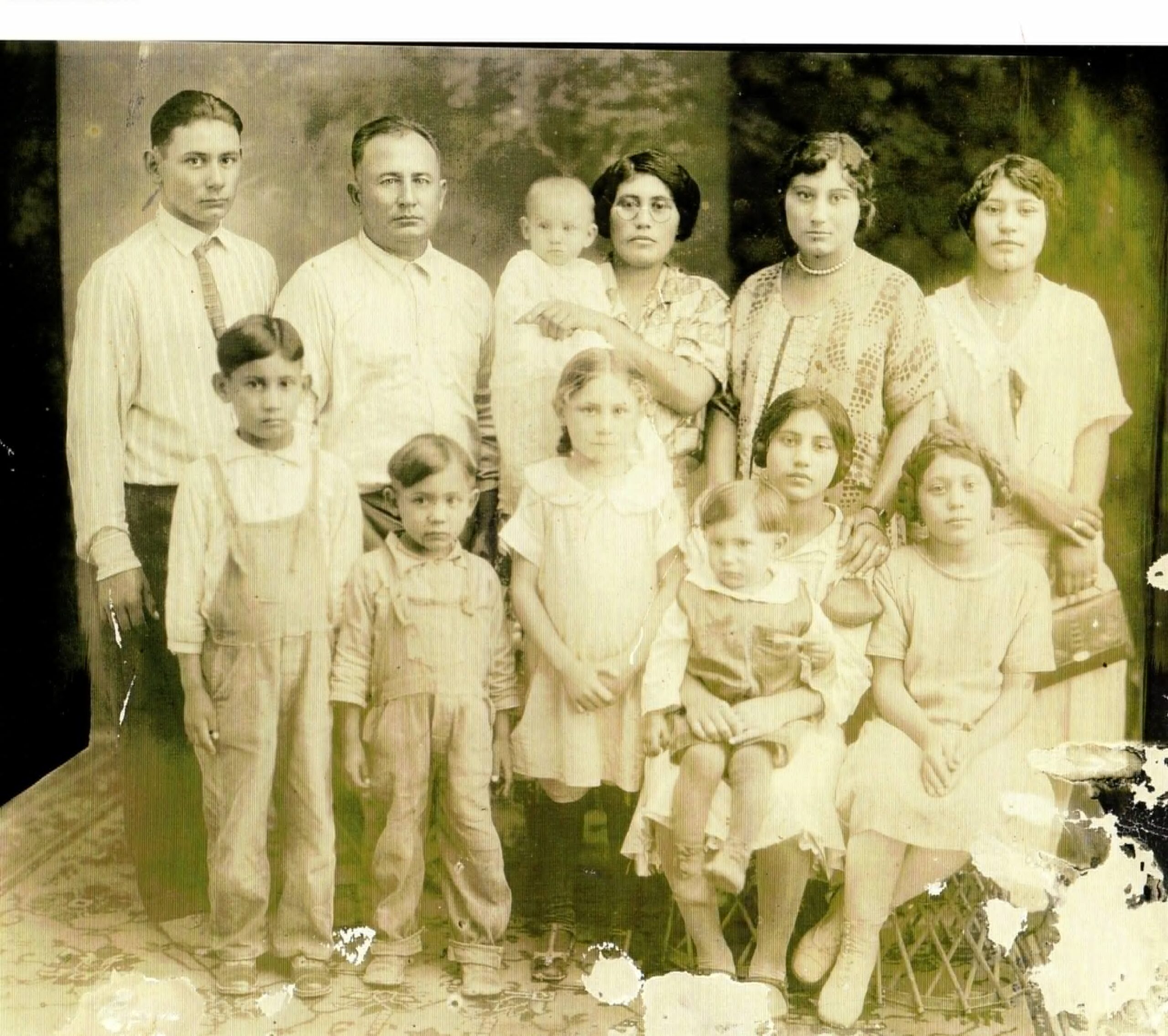
G.H. and Juanita raised 16 children (two others, twins, died at childbirth). According to Rosie Gobea, one of their descendants who keeps track of the family history, there are seven generations with 553 descendants and growing.
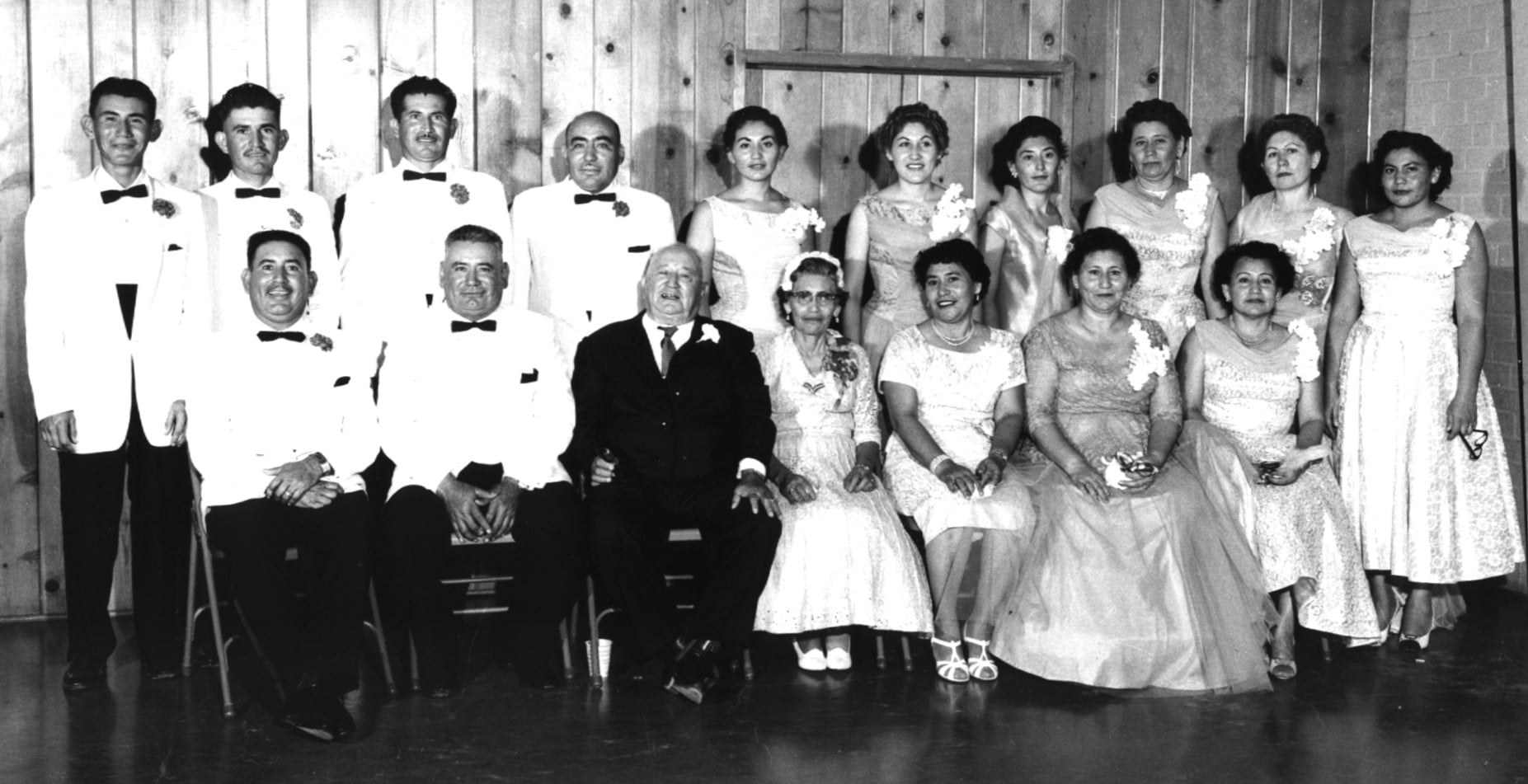
Lucy, the last of the children
Lucy Gobea, looking decades younger than 93, is the last living child of G.H. and Juanita. Her sharp mind remembers the ranch in detail from about age 8. “We lived out there in the middle of nowhere,” she said. “There was no neighbors, no nothing.”
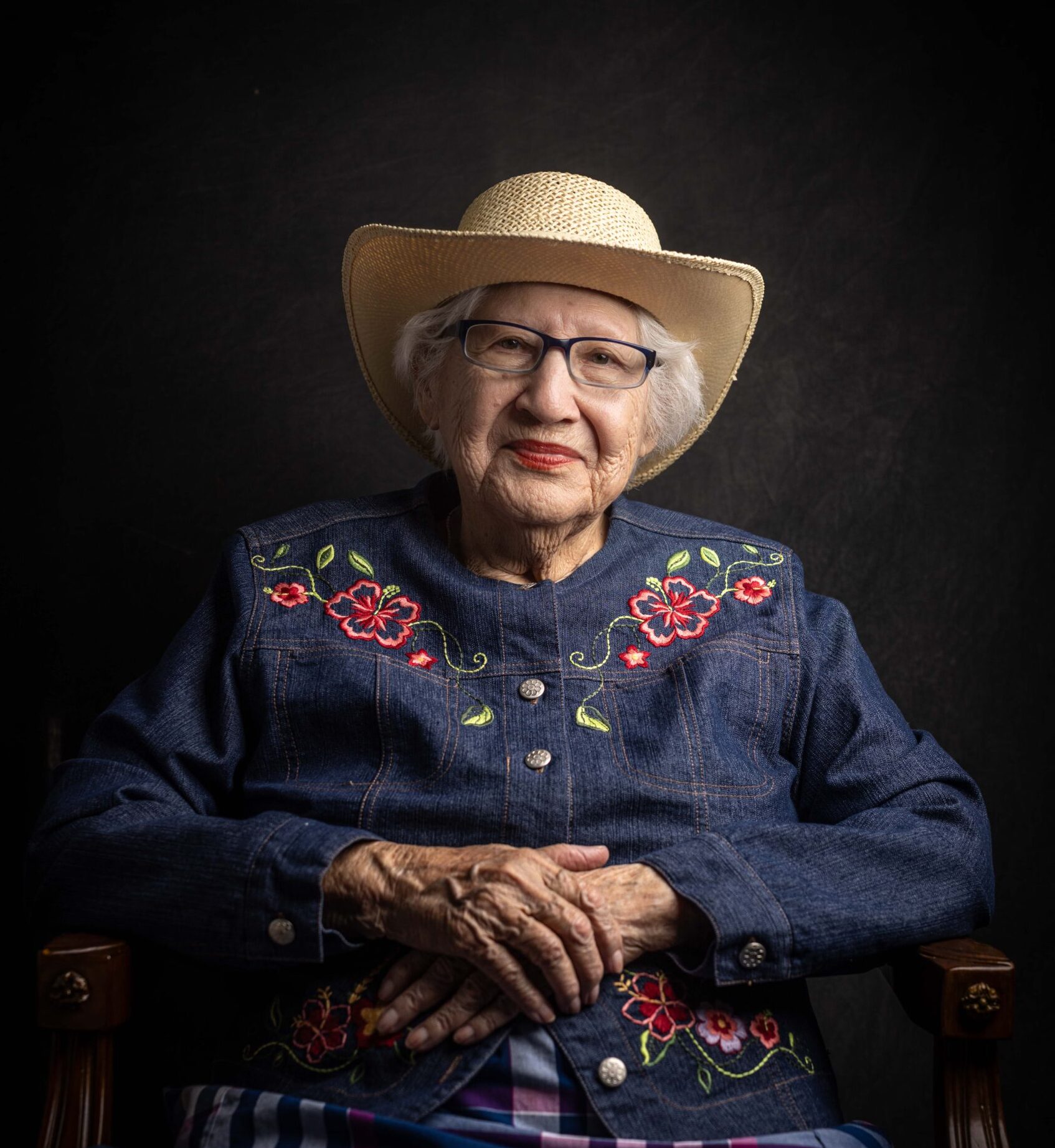
Once, when water ran down out of Sonora and the Santa Cruz rose, the family was cut off at home for three months, she said. They did not go hungry, because they had a freezer by then, their own cattle, thousands of chickens and the garden. But her father was diabetic, and his pills had to cross a flooded river. Lucy telephoned a pharmacy in Eloy, and a crop duster pilot who knew her father landed his helicopter in front of the house and handed the medicine over. Another year, the pharmacy got the pills as far as the far bank, and Lucy saddled a horse, crossed the river, and took them from Mayor Paul Pearce, who was waiting there.
The children walked a mile from their school bus to get home. When they got home, they took off their shoes, two pairs each, one for the house and one for church, and went to the coop to gather, wash and pack the eggs their father sold to a grocery in Casa Grande. The money was used to buy things they didn’t grow on the ranch, such as cereal and cookies.
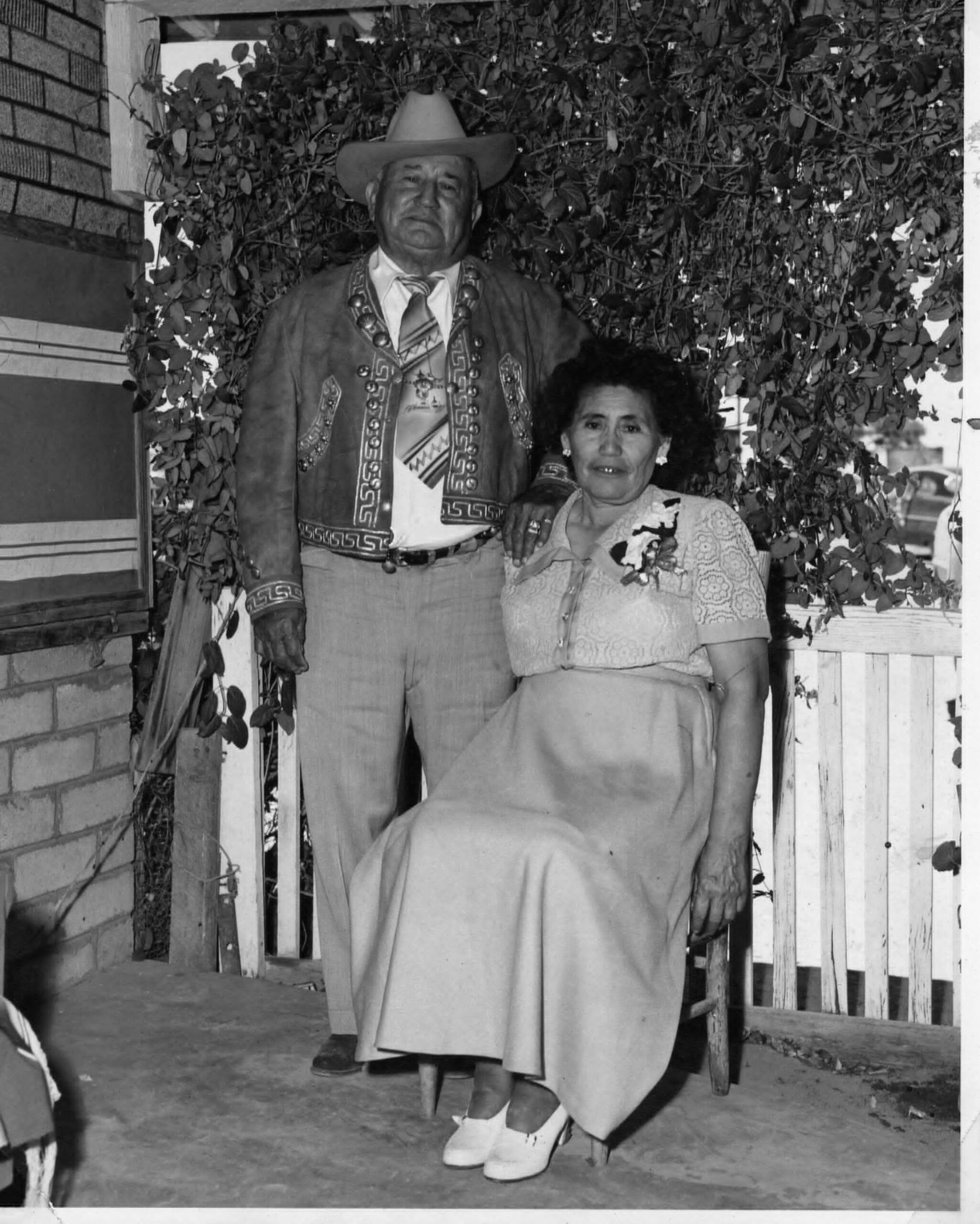
Juanita had married G.H. in 1908, as a young bride, and ranch life would be hers for the next six decades. The children called her Jenny, to make her laugh, and she was up before everyone to start the stove so the house had hot water and fresh coffee, which she ground by hand from beans her husband ordered from Nogales. She cooked all day, because there were many mouths to feed: Spanish rice, thick vegetable soups, chicken and beef, and machaca from meat the family dried itself before there was a freezer. She sewed the family’s clothes by hand, the girls’ dresses and undergarments and everything else. Regularly she and G.H. drove to Tucson by buggy behind two horses, two days each way, to go shopping, and came home with flannel, linens and cloth for the children. On those trips her husband would often offer to buy her a new dress, Lucy remembered, and her mother usually turned him down and told him to buy something for the girls. “She was a good mother,” Lucy said, and “a good wife to my father.”
Lucy went everywhere with her father. When her sisters complained that he was showing favoritism to her, he told their mother it was because Lucy was the strongest one and could even help him fix a flat tire, she said. One day the two of them butchered a steer alone. Her father shot and bled it, then handed her the knife. When she asked who was going to help them skin it, she remembered him saying, “Who do you think I am? You and I can do it.” She skinned it herself. She was never afraid out there, she said, because her father told her he was there to protect the family and always carried a gun. “He was never afraid of nobody. Nobody.”
When a brother of hers died in California, she and her aging parents drove there to take his two young children out of state custody, and a judge, when she was in her twenties and unmarried, made her their legal guardian. “They’re going to carry my name,” her father said. She raised the two children and looked after her parents as they aged, and did not marry until she was 70. “I never rode a bicycle, but I rode horses,” she said: horses, then pickup trucks, then a tractor, then… a Cadillac.
Her sisters married and scattered, to Salinas, Delano, Hollister and Tucson. In July 1969 the family sold the ranch to a buyer from Oracle and moved to Tucson, Lucy going with her parents. At the sale, Juanita told the Eloy Enterprise she would miss her life there. She remembered owning a single dress that she washed on the board each night so she could start the next day clean. “We were very poor then,” she said, “but very peaceful. It was a wonderful life.” G.H. lived into his 90s, healthy nearly to the end; the first time he was ever in a hospital, Lucy said, was for eye surgery. He died on March 17, 1972. Juanita followed ten weeks later, on May 31. Her funeral Mass was at St. Augustine Cathedral in Tucson, the same church where the couple had married, and she was buried beside G.H. at Mountain View Cemetery in Casa Grande, under a single stone marked GOBEA.
Asked what she makes of a data center and gas plant at the base of the hills where she grew up, Lucy had little to say other than “I don’t know who’s going to enjoy it.”
Frank, and a well that ran dry
Frank is a quiet, gentle man, and in a stretch of desert with few residents, no one lives closer to the site than he does. Frank lives there with his family and keeps livestock. Some days he lifts his binoculars and scans the desert due south, looking for the ruins of his great-grandfather’s ranch.
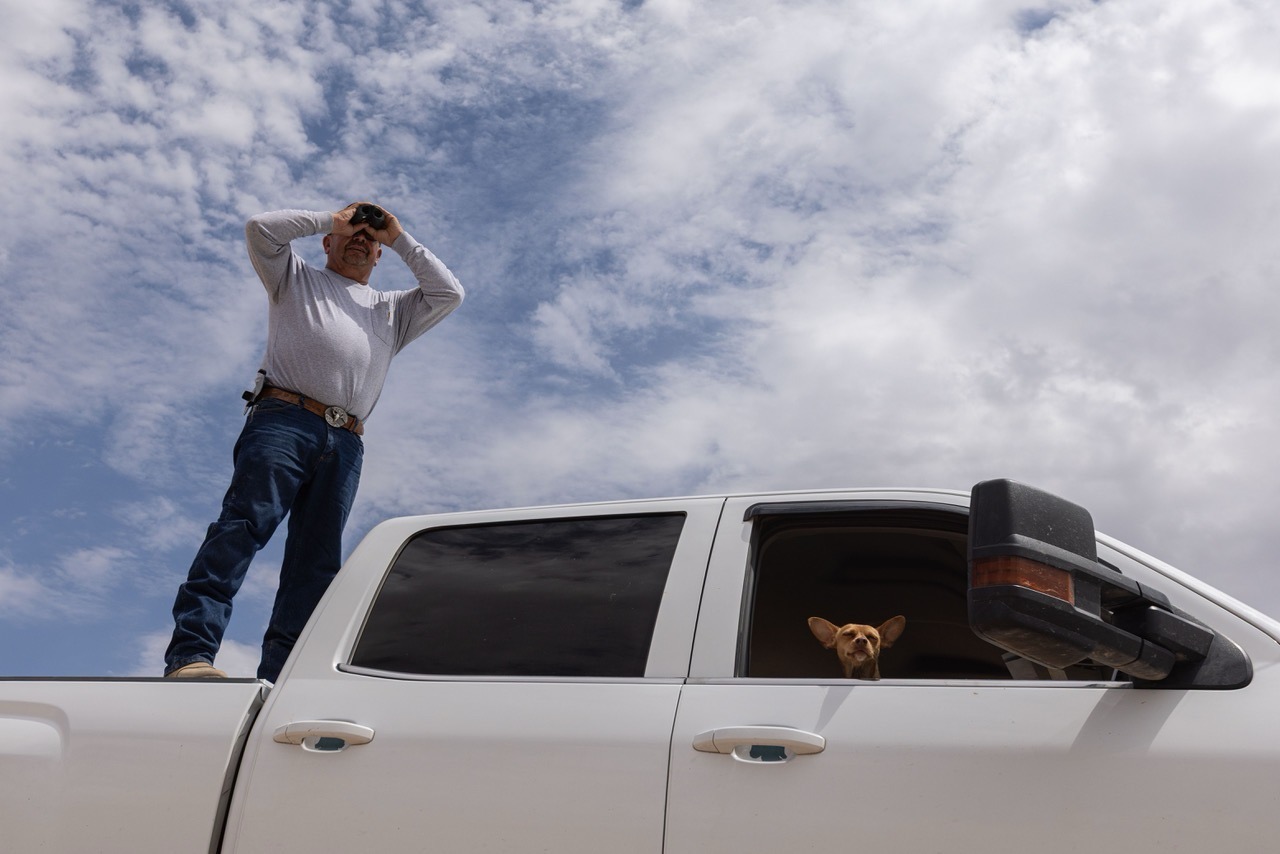
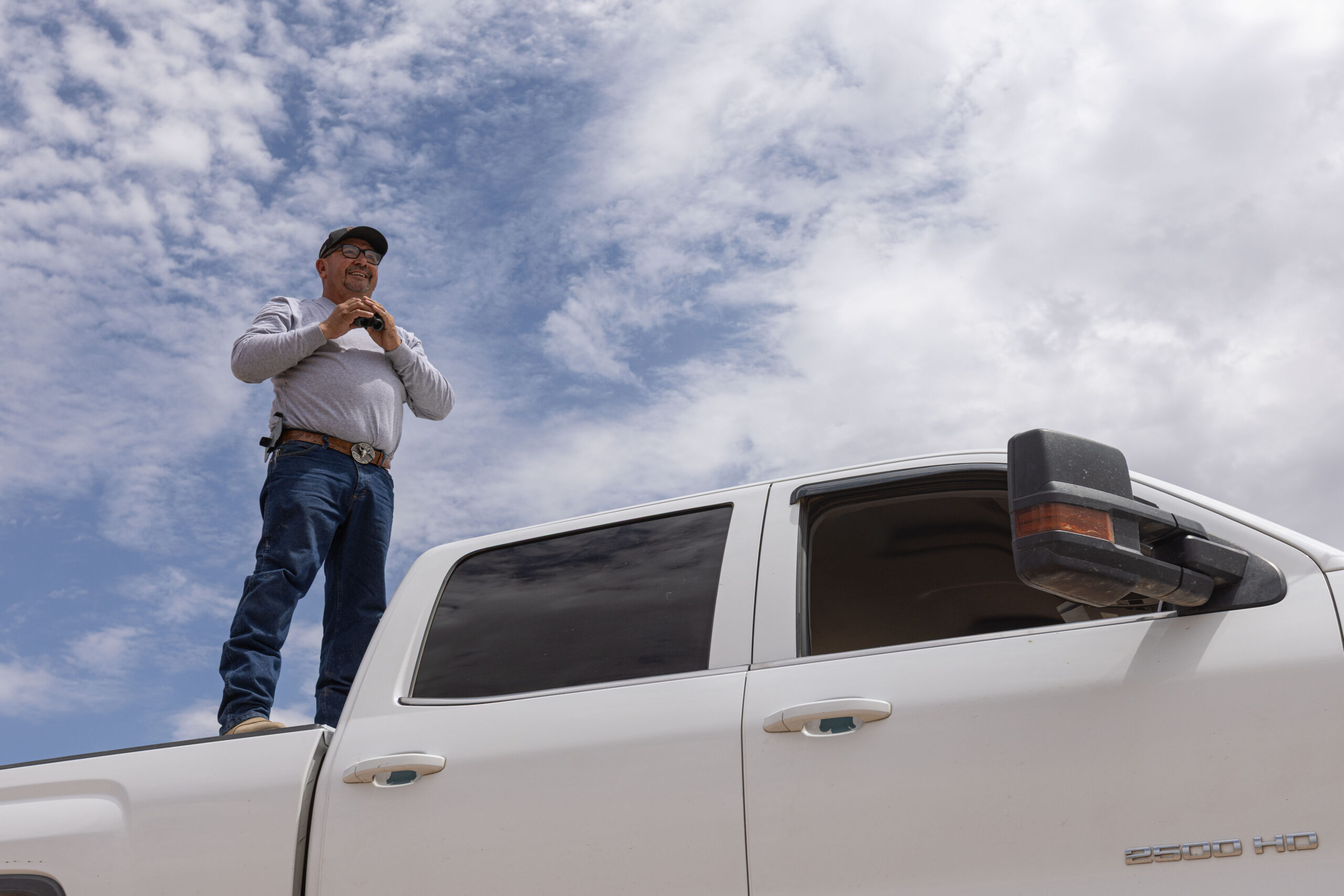
Four generations later, Frank’s two acres, and part of the data center site next door, sit within an active land-subsidence zone. The basin has been drawn down by generations of pumping, with earth fissures crisscrossing the surrounding desert. His well going dry was not the fault of any single project, but the accumulated cost of a century of area farmers taking more water out of the ground than the desert put back.
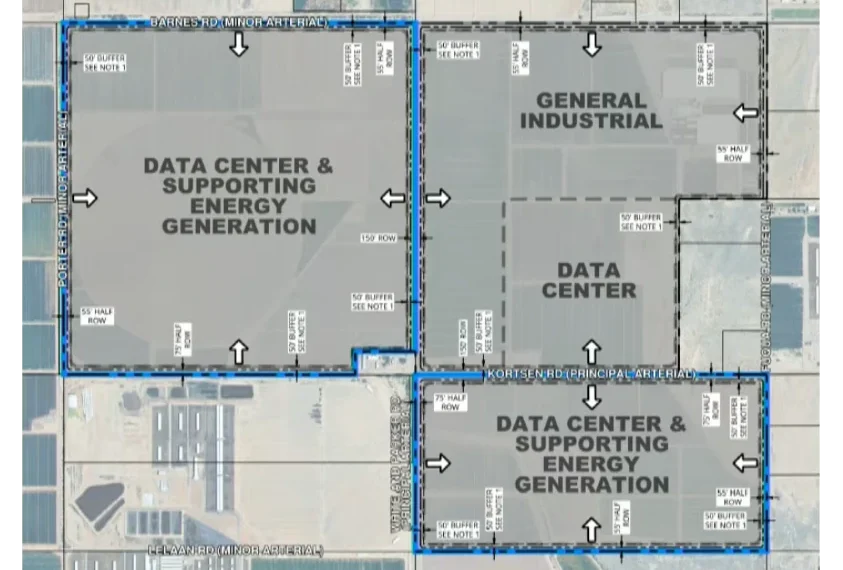
One conceptual layout puts the campus directly against his two acres: as many as 11 enormous data center buildings behind his house, each up to 60 feet tall and 400,000 square feet, a fire station next door, a gas plant at the base of the hills he looks out on, and the quiet dirt road out front, Baumgartner Road, widened into a major road. The buildings could sit as little as 50 feet away from his property line.
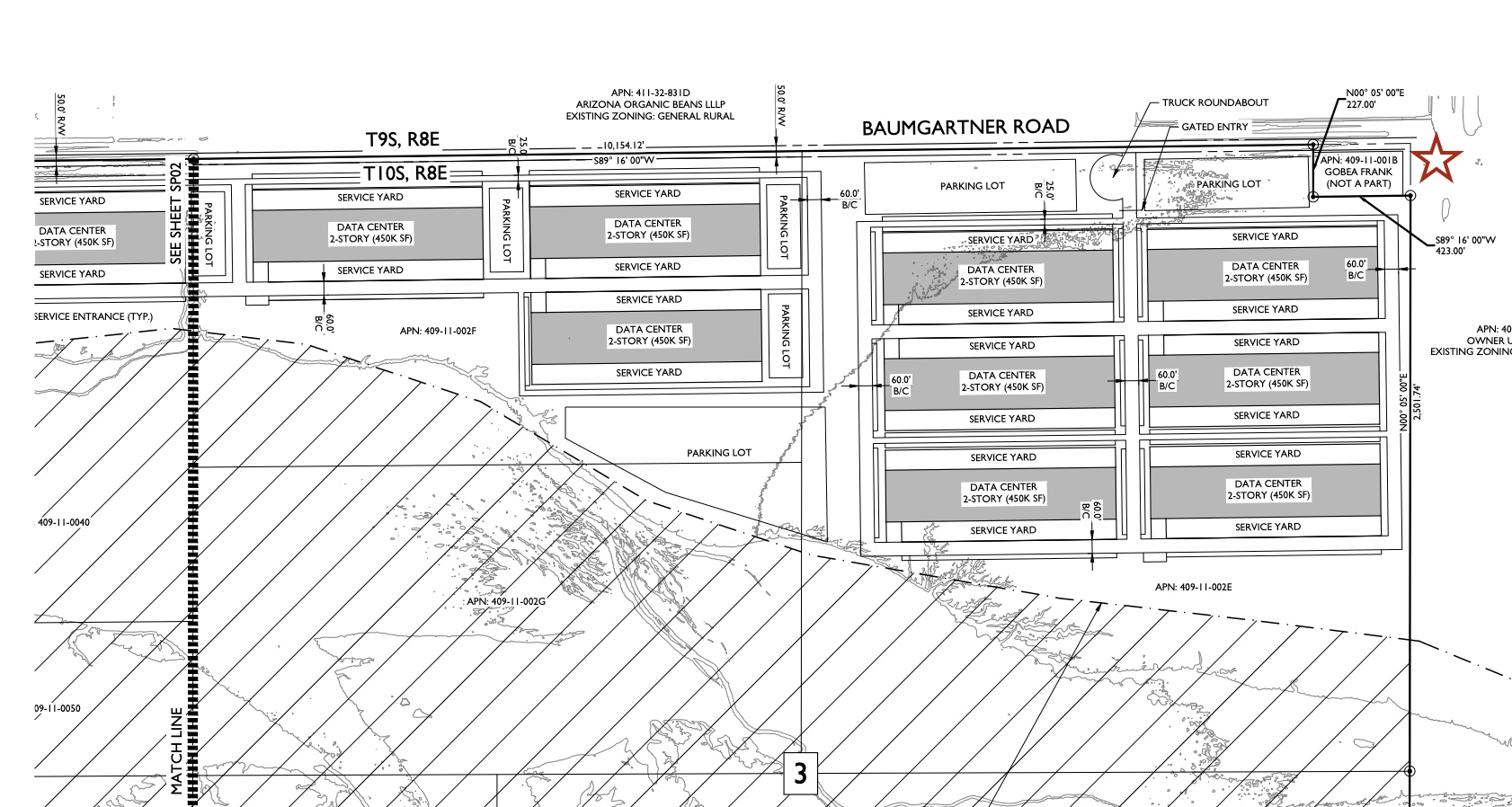
Frank is not against the idea of someone building out there. Houses would not bother him, he says, the low-density kind the rural zoning already allows; it is not zoned for denser residential developments. It is the industrial campus he objects to, and he worries about more than what will happen to his view. His home sits at the edge of a PM10 non-attainment area, where federal dust limits are already exceeded. Air-cooled cooling systems would run around the clock, producing a constant hum. And there is the family history, which he says the project would erase.
The vote
The La Osa Energy Center takes its name from the land. “La Osa” has marked this stretch of desert for more than a century, since the La Osa Cattle & Loan Co. ran near the smelter town of Sasco, and the tract has passed through cattlemen, a ghost town, and a collapsed plan for a desert city of some 175,000 people. Sasco itself, now a ghost town, sits within the project footprint.
The application would rezone rural land south of Eloy, along the Santa Cruz Wash: about 2,400 acres to industrial, 992 kept as open space. The land has been listed for sale, marketed as a large data center property with no tenant in place.
The stipulations would cap the campus at 600 acre-feet of potable water a year and require closed-loop cooling instead of evaporative. Six hundred acre-feet is about 195 million gallons, or, by the state water department’s rule of three homes to the acre-foot, roughly what 1,800 households use in a year, pulled from the same stressed aquifer the neighbors and farmers depend on in the Pinal Active Management Area.
The cap limits only potable water, not the construction water, dust control, and concrete for eleven 400,000-square-foot buildings. The effluent mentioned in the stipulations that could offset the draw is optional and unsourced. And because Arizona groundwater is regulated by the state not the county, whether Pinal County could enforce a limit written into a zoning stipulation is itself unsettled. The land is zoned General Rural, and its current use, mostly cattle grazing, draws far less water than the campus would.
The site is also a high-risk flood zone along the Greene Wash, a riparian habitat and wildlife corridor. It intersects two important Wildlife Linkage areas and borders Ironwood Forest National Monument, drawing desert-conservation groups against it.
G.H. Gobea grew his first cotton on flood water, then drilled wells with the profit. Generations later his great-grandson has to truck his water in. The county will decide whether the data center rises on the subsiding land, towering over what is left of the Gobea ranch.
The Board of Supervisors takes up the rezoning, cases 2026-PZ-003-26 and 2026-PZ-PD-003-26, at 9:30 a.m. on Aug. 26 at 135 N. Pinal St. in Florence.
Eirini Pajak is a licensed real estate agent, freelance photographer, journalist and Pinal County resident. She covers local land use and development decisions through her Pinal Unlocked page and runs the Pinal Code Watchers community group.