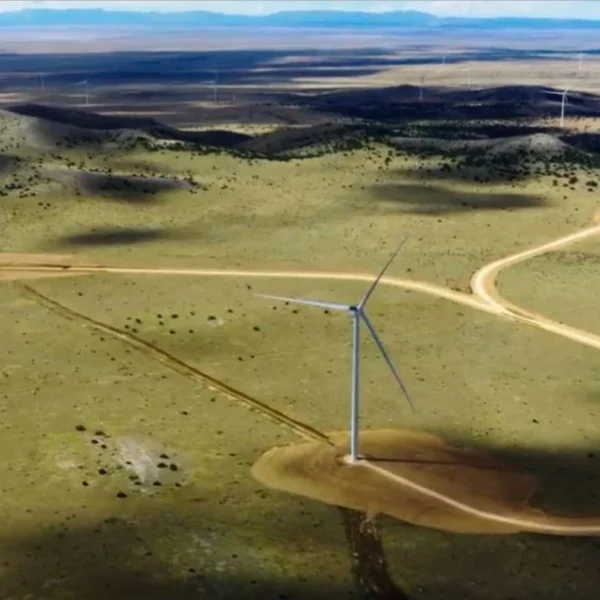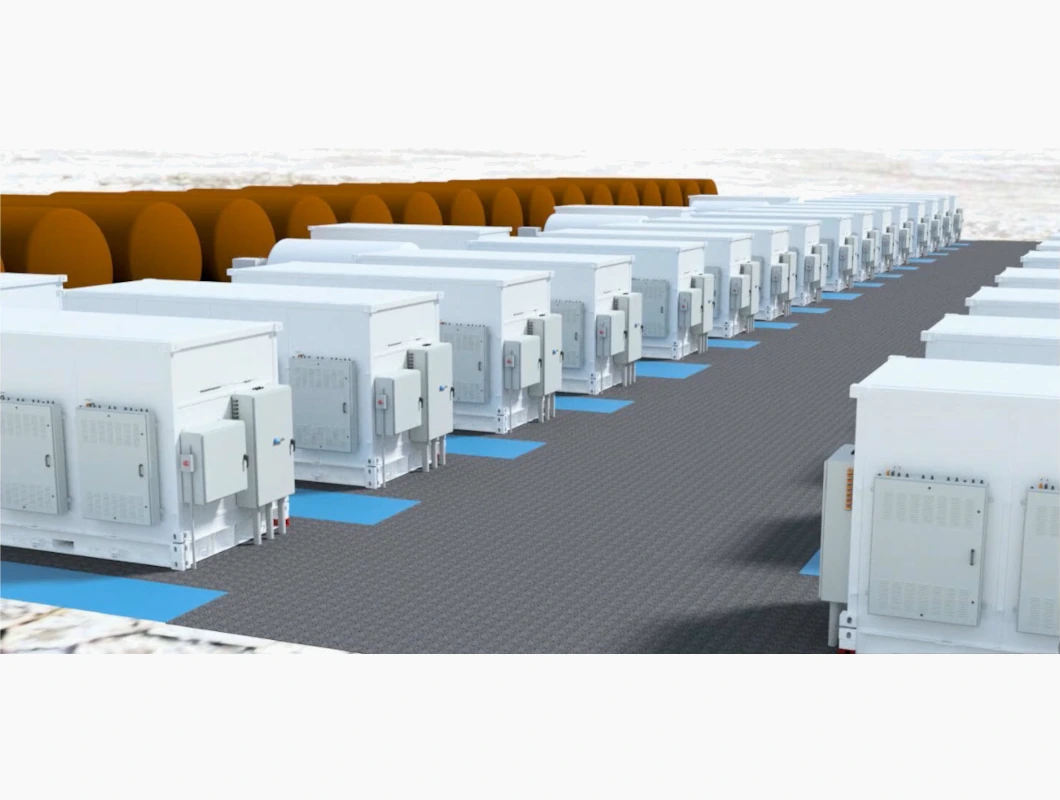
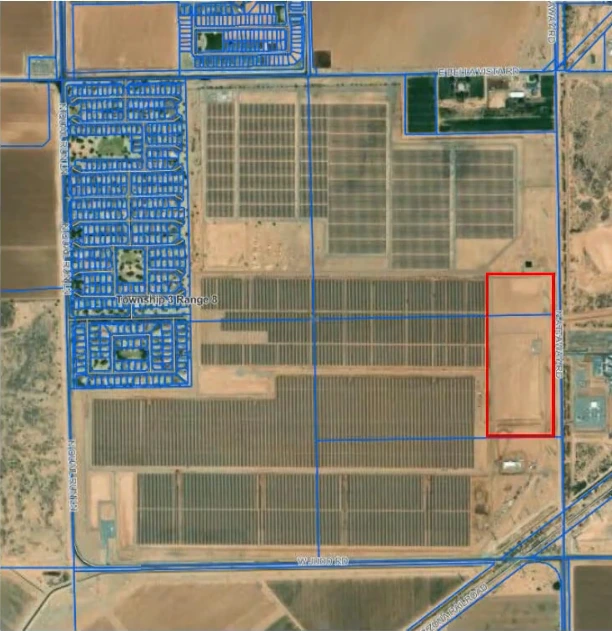
FLORENCE, AZ — The Florence Planning and Zoning Commission voted without opposition May 21, 2026, to recommend approval of a Copper Crossing battery storage land use change for 33.546 acres near the northern border of Florence. The site is part of Salt River Project’s (SRP) Copper Crossing Energy and Research Center. The amendment would shift the land’s designation under the town’s general plan from Suburban Neighborhood to Industry so SRP can host non-lithium battery research facilities on land it leases to outside companies. The Town Council will hold a hearing and take action on June 16, 2026.
Two Non-Lithium Battery Pilots, 5 Megawatts Each
The amendment is tied to two long-duration energy storage (LDES) pilot projects at SRP’s Copper Crossing Energy and Research Center: Desert Blume, by CMBlu Energy, and Project New Horizon, by ESS Tech, Inc. Each is a 5-megawatt (MW), 10-hour-duration project. Together, SRP’s application states, they will hold enough energy to power about 2,250 average homes for 10 hours. Reese Anderson, the Pew and Lake attorney representing SRP, told the commission that CMBlu’s site plan was already approved under the property’s existing zoning. The ESS project and space for future installations are what drive this amendment.
According to the application materials, CMBlu’s Desert Blume will use Organic SolidFlow battery technology, a mixture of solids and water-based electrolytes housed inside buildings. ESS’s Project New Horizon will use the company’s Energy Base system, which runs on iron flow battery chemistry built mainly from iron, salt, and water. The Energy Base is designed to deliver 10 hours of discharge and to recharge in 10 hours or less. At the meeting, Anderson said he understood the ESS modules would sit outside, while CMBlu’s system would be inside a building. The application states both companies will build, own, and operate their batteries on land leased from SRP, storing energy during daytime solar-generation periods and returning it to the grid at night.
Why Copper Crossing Battery Storage Tests Non-Lithium Designs
SRP is using the site to study storage technologies that avoid lithium-ion. Both pilots are research projects, and SRP wants to compare how each performs in Arizona’s climate. Anderson told the commission the partnership lets SRP pursue “safer, better, longer battery storage.”
Safety is one advantage cited for these chemistries. The application describes CMBlu’s mixture of solids and water-based electrolytes as non-flammable, and CMBlu’s product page says its design produces no thermal runaway and needs no complex safety systems. ESS told the commission its iron flow material is non-flammable as well, and the company’s product information describes the electrolyte as non-flammable with no risk of thermal runaway.
Supply chain is another cited advantage. CMBlu says its batteries use no lithium or cobalt and have no rare-earth dependency, relying instead on abundant materials. The application separately describes the system as fully recyclable and free of rare metals. ESS reports its products are made with over 90% domestic content, and its product information describes the batteries as made from easy-to-source iron, salt, and water with a secure, domestic supply chain. The application adds that ESS’s batteries are built to operate across a wide range of temperatures.
Duration is a third advantage. Each pilot has a 10-hour storage duration, while conventional lithium-ion storage typically targets four hours. CMBlu expects its system to store and deliver energy two to three times longer per cycle than lithium-ion. The longer window lets the batteries hold daytime solar power for use after sunset, when demand stays high. The companies also cite long service lives: CMBlu lists up to a 20-year lifetime for its system, and ESS reports a 25-year life expectancy.
Chico Hunter, SRP’s Manager of Innovation and Development, framed the pilots as a deliberate test at scale. “They’re big pilots, five megawatts, ten hours of storage each of them, and that’s intended deliberately so that we can test it at utility scale,” he told the commission. He added, “It’s small utility scale, but still utility scale.”
Fire Safety and Air Emissions Questions
Leslie Buchner, an alternate commissioner, asked the applicants about safety. He asked about “the extent to which there’s a potential for fire at these sites,” and what “particulates or gases would be emitted into the atmosphere” if a fire occurred.
Barry Sarin, an ESS representative, responded. “The material that we use, it is non-flammable,” Sarin said. He explained that the process can produce some hydrogen. However, “if there is any release of hydrogen, it’ll be directed to a venting system and have it dispersed.”
Sarin also described the technology’s prior deployments. “We’ve had, using this technology, 25 different deployments, seven currently active, using the base technology, and we haven’t had a fire,” he said.
Chairman Frost noted the applicants had committed to work with the Florence Fire Department on specialized training. According to the staff report, ESS met with the Town Fire Marshal in a pre-application meeting and pledged to help train fire personnel on firefighting practices for these battery systems. The staff report adds that the projects will be built to the 2024 International Fire Codes because of updated standards. Hunter added that SRP intends to use both pilots “as training opportunities for first responders and authorities having jurisdiction so that they can better understand what are the unique requirements and safety requirements for each of the technologies.”
On pollution, the staff report states the projects will not generate any particulate emissions, noise, vibrations, or smells that would negatively impact adjacent uses. The site will have no full-time employees, only maintenance and research personnel visiting at regular intervals.
Why SRP Volunteered for Town Review
SRP does not usually appear before local boards, and Anderson explained why this case is different. “When SRP acts in its governmental capacity, it’s not regulated by local jurisdictions,” he told the commission. In this case, however, outside companies, not SRP, will develop the land.
“SRP has made a policy decision that where they are leasing to third parties as part of their research and development efforts, that they wanna go a step further and be a good community partner, so they’re willing voluntarily to say, ‘Let’s go through the land planning process,'” Anderson said. He added that the amendment is needed because state law requires every rezoning to be consistent with the general plan, and a related zoning case will follow.
How the 33 Acres Fit Into the Larger Energy Center
The amendment area sits inside the multi-phase Copper Crossing Energy and Research Center, which surrounds the parcel with SRP infrastructure. Staff described a natural gas peaker plant to the east, solar panels to the north and south, and the recently amended Dobson Farms planned development to the south, which also carries industrial place types. Two major roadway projects, ADOT’s North-South Corridor (SR-505) and Pinal County’s Central Arizona Parkway, are also planned east and west of the site.
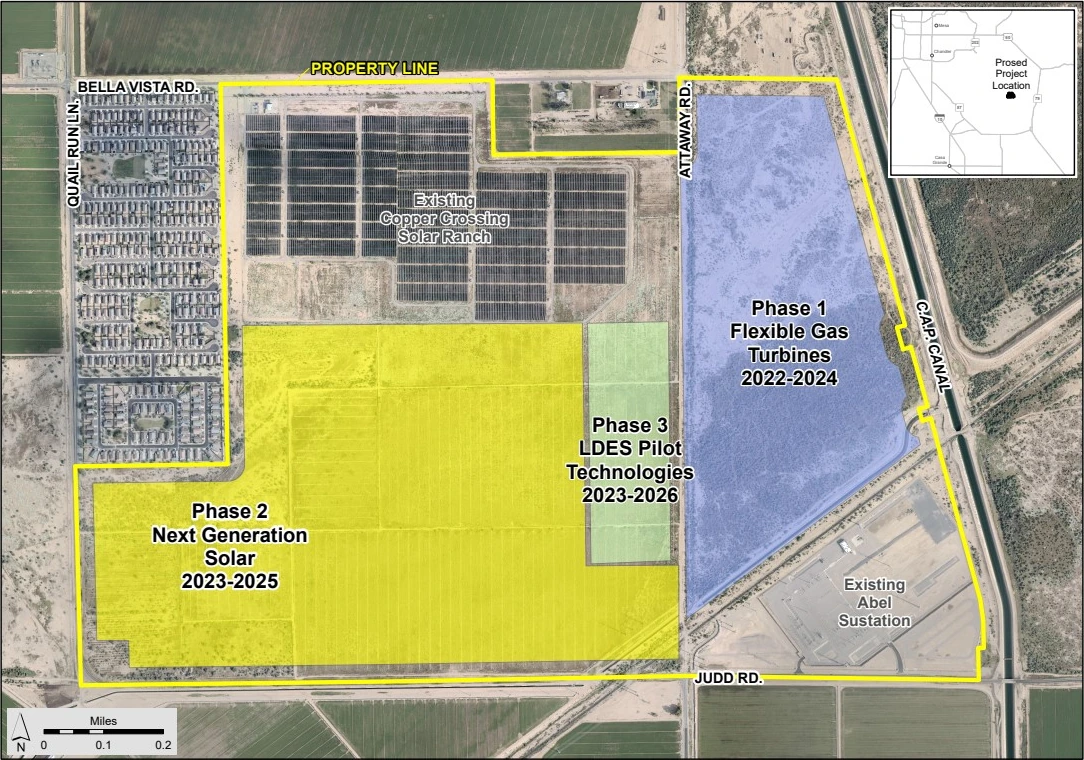
The land was originally part of the 2006 Nevitt Farms Planned Unit Development, which laid out the area for homes. That history left it with a “Suburban Neighborhood” label the town never updated when it wrote its 2022 General Plan. The amendment changes that designation to Industry for the 33.5-acre battery parcel.
The presentation traced the rest of the site’s development. A solar developer amended the plan in 2010 to allow a photovoltaic solar farm, and SRP began adding new generation a decade later. The SRP Board approved the gas turbines in September 2022 and a separate 55 MW solar project later that year. SRP then announced the CMBlu pilot in 2023 and the ESS pilot in 2025. Crews installed the 99 MW turbines in summer 2024 and finished the new solar project, spanning 270 acres, in March 2026. SRP has said both storage pilots are expected online by December 2027.
Future Projects on the Copper Crossing Energy Storage Site
Buchner also asked whether SRP had identified projects for the southern part of the battery parcel. Hunter said it has not. “This zoning activity is just in preparation for future projects,” he explained. SRP wanted to “just do this once so that we have that space already prepared.”
Hunter described how additional projects could follow. He said a large number of emerging technologies exist, and depending on how the pilots and newer options develop, SRP may invite companies to bid on future projects. According to Anderson, the facilities will take in power from the surrounding solar fields, then get tested and measured to determine the best technology to move forward with. Hunter also said SRP intends the site “to be a showcase” for new storage technologies.
“I think the town would like to be known as a municipality who’s forward-thinking and innovative, so we appreciate the support that SRP is bringing to this concept,” Frost said.
Council Decision and Zoning Case Still Ahead
No one spoke at the public hearing, and staff reported no public comments on the case. A neighborhood meeting held May 14 also drew no attendees, even though the process did not require one.
Town Attorney Robert Wingo recommended the approval be conditioned on the property owner signing a Proposition 207 waiver. That state law lets landowners seek payment when a land use regulation lowers their property’s value, and the waiver gives up that claim for this change. The commission added that condition and voted without opposition to recommend approval.
The Town Council takes up the Copper Crossing battery storage amendment on June 16, 2026. If the council approves it, a follow-up zoning case will return to the commission. That case would rezone the expansion area and raise the allowed building height from 30 feet to 40 feet for the battery facilities. That zoning case will require another public hearing before the Planning and Zoning Commission and the Town Council.