FLORENCE, AZ — The Florence Town Council unanimously approved a $390,820 contract with Carollo Engineers on June 16 to produce an updated Florence Water Master Plan. The town’s last water master plan was completed in 2008. According to the agenda, the plan will guide water infrastructure decisions, capital improvement priorities, and regulatory compliance. Carollo’s team will complete the work within 15 months.
Why the Florence Water Master Plan Update Is Happening
Utilities Director Jonathan Tuomey presented the proposal to the council. “The current plan’s nearly 20 years old,” he said. “As you all know, our infrastructure is aging, and our growth is expected. So, we’re in dire need of a plan.”
Tuomey also cited growth, infrastructure investment, and regulatory changes as reasons for the update.
Mayor Keith Eaton said he was “a little surprised” the town’s last evaluation was completed in 2008.
The fiscal year 2027 budget allocated $400,000 for the water master plan update.
What the Updated Florence Water Master Plan Will Cover
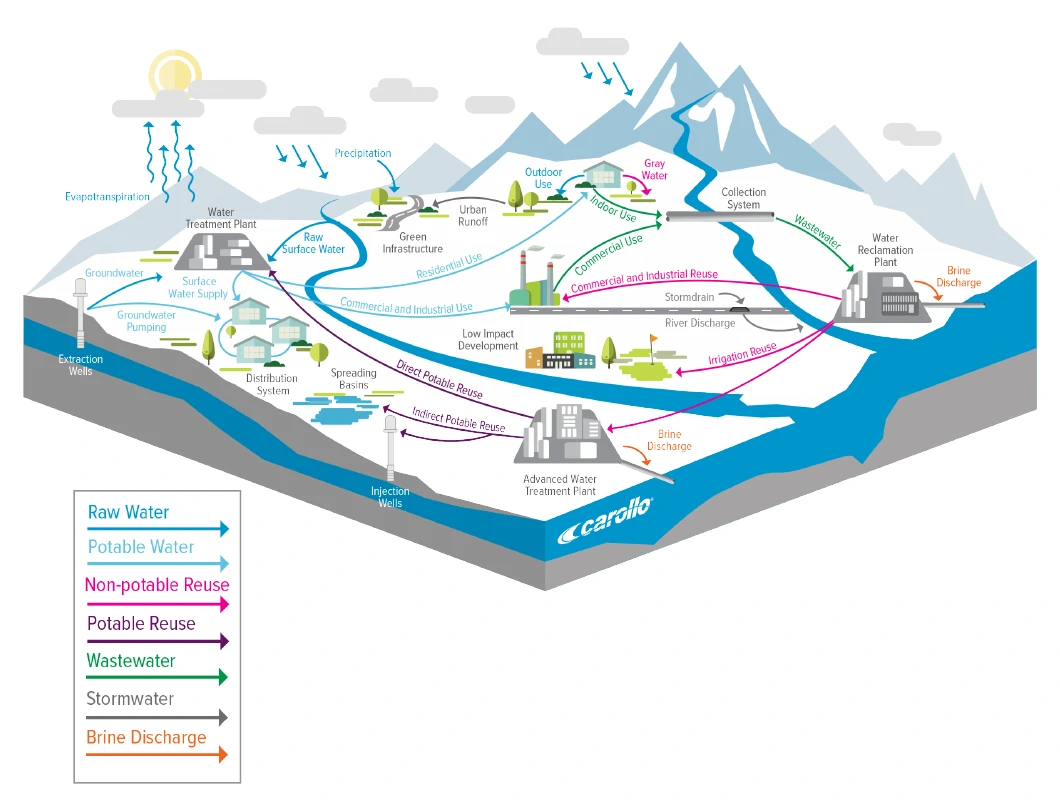
Eric McLeskey of Carollo Engineers presented the scope. He described “integrated water master planning” as a holistic approach that manages water resources and infrastructure as an interconnected system.
The scope of work breaks into six tasks: data collection, planning framework, water resources management, system evaluation and hydraulic modeling, master plan recommendations, and project management. McLeskey said the team will use hydraulic modeling to test the capacity of existing pipes and identify any that may need replacement or improvement.
The project will produce demand projections for both near-term and long-term horizons. “We would have estimated demands for tactical planning, meaning near term, with also a vision of build-out,” McLeskey said. He said the team will also consider “50 years into the future.”
Council Member Jose Maldonado asked whether the plan would cover the EPCOR-served side of town. “This would be focused on the town’s utility only,” McLeskey said. He added that the plan can identify EPCOR’s service area for awareness.
Pipe Conditions and the Data Center Question
Vice Mayor Cathy Adam asked McLeskey how the team will assess pipes. “I’m not exactly sure how you can find out what the situation is with our pipes, and do you recommend a plan for replacement,” she said.
McLeskey said that for physical condition, the team can use pipe age and material when inspection data is unavailable. “We’ve done desktop analyses for Scottsdale and others that rely on that kind of data,” he said. “It’s all about mitigating risk.”
In a separate effort under federal lead pipe rules, the town sent lead notices in December 2025 to households with unknown service line materials.
Adam also asked whether the modeling could compare water demand between agriculture and future uses like data centers or rooftops. “Data centers is the big talk,” she said. “Ag is going away, ag uses a lot of water. What’s the comparison if ag goes to data center, or rooftops?”
McLeskey said Carollo has reference projects on data center water demand, which “can be significant.” Adam said, “Data center technology’s changing, so old information might not be that useful.”
Future Project Costs and Water Rates
Council Member Tony Bencina linked the Florence Water Master Plan to future water rate decisions. “It is scary, for future councils once they start to see some project costs for the out-years and how it ties into water rates that you have to maintain those things in the future,” he said.
Bencina also said, “If you don’t fund [or] increase your water rates, you can’t do those projects in the future that you needed to do.”
Backflow Prevention Ordinance Updated
In a separate action, the council unanimously adopted Ordinance 788-26. The ordinance amends Sections 50.195 through 50.200 of Chapter 50 of the Town Code, which governs backflow prevention.
Tuomey said the update is “primarily just a housekeeping and modernization update to the existing ordinance.” He said the amendments clarify administrative responsibilities among the utilities department, community development, certified testers, and customers.
The ordinance will “establish and clarify annual testing and monitoring requirements for backflow prevention,” Tuomey said. It also updates references throughout the ordinance from the Utility Director position to the Town of Florence Utility Department.
Council Acts on PFAS Litigation
After an executive session on PFAS multi-district litigation, the council approved a contingency fee agreement and authorized the town attorney to execute it and take other action necessary to protect the town’s interests in the litigation. Under such agreements, legal fees would be paid from any settlement or award rather than billed hourly. The specific defendants, the terms of the agreement, and the executive session deliberations were not discussed in open session.
According to the town’s water quality page, Florence’s water test results are below the EPA’s maximum contaminant levels for all currently regulated PFAS.
Florence Water Company appears on an Arizona eligibility list for the Phase 2 settlements with 3M and DuPont. The council did not publicly confirm whether these settlements were the subject of the executive session.
PFAS, or per- and polyfluoroalkyl substances, are man-made “forever chemicals” that do not break down in the environment and have been linked to cancer, thyroid disease, and other health problems. The federal multi-district litigation, pending in U.S. District Court in South Carolina, consolidates a range of PFAS contamination cases — including public water system claims — against manufacturers including 3M, DuPont, Tyco/Chemguard, and BASF. The 3M and DuPont settlements offer more than $14 billion to municipal water systems nationwide. Whether this litigation is connected to the council’s action is not known.
Carollo’s 15-Month Schedule Begins
Carollo Engineers will work under a contract that runs through May 19, 2028. The final deliverable is a Water System Master Plan report that will include a prioritized list of capital improvement projects with cost estimates, water demand projections, hydraulic modeling results, and recommendations for five-year, 10-year, 15-year, and buildout planning periods.
Want Florence-only news? Follow our new Facebook group, Florence News by Pinal Post.