At a Glance
- Pinal County Planning and Zoning commissioners unanimously continued the Koepnick Property hearings on May 21, 2026, sending the case to the newly incorporated Town of San Tan Valley, which takes over land use jurisdiction on July 1, 2026.
- The revised plan proposes 351 single-family homes on 69.26 acres, dropping an earlier 3.59-acre commercial parcel.
- Both proposed entrances are on Judd Road, which dead-ends. An accident on Judd could leave residents with no public way out.
- An emergency-only crash gate at the southeast corner serves fire and emergency vehicles, not residents.
- The applicant’s preferred long-term second access route would come from a hypothetical future residential development on state-owned farmland to the north. The applicant told the commission the timing of any such development is unknown.
- The nearby North Copper Basin development, approved in 2025 with up to 2,338 homes, is expected to push additional traffic onto Judd Road toward Gantzel.
SAN TAN VALLEY, AZ — Pinal County Planning and Zoning commissioners unanimously continued the Koepnick Property San Tan Valley hearings to a date uncertain on May 21, 2026. The case, marketed as Cotton Blossom, moves to the newly incorporated Town of San Tan Valley, which takes over land use jurisdiction on July 1, 2026.
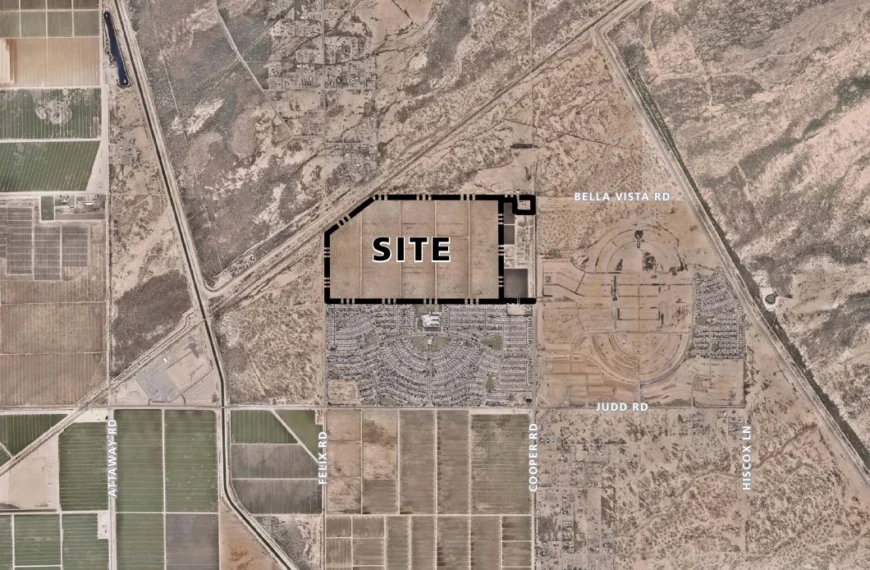
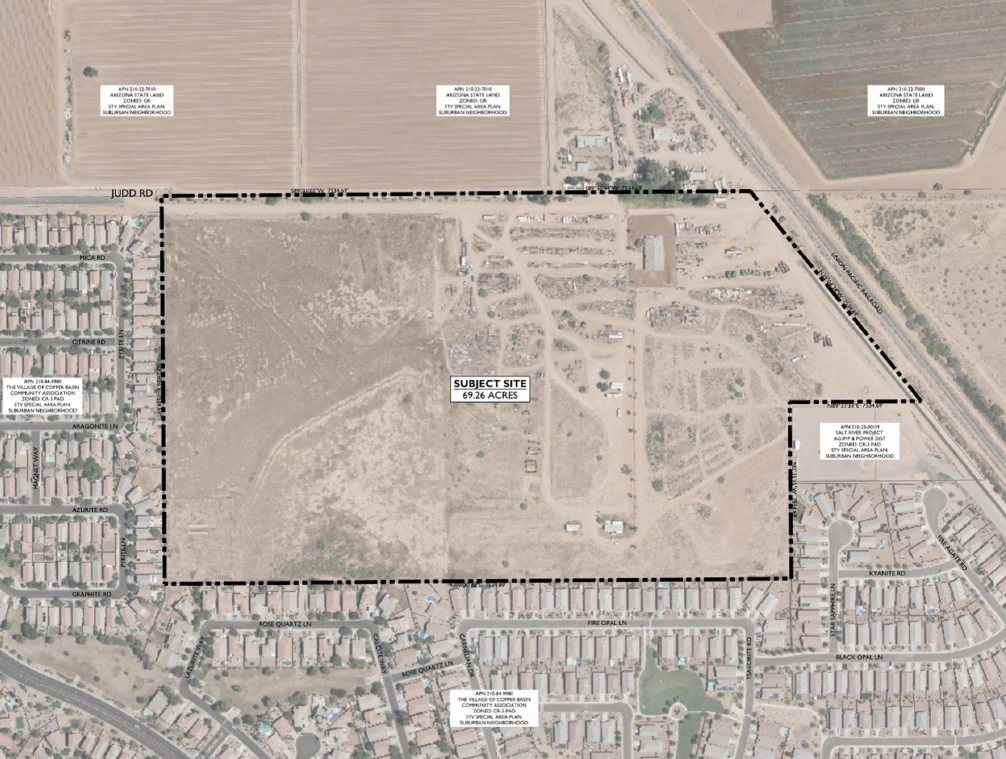
The Koepnick Property is a proposed subdivision on 69.26 acres of former cotton farmland south of Judd Road, with the existing Copper Basin community bordering the site to the south and west, the Union Pacific Railroad to the east, and state-owned farmland to the north. It requires three approvals: a comprehensive plan amendment, a rezone from General Rural to single-family residential (R-7), and a Planned Area Development overlay that allows the applicant to use smaller lots and tighter setbacks than R-7’s standard requirements. All three were continued together, effectively ending the county Planning and Zoning Commission’s role in the case.
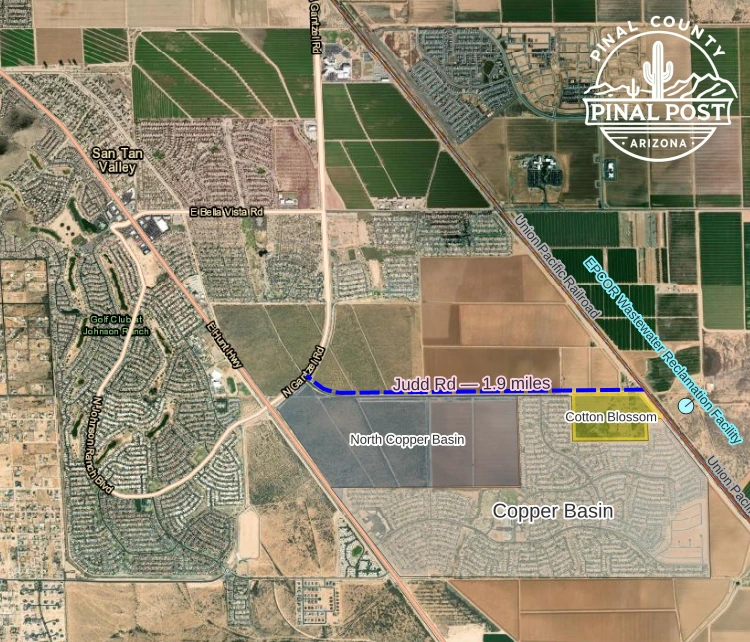
Why the Koepnick development San Tan Valley hearing was continued
San Tan Valley recently incorporated as a town, and Pinal County loses planning jurisdiction over the area on July 1, 2026. That deadline shaped the entire hearing.
The project’s reliance on Judd Road, a dead-end street, for both of its proposed entrances has been the central contention since the case first came before the commission in January.
Commissioner Daren Schnepf, who also serves as mayor of the new Town of San Tan Valley, moved to continue all three cases. “This is a challenging site because, for those who don’t know, it does dead end right there,” Schnepf said. He said sending the case to the town would be “more appropriate” given the transition timing, allowing town staff and engineers to work through the unresolved access issues.
What changed since the previous Koepnick Property San Tan Valley hearing
The case first came before the commission in January 2026 with 340 homes and a 3.59-acre commercial parcel near the railroad. Commissioners continued it to March 19. It was continued again to May 21 to address comments from the Town of San Tan Valley and unresolved concerns about a second access point.
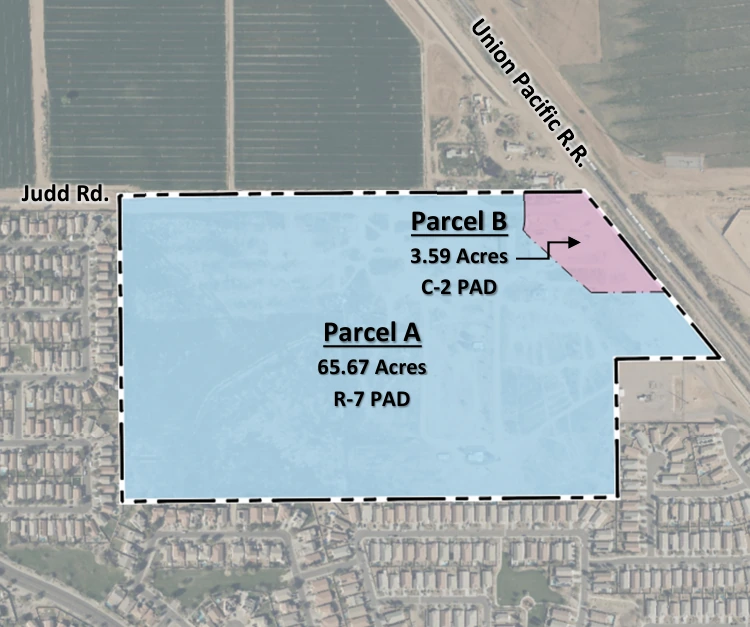
On May 4, 2026, the applicant submitted a revised plan removing the commercial component entirely, proposing 351 single-family lots across 67.04 net acres.
“I was scratching my head when I heard it presented, why would we put commercial at, effectively, the end of a road up against some railroad tracks?” said Brennan Ray of Ray Law Firm, the applicant’s attorney, who had not represented the project at the earlier hearings.
The revised plan also reoriented lots, placing the denser 40-foot-wide lots on the northern parcel near the railroad and 45-foot-wide lots on the southern parcel near existing Copper Basin homes that include 50-foot-wide lots to the south and 45-foot-wide lots to the southeast.
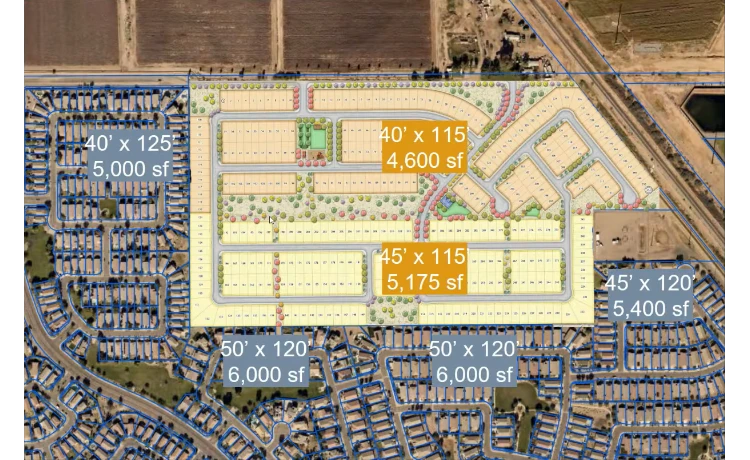
Access and evacuation concerns dominated the hearing
Pinal County subdivision code requires every new subdivision to provide a minimum of two permanent, paved public access points to existing public roadways. Stipulation 6 of the staff report goes further, requiring those two access points to connect to “two separate existing public roads.” The Koepnick plan proposes both entrances on Judd Road, which currently dead-ends. Ray acknowledged the two Judd Road entrances meet the base code but not the stricter staff stipulation, and proposed deferring the second access requirement to final plat approval.
Vice-Chair Karen Mooney asked why an engineering review of the access concept was not available. Panchenko said staff received the applicant’s presentation late Tuesday and had no time to consult the county engineer. Mooney cited a fire in her own community the day before that blocked the road for hours, leaving residents to “zigzag through everybody’s area” to try to get out.
Ray separated the code requirement from the broader evacuation concern. “While I can straight-faced look at you and say, ‘I’ve got the two points of access as required to Judd Road,’ that does not address the bigger concern of what happens if there is a catastrophic accident on Judd Road.”
Ray presented one secondary option: an emergency-only crash gate with a Knox box at the southeast cul-de-sac, accessing an SRP easement. When Mooney pressed, Ray confirmed it would be for emergency vehicles only, not public ingress and egress. “We are not saying that is our secondary access point.”
Mooney countered that the stipulation, not just the base code, was what the project had to meet, and that two access points onto the same road did not satisfy it. “On other cases we’ve heard, they just can’t both be on the same road.”
Ray told the commission he expects the state land north of the site, currently farmed by the Koepnick family under lease, to eventually be developed as another residential community. When that happens, he said, San Tan Valley would likely require new road connections through that development, providing the long-term second access route for the Koepnick site. Ray acknowledged he did not know the timing of northern development. If it is not in place by the time Koepnick reaches the platting stage, he said the family’s longstanding relationship with the State Land Department from farming the land could be used to negotiate access, though he described that route as a longer process requiring town engineer approval. He proposed tying the second access requirement to final plat approval. Planning Manager Harvey Krauss said any future plat would now go to the town engineer, not the county.
Commissioner Scott’s question on rentals and Section 8
Commissioner Tom Scott asked whether the homes would be sold or rented, and whether Section 8 would be permitted. “Those are for sale, but that does not prevent someone from purchasing a lot and renting it out,” Ray said. “I cannot stand here and say that they won’t be rented.” He did not address Section 8 directly, calling it a federal housing matter he did not know well enough to answer.
The railroad, the wall, and the EPCOR wastewater facility
The Koepnick site sits at the southwest corner of Judd Road and the Union Pacific Railroad, with EPCOR’s wastewater treatment facility on the east side of the tracks. Ray said the denser 40-foot-wide lots were placed in the northern parcel partly because that side of the site abuts more intense uses, including the railroad and EPCOR’s facility. A standard six-foot theme wall is proposed along the railroad frontage. Commissioner Terrilyn Klucar asked whether a taller wall might help with sound, and Ray said the developer could revisit wall height during design.
The North Copper Basin development and traffic on Judd Road
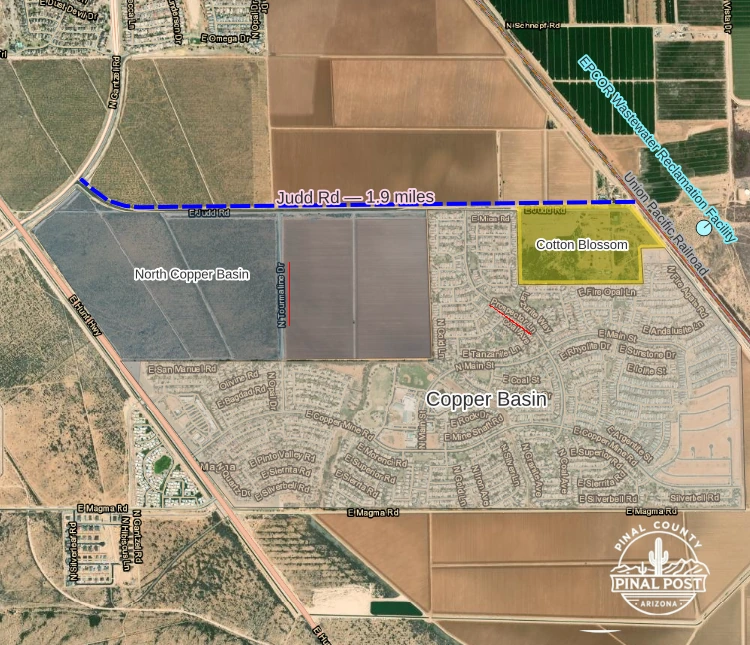
The Koepnick Property is not the only large project reshaping the area. The Pinal County Board of Supervisors approved the 389-acre North Copper Basin development in a 4-1 vote on September 17, 2025. The project north and west of Copper Basin allows up to 2,338 residential units plus at least 25 acres of commercial and office uses along Hunt Highway. The residential portion had been scheduled for public auction in the second quarter of 2026.
For Judd Road, the practical impact is future traffic. Ray told commissioners he expects future state land development to the north to eventually provide through-connections, potentially linking the area out toward Gantzel Road via Tourmaline Lane.
Public comment from a Copper Basin neighbor
Steven Clary, a Copper Basin resident adjacent to the proposed development, was the only member of the public to speak at the May 21 hearing. “I didn’t see what the rush was for zoning or anything else. In July, it’s not gonna be your problem anymore,” Clary said. “We’re trying to put 50 pounds of housing into a five-pound bag here. There’s no infrastructure to support it.”
Procedural details
Schnepf moved to continue PZ-PA-018-25 (Comprehensive Plan Amendment), PZ-021-25 (Rezone), and PZ-PD-015-25 (PAD Overlay) to a date uncertain. Mooney seconded. All three passed unanimously. Any future hearing is expected to occur under the Town of San Tan Valley’s planning process.