Key Points
- The Apache Junction City Council voted 7-0 on Sept. 15 to have the city attorney draft a surveillance ordinance.
- The ordinance would make personal misuse of the city’s Flock license plate cameras a crime.
- Violators would face firing and a Class 1 misdemeanor charge.
- That charge can carry up to 180 days in jail and a fine of up to $2,500, plus surcharges.
- The offense would also cover drones, the real-time crime center and other city surveillance technology.
- The draft rules would set time limits on data storage, currently 30 days, and restrict the sale of data.
- Searches would require an incident number and supervisor approval.
- Audits would be required, on a schedule set by the police chief.
- Police Chief Michael Pooley said Arizona police chiefs are pushing for a state law that would make misuse a felony.
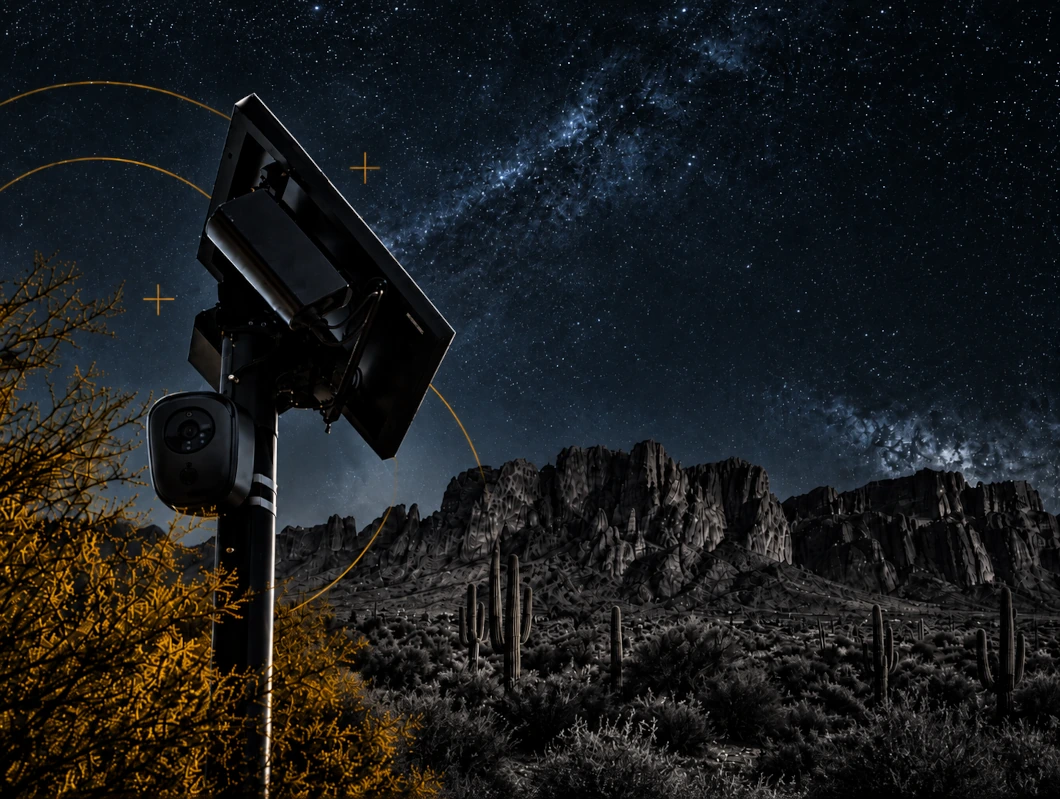
- Pooley said 15 cameras have been damaged in recent months, and the city now has fewer than 30.
- Pooley said any Flock upgrade would go to the council first.
- The draft returns for a work session Oct. 5 and a public hearing and possible adoption Oct. 6.
APACHE JUNCTION, AZ — A proposed Apache Junction surveillance ordinance is headed to a public hearing and possible adoption on Oct. 6. It would make personal misuse of the city’s Flock license plate cameras a crime. The City Council voted unanimously on Sept. 15 to have City Attorney Joel Stern draft the city code amendment. Under that direction, any city employee who uses the system for personal reasons would face firing and a Class 1 misdemeanor charge. The motion by Councilmember Bryan Soller, a Mesa police lieutenant, also called for the offense to cover all city surveillance technology, including drones.
The council took up the cameras on two consecutive nights. At a work session on Sept. 14, Stern presented a list of provisions the council could put in city code. At its regular meeting the next night, Soller read that list into his motion, added a provision covering the city’s other surveillance systems and won a 7-0 vote.
Those rules trace back to a Sept. 1 public hearing, where 26 residents spoke. Introducing the list, Stern pointed to what residents said, to a code Queen Creek adopted and to existing police department policy. “We had that public hearing, and it was interesting, and you heard from the public. I noted a whole bunch of items that some individuals were very strong about,” he said. “Restrictions on selling information and types of information collected, that was a big issue.” Queen Creek’s council voted unanimously Sept. 2, and its police chief said the new crime covers knowing misuse, not accidental use, KJZZ reported.
The draft first returns at another work session, on Oct. 5. Meanwhile, Police Chief Michael Pooley said the department currently plans no Flock upgrades and would bring any upgrade to the council. It will keep using its existing cameras, he said.
What the draft Apache Junction surveillance ordinance would require
Much of the list already exists in police department policy. “A policy is not a law, that’s true, but the policy does include a lot of this,” Stern said. “But if you wanna make that part of the law, you can certainly do that through an ordinance.” Written into the code, intentional unauthorized or personal use would carry a criminal penalty.
The written list Stern gave the council was not posted with either meeting agenda. Asked by the Pinal Post for a copy, he said that document is attorney-client privileged and cannot be released. He instead emailed on Friday with the items that “will be at least” in the code, largely tracking what Soller read and reflecting the council’s change striking “potentially” from the misdemeanor penalty.
- Access: Only “internal law enforcement representatives” would have access.
- Data retention: Information storage would carry time limits, currently 30 days. Under department policy, data is deleted after 30 days unless it is tied to an investigation.
- Data sales: The ordinance would restrict the selling of information.
- Types of data: Stern’s list describes the permitted information as vehicle type and color, location, date and time. The department’s Sept. 1 slides say the system also captures plate information and vehicle images.
- Agency sharing: Sharing with other agencies would require supervisor authorization.
- Queries: Query access would require an incident number and supervisor approval.
- Audits: Audits would be required. Soller’s motion added that the chief would direct how often and when.
- Use of information: Use of the information would be for law enforcement only.
- Personal searches: The ordinance would strictly prohibit personal searches.
- Approved uses: Investigations and hot list alerts would be the approved uses.
- Penalties: Unauthorized access or use would bring termination of employment and a Class 1 misdemeanor charge. A Class 1 misdemeanor can carry up to 180 days in jail and a $2,500 fine, plus statutory surcharges. Probation can last up to three years, and community service can also apply.
Termination for unauthorized use is not in the policy now, Stern said. He also told the council it could instead “stay the course, do nothing” or “terminate the Flock agreement.”
Audits already happen under department policy. At the work session, the night before Soller’s motion, Stern had told the council it could define in the Apache Junction license plate reader ordinance how often audits occur and what they show. “And that would be publicly available also,” he said.
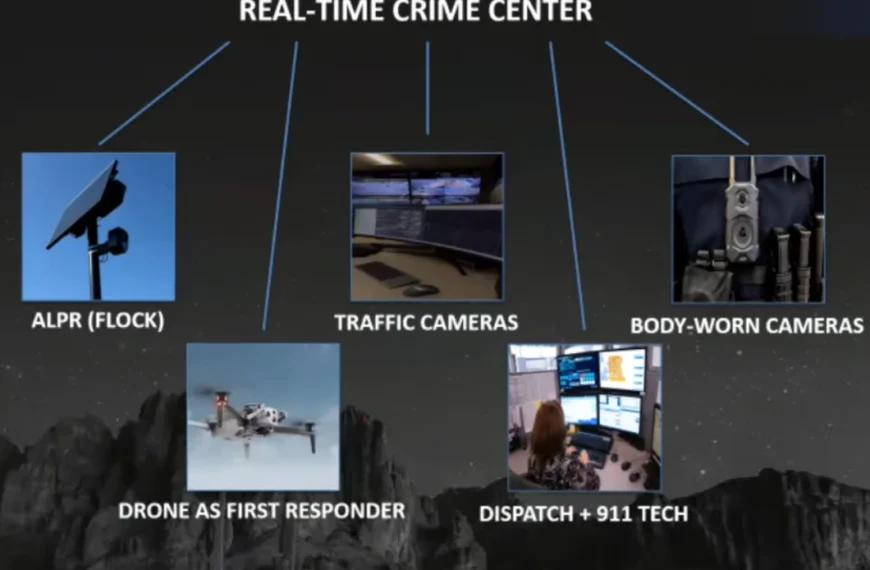
Soller also extended the offense to the city’s other surveillance systems, in what he called a caveat to his motion. Those include drones and the department’s real-time crime center, which runs on Axon software. The Pinal Post detailed those systems in April. “All of the Flock, real-time, drones, Axon, all the stuff we have right now falls under this, and it will be a crime to misuse it for personal use, and it can only be used for legit government purposes,” he said.
Future systems would be covered too, Soller said at the work session. “If any other new technology comes out that we’re using for surveillance, it would be incorporated into that crime,” he said.
Who exactly the offense covers has been described in different ways. Soller referred to city employees. Councilmember Tess Nesser then broadened it to any police department personnel, and Councilmember Darryl Cross agreed it should reach anyone with access to the systems. Stern’s email described the added provision as applying to “any person” who misuses them. The draft due Oct. 5 will settle the wording.
The department’s Sept. 1 slides say the license plate readers capture plate information, vehicle images, vehicle characteristics, and the date, time and location of each detection. They are used for missing persons, stolen or wanted vehicles, and investigations. Under current policy, officers must verify a plate before acting on an alert, and the readers “may not be used to monitor constitutionally protected speech, association, religion or other protected activity.”
Council: misuse should bring both firing and criminal charges
Stern’s list originally said violators would face termination and “potentially” a Class 1 misdemeanor. However, Cross objected to that word.
“I think it should be termination and a Class 1, not potentially a Class 1,” Cross said. “You can’t have that word potentially. That’s discretionary.”
“There needs to be fear in these individuals that they do not abuse the system whatsoever,” he said. Cross said firing alone was not a strong enough consequence. Adding a criminal charge on top of it puts “some teeth there,” he said.
In response, Soller agreed. “If they misuse it, you’re absolutely right. They should be charged with a crime,” he said. Stern said, “I’ll change that word,” and Soller agreed to take it out.
However, “potentially” had not been about whether to charge someone, Stern explained. He wrote the word because the fine, jail time and probation in his list are maximums rather than required penalties. “A judge does not have to set the maximum,” he said. “And you cannot tell the judge to set the maximum on a Class 1 misdemeanor.” The council’s position, as Soller put it, was that violators “should be charged.” The sentence would still rest with the judge.
Nesser also said, “It’s not just police officers. It’s any police department personnel.” Cross agreed that it should cover “anybody that has access to the system.”
City can set a misdemeanor; chiefs say they will seek a felony bill
A city ordinance can only go so far, Stern told the work session. “The city council can’t say, ‘Oh, it’s a felony.’ You can’t do that. But you can say it’s a Class 1 misdemeanor,” he said. Additionally, “penalties and interest” added on top can push the total owed past $4,000 in extreme cases, he said.
However, Soller said a felony penalty could still come from the Legislature. “I know the chiefs of police are gonna run a bill to make it a felony when the legislation opens up after January,” he said. The council should not wait for that, he said: “I think just as a city council now, we should make it a misdemeanor one.”
Later that night, Pooley confirmed that effort. He is president of the Arizona Association of Chiefs of Police. “We are, as Arizona chiefs, trying to push the legislation to make it a felony,” he said.
Fifteen cameras damaged; Soller says ‘there’s no room in America for vigilantism’
The department’s camera count has dropped below 30, Pooley told the work session. “We’ve had 15 cameras damaged over the last several months,” he said. Some have not been replaced, and others have been moved to cover those areas.
Soller then addressed anyone who damages the cameras. “I wanna tell everybody out in TV land, that’s government property,” he said. “If you damage these things, we are going to investigate. We are going to try our best to find you, and when we do, we are going to charge you, and you’re gonna pay substantial fines, possibly do jail time.”
He called damaging the cameras a felony crime that would stay on a person’s record. “There’s no room in America for vigilantism,” Soller said. “You’re a criminal, and you’ll be treated as such if we find you. I just want you to understand that, and that’s coming from a 37-year police officer.”
Rural cameras removed; upgrades would go to the council first
Also at the work session, Vice Mayor Robert Schroeder asked about camera placement. Cameras in rural areas have been removed, Pooley said, and some cameras will be moved to freeway entrances and exits and main thoroughfares.
Meanwhile, Cross said an email had gone out claiming the cameras could be upgraded remotely. He asked whether someone could “hit a couple buttons and reprogram that camera from a remote source.” However, Pooley said the current cameras lack that capability, and that he has been told adding it would require replacing them. “That’s what we’ve been told. I believe them,” he said. “It’s a license plate reader. It takes a picture of the back of a vehicle.”
Cross then posed a hypothetical about newer cameras that capture the side of a vehicle or “shoot the vehicle coming and going.” He said, “I don’t ever wanna see that, ’cause we don’t want that facial recognition. That’s what everybody’s so concerned about.”
Cross asks for council approval before any Flock FreeForm purchase
FreeForm is a separate Flock product the city does not have. It lets authorized users search video and license plate records with plain-language descriptions of people or vehicles, rather than a plate number. The company says the tool sends alerts on matches and, where sharing is enabled, can reach cameras belonging to other agencies and businesses. It does not use facial recognition, according to Flock. For example, in a company case-study video, investigators searching “cow print” and “crazy van” surface a suspect vehicle from a witness description within minutes.
However, Cross cited an email reply, which said the police department has “not paid for, nor do we currently have Flock Freeform in our contract with Flock.” If the department ever wanted it, he said, “I would like to see that come to the council for approval.”
Pooley agreed. “Any type of upgrade or anything, we would come to the council for sure,” he said.
Pooley on Flock’s role: ‘It is our data. We own it.’
Also at the work session, Councilmember Peter Heck asked what control the city has over the vendor, noting that residents cannot file a public records request with a private company. “We may have zero control over what Flock does with that,” he said.
Pooley said a state law took effect Sept. 12. “It is against the law for any of these tech companies to sell that data. It is our data. We own it,” he said. At the Sept. 1 hearing, he cited Senate Bill 1552. That law requires any police contract with a vehicle-identifying camera company to bar the company from “selling or disseminating to third parties any data collected by the camera system.” Pooley said the city’s contract already includes that restriction: “It’s in our contract as well. We could sue them as a city if they were to breach that contract.”
Meanwhile, the data sits in Amazon Government Cloud, he said.
He also noted the department has stored body-worn camera video in a cloud for over a decade, calling it more sensitive than license plates. “We have to have some trust in these tech companies,” he said.
Soller defends the 30-day retention period
At the work session, Soller addressed how long data is kept. “If you have a homicide and you find out a week later, ‘Hey, somebody was killed here,’ we can try to track back and find out who was in that area and build a case. So I like the 30 days,” he said. “The only things that get looked at are when we have a government purpose to look at it. Everything else falls off in 30 days.”
Resident Donna Carr: ‘Once you lose it, you’re not gonna get it back’
One resident, Donna Carr of Apache Junction, spoke during the call to the public at the regular meeting. “It doesn’t matter whether it’s Flock or any other brand name license plate reader, I’m opposed to those too,” she said. At the Sept. 1 hearing, Carr submitted 95 signatures from people who want the cameras removed.
Carr said she recently spoke with Pinal County Sheriff Ross Teeple at another meeting. By her account, he took down his Flock cameras and turned down nine other camera companies. “Once you lose this part of your privacy, and yes, they’re surveilling all of us, once you lose it, you’re not gonna get it back,” she said.
Carr said she also realized something about cost at that meeting. “You can afford to pay for more officers if you’re not paying for the Flock cameras or any other license plate reader,” she said. She called the readers “nothing but mass surveillance.”
Carr said people have asked her about her own cellphone. She keeps a Faraday bag for it, she said, adding, “Anytime I wanna go anywhere, nobody can track me.”
Finally, Carr addressed the Oct. 6 hearing date. She said she does not mind “sitting on the corner of Ironwood and the Trail inviting people to please show up” if they want the cameras down.
Before the call to the public, Mayor Chip Wilson said the open meeting law bars the council from discussing issues raised there, though members may respond to criticism or direct staff to follow up. No council member responded to Carr.
Motion passes 7-0
All seven council members voted for Soller’s motion, which directed the city attorney “to prepare a draft city code ordinance amendment reflecting the discussion of last night and tonight on the use of automatic license plate readers with Flock Incorporated.” He asked that it include all the bullet points from the work session, then read the full list, from access limits to penalties, into the record.
Apache Junction Flock camera ordinance returns for two October meetings
The council asked to see the draft Apache Junction surveillance ordinance at a work session before voting on it. City Manager Bryant Powell proposed Oct. 5 and 6, and the council agreed.