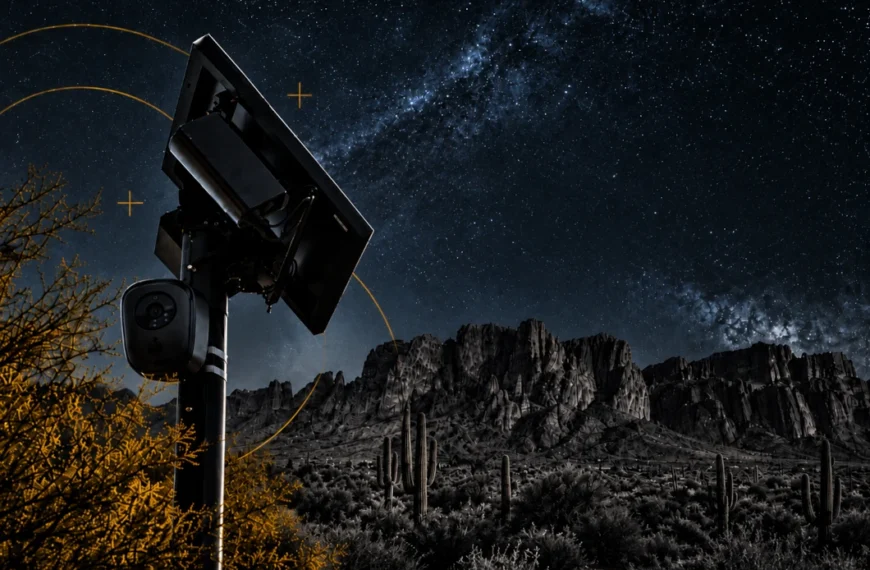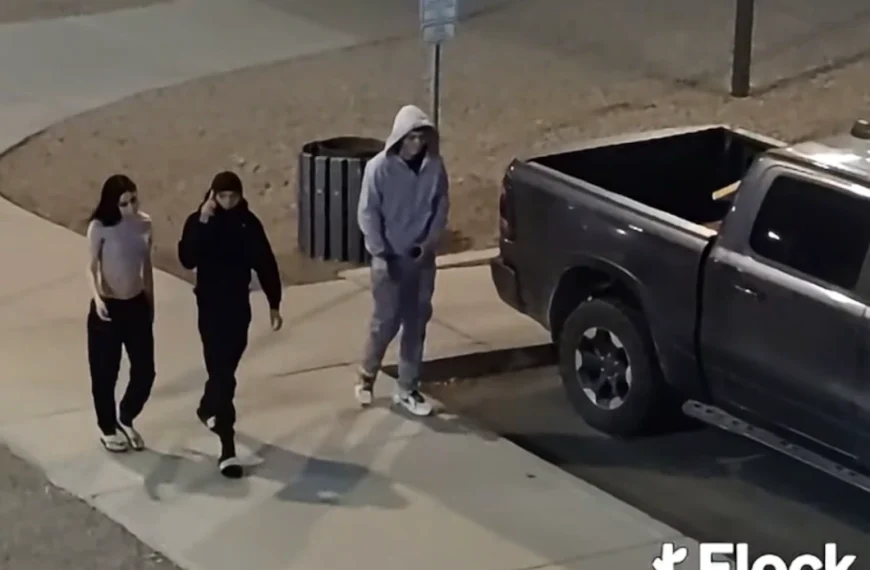
APACHE JUNCTION, AZ — Apache Junction Flock cameras will continue operating while the City Council studies the program further at a future work session. On Sept. 1, one agenda item — a presentation, discussion and public hearing on the police department’s automated license plate readers and other crime-detection technology — ran about two hours and 15 minutes. The chief and city attorney presented, 26 residents spoke, and council members asked questions. However, the council took no vote.
One change is already underway. After a resident raised concerns, Police Chief Michael Pooley said the department will relocate the cameras along Goldfield, a residential area, to the main routes into the city. “We’re moving the cameras on Goldfield because we don’t feel that they need to be in the residential areas,” he said. Meanwhile, Vice Mayor Robert Schroeder asked whether the 30-day retention period for data not tied to an investigation could shrink to seven days, and Pooley said it could. A new state law taking effect Sept. 12, Senate Bill 1552, will also require contracts between Arizona law enforcement agencies and license-plate camera vendors to prohibit the vendor from selling or disseminating that data to third parties, he said.
Of the 26 speakers, 19 spoke against the cameras, four spoke in favor of keeping them, and three raised questions or expressed mixed views.
Councilmember Bryan Soller said the council was not taking sides. “I’m not a Big Brother fan myself, but we’re here to discuss the pros and cons,” he said.
Apache Junction Flock cameras: what Pooley said they do and do not do
Pooley opened by comparing plate readers to earlier police tools such as radios and DNA. “They’re tools, and they do not replace police officers. They do not replace good judgment. They do not replace good police work, constitutional policing, or accountability,” he said. “That’s how change happens. It’s through dialogue like that, and like tonight,” he said of public questions.
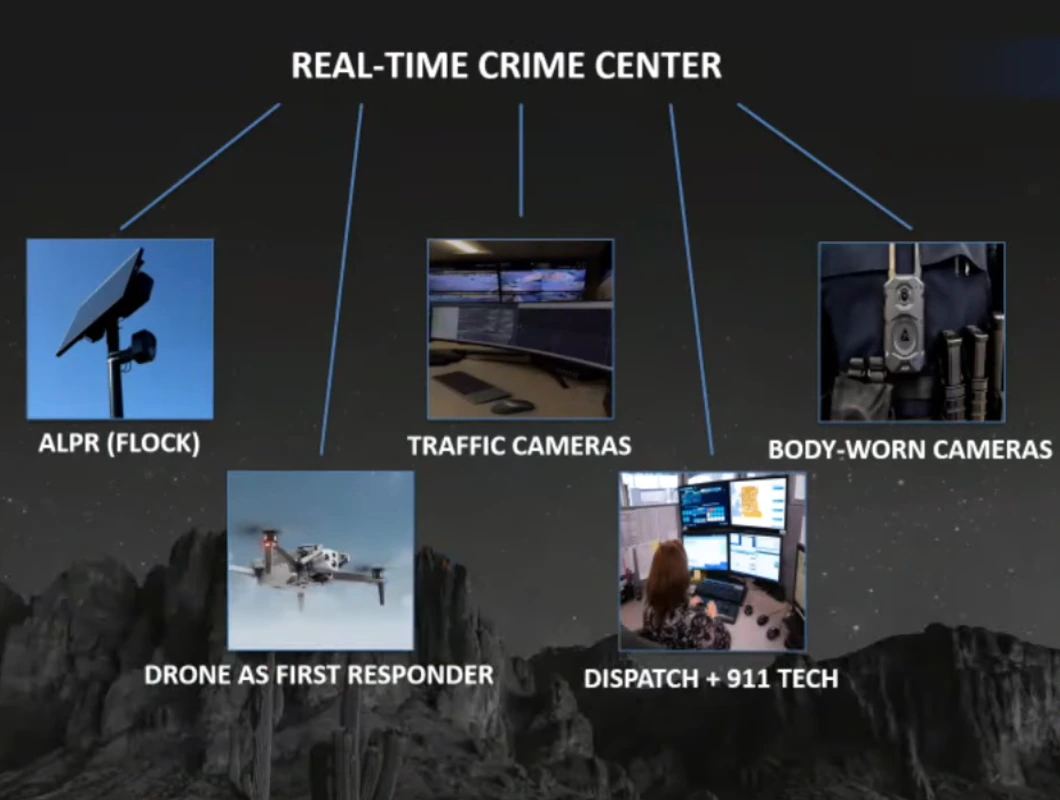
The department’s technology includes Flock license plate readers, traffic cameras, body-worn cameras, a drone-as-first-responder program and dispatch and 911 systems. Pooley tied these tools to falling crime. “Crime has been declining significantly. So much so, just in the last three years it’s declined almost 20% since 2022,” he said. “There’s a lot of reasons for that. The way we do things, the way we have changed things, different people have been put in place. But a big part of that, I believe, is part of the technology that we’ve used in law enforcement.”
He then addressed claims he said were circulating about the cameras. “I also want to separate what this technology actually does from what people fear it may do,” he said. His points included:
- The cameras photograph the rear of a vehicle and do not use facial recognition. “Anybody that sees the photos, you cannot see who’s in the vehicle,” he said.
- According to the department’s slides, the system does not identify drivers or occupants, does not listen or record video and does not track speed.
- A photo of a car does not mean police look at it. “The only reason we see that vehicle is if it’s involved in a crime or it’s involved in some type of investigation that we need to find the person,” he said.
He also promised the conversations will continue. “We will go to churches. We will go to schools. We will go to community forums. We will not shy away from this, and we will have these open discussions. That is my commitment,” he said.
How a stolen-car report reaches the cameras
Pooley described how alerts work. “When somebody commits a crime or somebody steals a vehicle, that information is put into a national crime database. That information is synced to our cameras,” he said. When a vehicle listed in that database passes a camera, “it’ll give us an alert and say that a stolen vehicle or a missing person just drove by this camera, and it sends us a picture of that vehicle. At that point, we are able to respond and try to take action.”
Pooley also described the five-month-old drone program. For certain calls, trained personnel can send a drone ahead of responding officers, who otherwise face a three- to five-minute gap between a 911 call and arrival, he said.
Recovered cars, missing people and a kidnapped 13-year-old
Since 2024, the department has recovered 34 stolen vehicles worth about $700,000 and located nine missing people, Pooley said. The technology also helped solve a fatal hit-and-run, he said, by finding a vehicle that had been in the area and tracing it to northeastern Arizona.
He then described the kidnapping of a local student. “She had just turned 13 years old, and she was taken by a 68-year-old stranger. We would have not found this girl as fast as we did had we not had these ALPRs,” Pooley said. “Now, that’s one person. Is it worth it, one person that’s one of our students at Apache Junction Unified School District? Absolutely.”
He also cited the unsolved death of Adrienne Salinas, whose remains were found in Apache Junction in 2013. “The reason I put a camera on Lost Dutchman and Meridian is because had we had a camera there, we would have caught the individual that took her and killed her,” he said.
The April misuse and the guardrails added since
Pooley also addressed the misuse. “This happened on April 19th, and when we found out about it, we knew about it within about three hours, and we took action immediately. The officer was suspended. All of his rights were taken away from any access to any of this, and we were in contact with the person that he was trying to locate,” he said. The officer, Joshua McDaniel, resigned before he could be fired. Internal affairs records obtained by Arizona’s Family show two dispatchers who helped run the plate were suspended and still work there.
In response, the department made several changes:
- Fewer employees can access the system.
- Searches outside an active investigation require supervisor approval.
- The command that oversees internal affairs conducts weekly audits.
- The department reviewed camera placements and concluded some, including those on Goldfield, were not needed where they stood.
- Pooley is working with state senators on legislation that would make it a crime for police to use the camera system for personal rather than law enforcement purposes.
He noted his role as president of the Arizona Chiefs Association. “It is a technology I stand by. It’s a technology that I know is keeping the city of Apache Junction safe, and it’s something that I know will continue to do so,” he said. “I would be foolish to say that a misuse will never happen again, but I’m confident that the likelihood of that happening will not happen while I’m here.”
Who holds the data, who sees it and when it disappears
Pooley said the department owns its camera data and shares it only with other Arizona agencies. “This data that we hold is held only by the Apache Junction Police Department. It is our data. We do not share it with anybody outside of the State of Arizona. We share it with 60 other law enforcement agencies, local, state, and county in Arizona. We don’t share outside. We don’t share with federal authorities. This data is scrubbed after 30 days,” he said. According to the department’s slides, records tied to an investigation are kept longer.
He added: “In our contract, it does say that we own the data that we take from these cameras. There’s also a Senate bill that will take place on September 12th, Senate Bill 1552, that states that on September 12th, any ALPR camera, any data that is taken from those cameras throughout the State of Arizona will not be able to be sold by any tech company, any technology database at all. So that’ll be an Arizona state law,” he said.
City attorney says plate readers need no warrant
City Attorney Joel Stern said the city reviewed the legality when the cameras arrived in 2023. Police do not need a warrant to check plates this way, he said, and drivers “do not have a reasonable expectation of privacy. It’s in plain view. Anybody could see their license plate.”
Other tracking works differently, Stern said. A GPS tracker on a car and cell phone location records both require a warrant under Supreme Court rulings, and phones are tracked far more often than cars passing the city’s roughly 30 cameras. Plate readers, by contrast, remain legal without a warrant, he said. “Will that change someday? It depends on the Supreme Court. It depends on other circuits, but right now it is completely legal,” he said.
A council member asked whether the Supreme Court had ruled. Stern said it has not ruled on the exact issue, though other circuit courts have. He added that he had about 20 cases with him from various courts. Asked directly whether the Ninth Circuit, which covers Arizona, had ruled the practice not illegal, Stern answered yes. He did not name the case. Later, resident Dan Widder said he could not find that ruling and asked Stern to identify it.
Council presses on retention, data sharing and accountability
Schroeder said that because he passes a camera every day, the 30-day clock never really runs out, which is why he asked about seven days. Pooley explained that chiefs statewide settled on 30 days because some crimes are reported late, for example after a vacation. Once data is deleted, he said, it cannot be retrieved even with a warrant.
Schroeder also asked which cities have dropped Flock, and Pooley named Tempe, Surprise, Carefree and Chandler. Asked what purpose the network serves if fewer cities share data, Pooley said criminals move between cities, but local cameras also solve local cases such as hit-and-runs. Schroeder noted that a city without Flock can still enter a vehicle into the state’s database and trigger an alert here, and Pooley agreed.
Soller pressed for the new safety protocols. “Police officers are humans, and they can make bad decisions,” he said, adding that any officer who uses government equipment for personal use “should be dealt with and held accountable.”
Residents on Apache Junction license plate readers
Speakers came to the podium one after another, and their comments fell into several themes. Donna Carr submitted 95 signatures from people who want the cameras removed. Heather Gerson delivered 61 signatures, 10 from Apache Junction.
‘A profile’s being built around me’: privacy and surveillance
Carr said her privacy “has been sold” in exchange for security. Pam Bradshaw, a 30-year resident, said the cameras record her movements even though she is law-abiding, and anyone with a grudge could use that data against her and her family.
Widder said the issue is bigger than a photo. “It’s about the system built around the camera that tracks you everywhere you go,” he said. “It’s not just to Walmart. It’s to gun stores, to gun ranges, to church, to political events, to doctors. It’s building a database on you.”
“I go outside, I expect everybody’s gonna see me, but I don’t expect that a profile’s being built around me,” Sean Riley said. Jessica Duff said people can choose whether to carry a cell phone, and phone data sits behind a warrant. Kimberly Carroll, a small business owner, said 30 cameras create a record of neighbors’ doctor visits, churches and protests. Barby Ingle said the cameras chill speech and assembly. Andre Meek said the crowd was “tired of being surveilled.”
‘Get a warrant’: constitutional questions
“It’s called the Fourth Amendment. Get a warrant,” Widder told the council. Ingle argued that good outcomes do not fix a warrantless search. Carroll cited a pending appeal challenging Flock cameras in Norfolk, Virginia, and said Apache Junction need not wait for its own lawsuit.
Rodney Martin, who said he supports the police, described 35 years working with law enforcement, including time as a judge. He said the cases Stern cited omit AI and tracking, and “courts are generally behind technology.” He urged the council to err on the side of civil liberties and offered to work with Pooley on solutions.
Brooke Labrake said the distinction the city attorney drew between phones and cameras will turn into semantics as cameras multiply. She asked how close they must be to one another before they track every move she makes. Nathan Taylortaft, co-director of East Valley Unite, read out the Arizona jurisdictions that have dropped the cameras. “They are Sedona, Flagstaff, Sierra Vista, South Tucson, Pinal County, Chandler, Surprise, Tempe, and Cave Creek,” he said. That is nine. Pooley had named four cities earlier in the meeting.
‘Where do we draw the line?’: misuse and accountability
Kristen Rodriguez of Gold Canyon, who runs the nonpartisan Lighthouse Group, said residents were once told Flock could not be abused, and “Apache Junction now has a real example showing that it can.” Taylortaft said the misuse was not prevented but “enabled by the ALPR system in the first place.” Brenna Sandoval asked why no safeguards existed before the incident. Widder said the investigation ran from April into July and that no criminal charges were filed. Audit logs can be pulled in seconds, he argued, so the case should not have taken that long.
Martin said Flock “is more than a good cop should be tempted with, and it’s a heck of a lot more than a bad cop should have at his disposal.” Riley argued that the danger is who gets watched when the government’s definition of a threat shifts. He described his own experience with such a label. The FBI in 2022 designated a group he belonged to, American Contingency, a terrorist organization, he said, though the group had no history of violence. “We didn’t even organize and rally, but we were a dissenting group. It was labeled a terrorist organization. That changes so many different things as to what I’m subject to. So where do we draw the line? Now we have this technology that’s out, and on a daily basis, creating a profile.”
Rick Adair recalled arrests during 2020 lockdowns for visiting churches and parks. The current rules may be fine, he said, “but what if they change the rules on us?”
‘Who is watching them?’: data security and vendor control
Widder said he filed a public records request July 7 for search terms, audit logs and the Flock contract, and 27 days later was told he could have only the contract. “Running out the clock twenty-seven days on data that’s only kept thirty days isn’t the way to operate a transparent police department,” he said.
Ed Kahle said the city is only renting from surveillance companies that hold the data. “Who’s watching them? Who is watching what they do with it?” he asked. “I’m the one that backed over your camera, so I’m gonna pay that price,” Kahle said. He wants the cameras gone until they are more secure.
Carroll said Flock confirmed in January that some camera feeds were exposed to the open internet. Brian Kann said the fire department he retired from was hacked despite every firewall, and he fears his vehicle data will end up “out there in the ether world, and that scares me.” Labrake said the city must also trust Flock as a company. Rodriguez added, “The safest data is the data we never collect.”
‘Wasn’t her, wasn’t her car’: misreads and wrongful stops
Taylortaft cited a Roseville, California, police analysis that he said found the software misread plates in 71% of alerts. In separate cases, he said, drivers in Arkansas and Ohio were detained at gunpoint after camera errors. Martin recalled a Virginia woman who spent 17 days in lockup over a misidentified car. Bradshaw said a friend learned at an oil change that someone had switched his license plate, which could put an innocent person in the system. Gerson said only 1% of vehicles scanned by Flock are ever connected to any crime. Adair said human error means “somebody’s pulled over for no reason. But they gotta prove themselves innocent, and that’s not how this country works.” A resident who identified herself only as Marissa said a false or mistaken 911 report could put the wrong car into the database, and the cameras would then track it. She raised swatting as an example, in which a fabricated call about an innocent person could trigger an armed police response.
Hamza Al Baroudi, who said he worked for Flock until about two and a half months earlier, asked what policy prevents action on misreads and predicted Pooley would answer “we verify.” The department’s slides state that officers must verify plate and alert information before enforcement.
‘You’re only as good as your technology’: supporters make their case
Nita Soller, wife of Councilmember Soller, said she expected no applause but believes Flock is necessary. She described a stolen car with a 2-year-old inside that was found within 15 minutes and suggested a two-week retention compromise. “As a police officer’s wife, I just remember him coming home so many times that they lost a child,” she said of her husband’s 30 years in law enforcement. Despite the crowd’s general opposition to the cameras, many residents clapped when she finished.
Elsie Wescott said she was a crime victim twice, once without cameras and once with them. “You’re only as good as your technology is,” she said. Mehmood Mohiuddin said the camera had run for four years with one officer misusing it and no complaints before that, so it is a good thing for public safety as long as it is not abused. He answered the Fourth Amendment objection by pointing to cellphones, which he said already collect everyone’s information yet draw no such complaint. The city should keep up with the technology and rewrite its codes as needed, he added.
Baroudi said, “Your vehicle is not being tracked if a search is not done.” According to the department’s slides, each camera records an image, plate, vehicle details, date, time and location for every passing vehicle; a search determines whether anyone retrieves those records. He recounted a case he said then-Prescott Police Chief Amy Bonney raised at a Prescott council meeting, in which a vehicle stolen in Pinal County was used to kidnap a child in Phoenix and passed through Flagstaff and Sedona, which had canceled Flock, before a stolen-vehicle alert in Cottonwood led to an arrest.
Martin, Rodriguez and former Councilmember Christa Rizzi each said opposing the cameras does not mean opposing police, and Kahle said he believes Pooley is doing his job well. Andre Meek called himself “rabid pro-police” and said he supports red-light cameras and “some of the aspects of Flock.”
‘A shifting baseline’: where the technology goes next
Riley said accepting plate readers could lead to accepting cameras that look at faces. Marissa said Flock’s CEO has said software updates can give cameras already installed new tracking abilities they did not have when purchased. Rizzi, who helped hire Pooley while on the council, said the cameras “didn’t have the ability back then probably to do what they do now.”
Carroll and Duff asked the council to commit publicly to not replacing Flock with similar systems from Axon or other vendors. Adair questioned a drone flying throughout a Blues and Brews event at Lost Dutchman Park. Sandoval predicted technology will eventually replace officers to save money.
‘A perception issue’: trust and where residents come down
David Day, a county resident, said he moved to the area partly for its police, whom he trusts, but the cameras took trust away rather than building it. Rizzi said residents distrust the cameras, not the police, and urged the council to remove them until misuse becomes a crime.
Jeff Danford said the council faces “a perception issue” and that the largely conservative crowd is not trying to defund police. “I’m not anti-Flock. I’m not pro-Flock,” he said. Catherine Meek said she is torn. Her phone, Fitbit and store apps already track her, and she often gets letters saying her medical records were hacked at another hospital. Even so, she said, she would have loved to track down family members with dementia, and she wants police to find missing children. “I don’t know what the answer is,” she said.
Several speakers suggested other uses for the money. Ingle said it could instead hire officers, improve training and strengthen community policing. Sandoval called for a behavioral health unit. Adair said the funds could fix roads and questioned why the original contract was signed without a public vote.
‘We are here to do the will of the people’
Near the end of the hearing, Soller thanked the speakers for their professionalism. “We’re here to do the will of the people, and we might have to go out to the whole city and see what everybody thinks,” he said. As a police officer, he said, he loves the technology and thinks it is worth keeping, “but there has to be strict guidelines, rules, and there has to be absolute punishment if you abuse it, and that’s the fault that I saw with Flock. It was out there, and there was really no guardrails on it.”
Later in the meeting, Councilmember Darryl Cross asked City Manager Bryant Powell for a work session on the cameras. Powell said staff can get it on the agenda. No date was set. The council is expected to discuss the Apache Junction Flock cameras again at that session.