Key points
- Council voted 7-0 to approve two waivers of the conditional use permit requirement, settling Prop 207 claims filed by landowners Dale Willis and Vernon Barnes.
- Under Arizona’s Proposition 207, property owners can seek compensation when a new land use law reduces their property’s value. The city’s July 2025 interpretation letter had said the claimants’ proposed data center qualified as a permitted use on their industrial-zoned parcels, and the October 2025 ordinance later added a conditional use permit requirement.
- The claims totaled about $146 million.
- In exchange for dropping the claims, the city gave up requiring that permit on 480 acres west of Ethington Road.
- If a data center is built, binding conditions in the waivers replace what the conditional use permit review would have covered: an 800 net acre-foot water cap, on-site power, noise limits, decommissioning rules and a $5 million community contribution.
- No end user has been identified. The vote does not approve construction. Site plan review and building permits are still required.
- Any new data center elsewhere in Casa Grande still needs a conditional use permit.
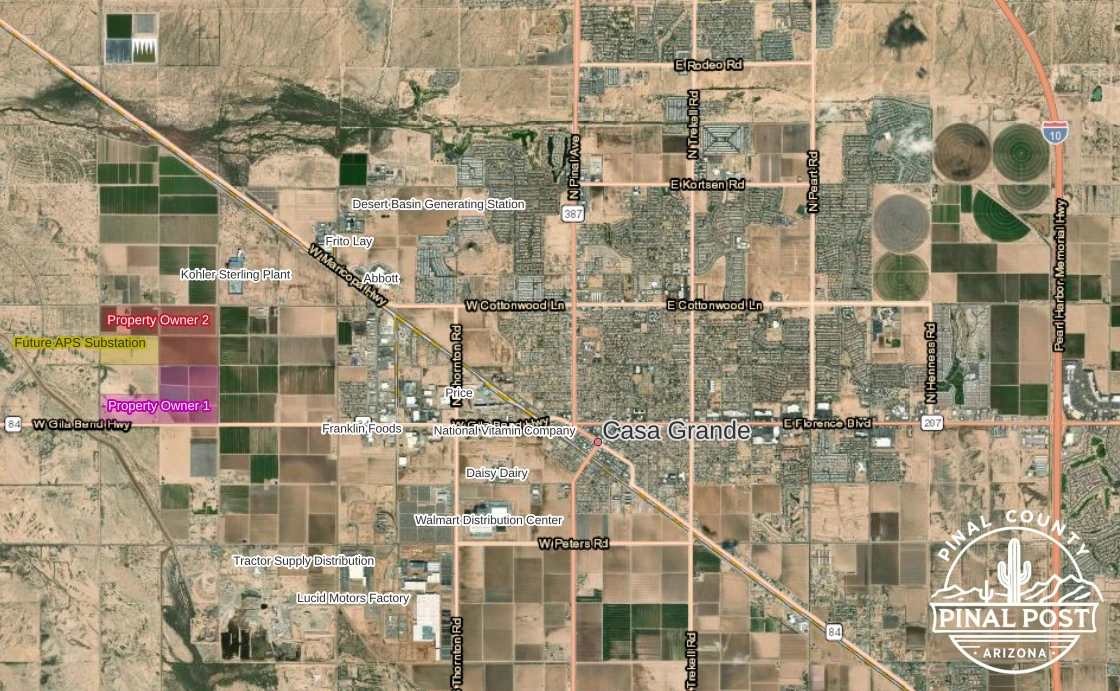
CASA GRANDE, AZ — The City Council voted 7-0 on Monday, Aug. 3, to approve the Casa Grande data center waivers, settling roughly $146 million in Proposition 207 claims tied to roughly 480 acres of farmland west of Ethington Road, south of Clayton Road and north of Gila Bend Highway.
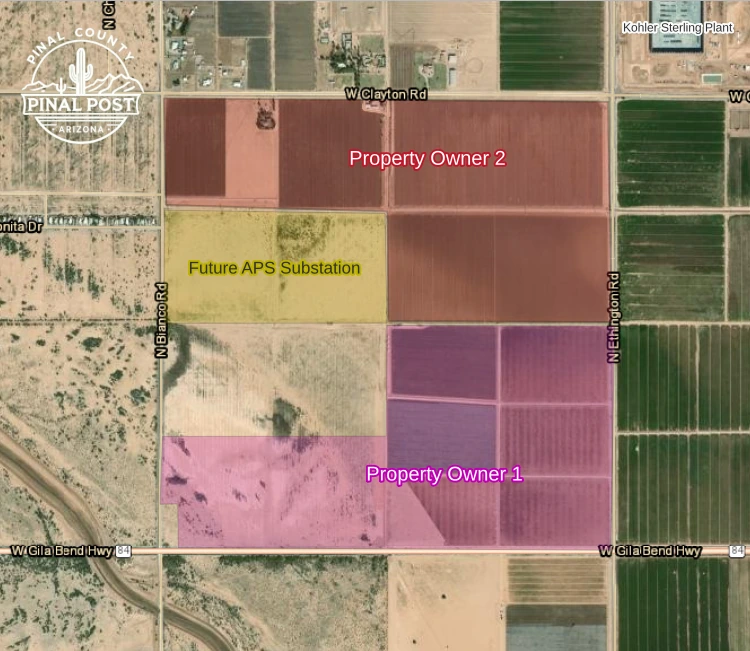
Two owners filed separate claims through the same law firm: Dale Willis and Vernon Barnes. The owners had earlier obtained a city interpretation saying their proposed data center qualified as a permitted use in the I-2 district. The council later adopted a citywide ordinance requiring a conditional use permit, reversing that reading. Under Prop 207, that kind of change can entitle owners to compensation when it reduces property value. Their Feb. 25 demand letters each seek $73,180,800, for a combined $146.36 million. Staff rounded that publicly to “approximately $140 million.” The vote authorized execution of the two waivers, which will resolve the claims once they take effect. It does not itself approve any construction, which still requires site plan review and building permits. In exchange for the owners releasing their compensation demand, the city agreed not to apply the conditional use permit requirement to these specific properties.
The waivers lock in a set of binding operational conditions that would apply if a data center is developed: an 800 net acre-foot annual cap on potable water, on-site power generation, with utility connection optional if grid capacity ever becomes available, day and night noise limits, decommissioning rules, and a $5 million contribution to city recreation facilities. The conditions run with the land, so they follow any future buyer. City Manager Larry Rains told the council that “there’s not been an end user identified specifically.”
What the Casa Grande Data Center Waiver Binds — and Where
The waiver, Rains said, “does not change or waive any of the city’s zoning regulations.” Instead, the binding conditions live in the waivers themselves and become enforceable when the developer applies for a site plan or building permit. The properties still face all other applicable rules, including building, fire and engineering codes.
The waivers apply only to these two properties. Anywhere else in Casa Grande, a new data center still triggers a public hearing where the council can attach conditions or reject the project. When resident Eric Rivera asked whether more data centers could follow, Rains was direct:
“They would ultimately have to go through a conditional use permit… If future development comes in, that’s gonna be what we’re encouraging them to actually follow — our conditional use permit — in these industrial zoned areas.”
— City Manager Larry Rains
Potable-Water Cap Below Estimated Farm Pumping
Rains laid out the water rules: no once-through cooling (systems that use water once and dump it as waste), and total water demand for the data center and on-site power capped at 800 net acre-feet per year of potable water. The cap covers both properties combined, not each one separately.
Rains stressed the cap covers on-site power too: “This is not just the water to serve the data center itself. It would be any water that would actually serve the power generation at that plant in this area.”
For comparison, the land currently grows cotton and alfalfa, drawing an estimated 1,240 acre-feet of groundwater per year. The 800-acre-foot potable-water cap sits about 35% below that current use. The owner can also negotiate with the city to buy treated wastewater to reduce or offset potable use. Any such agreement would need separate council consideration. An annual water usage report must be filed with the city manager and may be made public on the city’s website — a transparency term Rains said councilmembers pushed for.
Fred Schneider, president of Arizona Water Company, said caps like this are enforceable through service agreements. If a customer exceeds its limit, the company can notify it, throttle or shut off supply, or require it to fund additional infrastructure. “We do that with a few other users, so it’s not totally uncommon,” he said.
On-Site Power, With Grid Connection Optional
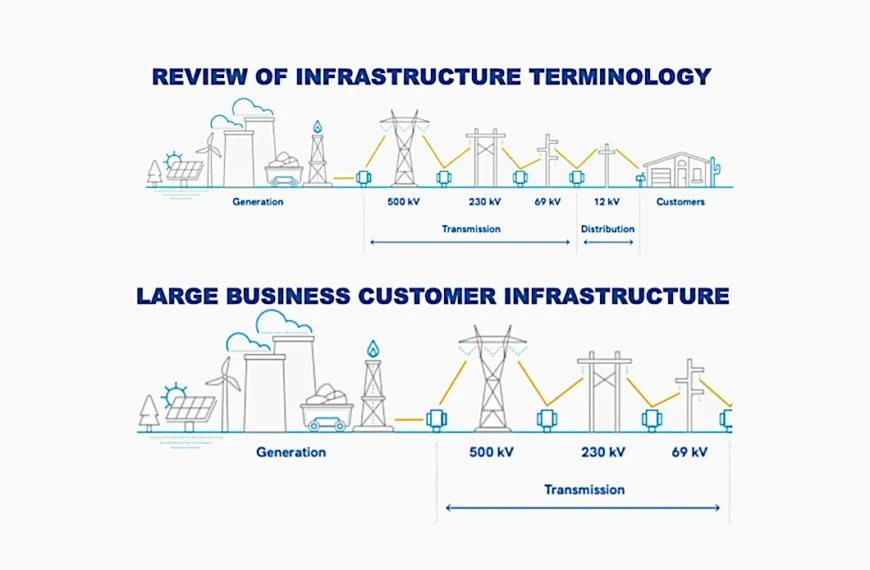
Because of regional grid constraints, the waiver assumes the campus will power itself. “It’s highly likely in Casa Grande, because of the capacity levels we have on the power side, that either we’re years away from a group being able to connect to the grid and/or that they’re going to be bringing some type of power generation to the particular site,” Rains said.
Until the grid can serve it, the waiver requires the campus to run on on-site or behind-the-meter generation. Before any generation goes in, the owner must disclose the technology, capacity and fuel source to the city, meet emission standards for non-attainment zones, comply with I-2 zoning, and satisfy state, federal, and county air-quality and energy regulators.
If the owner ever seeks a grid connection, it must pay all interconnection costs. “So ultimately, we’re driving the standard that they’re gonna pay their way on both water and power,” Rains said. He also reminded residents of a structural limit on the city’s role: “It is also important to recognize that the city is neither the water nor the electric utility provider.”
Will Rates Rise? What the Utilities Said
Mayor Lisa Navarro Fitzgibbons raised the question she said she hears constantly: will residents’ water and power rates rise to pay for a data center? She asked the utilities to explain.
Both providers gave the same answer under different names. Schneider called Arizona Water’s philosophy “development pays for development.” The developer would fund the infrastructure it needs, like wells and water mains, and then pay standard service fees. “So there really is no increased cost per se,” Schneider said, “because they’d be paying that infrastructure.” He also addressed the company’s pending rate review — its first in six or seven years, with rates last evaluated around 2019 and a decision expected early next year. When Councilmember Sean Dugan summarized that the project is “capped at about 33% less than what the current usage is” and “it’s not raising rates on any of our citizens,” Schneider replied that raising resident rates is “not how that works.”
Richard Rosales of APS public affairs called the same principle the “growth pays for growth model.” APS created a special rate class in 2017 for “high load factor customers” — chiefly data centers, which ramp up to peak demand and stay there around the clock, unlike manufacturers such as Lucid or Frito-Lay that cycle with shifts. The rate ensures those users pay their own way instead of shifting costs onto regular ratepayers. APS’s pending rate case, filed in June 2025 with a ruling expected in December, proposes going further: a 45% rate increase for high load factor customers. Rosales said “no cost shifts to residential and the regular business customers.”
Record Demand and a 20,000-Megawatt Queue at APS
Rosales also gave the council a status report on supply and demand. “Last year, 2025, data centers only comprised about 5% of our peak demand. And by the way, we set a new peak demand yesterday [Aug. 2], 9,100 megawatts,” he said, noting the utility “held” with capacity to spare. Demand is climbing nationwide, and he said Phoenix is projected to be roughly the second-largest data center development market in the country. Separately, Salt River Project reported an all-time peak of 9,072 megawatts on July 24 during extreme heat, surpassing its previous record of 8,542 MW from August 2025, according to an SRP press release.
APS will not serve new data center capacity until it has surplus — “far down the line,” Rosales said. Requests enter a queue, with leftover capacity from annual resource planning offered to the next customer. “We currently have like 20,000 megawatts in the queue of requested to serve,” he said, adding it will be years before APS works through it. When Dugan asked whether APS would connect to any Casa Grande data center “anytime soon,” Rosales cited NDAs and pointed to the queue. Councilmember Matt Herman then asked whether the campus would need to bring its own power. Rosales: “That’s an option that they have.”
Noise Limits Tracked for Three Years
The waiver sets numeric noise ceilings. Rains read the standard: “The campus shall be designed and constructed so that the noise generated by the data center, on-site power generation and electrical infrastructure does not exceed 60 dBA between the hours of 8 a.m. and 9 p.m., and 55 dBA between the hours of 9 p.m. and 8 a.m.” Before any building permit, a licensed acoustical engineer must study ambient noise at all adjacent property lines and model projected operations. Then, “within 90 days after a phase becomes operational, the owner shall commission a post-construction noise measurement study,” Rains said. Those limits do not apply to backup generators running during a power outage, grid curtailment or other emergency beyond the owner’s control. Backup generators otherwise drew their own rule: routine testing is limited to Monday through Friday, 9 a.m. to 4 p.m., excluding holidays, with 24 hours’ advance notice to the city. Emergency use during an outage requires notice within 24 hours after the event.
When Councilmember Rebecca Romo asked how 60 dBA compares with existing industries, City Attorney Brett Wallace acknowledged a gap: “We don’t have current standards for those other industries, so it’s hard to do that.” The city’s noise ordinance bans “unreasonable” noise but does not set specific decibel limits for industrial operations at property lines. By contrast, he said, these owners agreed to measure ambient levels up front and then keep studying noise “for three years while they’re operational, so that we get really good data.”
Decommissioning Rules and PFAS Questions
Under the decommissioning terms, if operations cease for 24 continuous months or the owner declares permanent closure, the owner must begin removing all major equipment within 180 days. This includes IT equipment, cooling systems, generators, fuel tanks, batteries, transformers and any on-site substation, plus hazardous materials like petroleum, coolants and refrigerants, and environmental remediation of any site contamination.
On PFAS chemicals, the waiver is silent, though Rains said conversations continue. The developers plan to discharge to the city wastewater plant, not the property itself. Any change in discharge plans would surface during site plan review.
How a $146 Million Claim Reached the Council
Rains traced the dispute to the city’s effort to write data center rules before applications arrived. The sequence:
- 2006: Arizona voters approve Proposition 207, the Private Property Rights Protection Act, with 64.8% support statewide. It can entitle owners to compensation when a land use law reduces property value.
- Late 2024–early 2025: City staff begin studying how to regulate data centers, which the zoning code did not mention.
- July 14, 2025: Planning and Development Director Dan Coxworth issues a formal zoning interpretation. Because the code did not list data centers, he wrote, “the proposed data center qualifies as a use permitted by right in the I-2 district,” calling the use most analogous to a warehouse.
- August 2025: The Planning and Zoning Commission unanimously recommends amendments listing data centers as a permitted use in industrial zones.
- September 2025: The council modifies that recommendation, requiring a conditional use permit instead.
- October 2025: The council adopts Ordinance 3479, requiring a conditional use permit for data centers in industrial and B-4 zoning districts.
- February 2026: Attorneys for Willis and Barnes send the city separate written demands for just compensation under A.R.S. § 12-1134, each seeking $73,180,800 — or, alternatively, a binding waiver restoring the by-right use.
- July 20, 2026: The council holds an informational study session, followed by a public comment window, as previously reported.
Rains walked the council through four options under the statute: repeal the conditional use permit requirement, pay compensation ($146 million), deny the claim and litigate, or grant a property-specific waiver. Staff rejected repeal, he said, because the permit process “remains an important planning tool,” and rejected payment because the claim approached one and a half times the city’s roughly $100 million annual general fund. Litigation carried its own risk, Rains said, because “no one can predict the outcome,” and a loss could severely limit services on top of legal costs. Staff recommended the waiver, an approach Rains said several Arizona municipalities have used to resolve Prop 207 claims.
The owners’ lawyers told the council the claim was strong. Andrew Gould, a former Arizona Supreme Court justice on the claimants’ team, said the claim met all three tests Prop 207 requires: a land use law, a reduction in owners’ rights, and a loss in property value. That meant damages would be mandatory if proven, and the city would owe the owners’ attorney fees if it lost. He put the loss “probably closer to $150 million,” called it “one of the strongest claims I’ve ever seen” in nearly 40 years of practice, and pointed to the July 14, 2025 letter as “the biggest piece of evidence here.”
Support and Opposition to the Prop 207 Waiver
Public input leaned against the deal. Of 28 submissions counted by staff, 16 opposed the waiver, eight supported it and four were neutral. Within that total, the nine emails sent directly to council ran seven in support and two opposed. Romo said her emails and conversations had been “50/50.”
Every speaker raised concerns. Casey Day, who lives across the road from the site but outside city limits, said impacts “don’t stop just at the boundary line” and translated the cap for the audience: 800 acre-feet is “more than 260 million gallons… that’s like between 2,500 and 3,000 residential homes every year. That’s a whole community.” He added that 60 decibels is about the level of a conversation, “but that’s a hum. That’s 24/7… It’s a totally different kind of noise.” Tyler Stein, a policy analyst with Rural Arizona Engagement, urged a no vote, arguing the owners lack a strong claim and warning, “I want to emphasize that this is net acre feet, not gross acre feet, so the true amount of water for this data center could be far greater.” He asked, “How can your average citizen compete with a billion-dollar corporation that can afford to dig deeper and deeper into our aquifer?” Eric Rivera questioned whether more data centers would follow and what happens to neighboring farms and property values. Rodney Williams said, “for a company to come in here and look for an opportunity to put a stranglehold on you as a way of introduction, that should be a telltale sign of what’s to come.” Nancy Wood said Arizona’s water shortage and extreme heat make it a poor location for data centers anywhere in the region, not just Casa Grande. She said the property owners’ decision felt like it devalued her home and worried about long-term effects on people, animals, and “what we’re gonna leave for our children and our grandchildren.”
Where Each Councilmember Landed
All seven members voted yes.
Sean Dugan called water “the big one” for him, saying the capped project is a reduction from current use, and recounted a council visit to Goodyear, which has seven data centers. Officials there reported a single noise complaint, tied to a one-time generator test, and said nearby property values rose rather than fell. He also said: “it’s not the data center that’s coming in on this Proposition 207. It is local resident farmers, property owners that want the right to sell their property. It’s not the data center coming in forcing this down us.”
Matt Herman called the choice “difficult and consequential” and “an emotional decision,” but said resident concerns about water, power, noise, environmental impact and agriculture were not dismissed but addressed by enforceable conditions in the waiver. He noted the city recruited Kohler, Lucid and Frito-Lay but “did not ask for this data center,” that the land is already zoned I-2, and that he explored a moratorium before the city attorney advised against it. On the use itself, he said: “If you use Netflix today, Amazon, Google Maps, Facebook, Instagram, anything, artificial intelligence, smartphones, I mean, your hospital records, everything, these are all stored somewhere, and data centers is really where they are.” If the waiver passed, he said, “it’s our responsibility to hold development accountable.”
Mayor Pro Tem Brent BeDillon said: “Don’t necessarily like how we got to where we are now, but I think we’ve got what we would ask for under a conditional use permit.” He added that losing $140 million in litigation “would not be good at all for the city,” calling it “more than just a year and a half’s worth of operating budgets.”
Rebecca Romo pressed staff on how the noise limits compare with existing industry — the question Wallace answered with the three-year study commitment — and said facing the Prop 207 claim “wasn’t ideal” but the waiver reflected real deliberation about best practices.
Anthony Edwards and Bob Huddleston voted yes without comment during the discussion.
Fitzgibbons said the past few months were tough and that “none of us were really happy when the notice came forward. We thought our hands were tied.” Still, she thanked the owners for voluntarily accepting operational conditions they weren’t legally required to take on. Before the vote she reminded the room that “today’s agenda item is not a decision on data centers” but a waiver request resolving the Prop 207 notice.
Projected Dollars for the City, Schools and County
Rains closed with an owner-commissioned economic analysis he called conservative, since it assumes the campus brings its own power and no end user is signed. If a data center is built, he cited:
- Roughly $5 billion in total project investment.
- About $65 million in construction sales tax to the city over roughly five years of construction.
- About $55.3 million in city property tax revenue over 20 years.
- Full-time jobs starting “in the 220 range,” Rains’s conservative estimate, with a larger indirect base of contractors and maintenance workers on top. The city’s FAQ, citing the developer, gives a separate estimate of about 585 full-time employees within five years, at an average wage near $93,000.
- Roughly $210.3 million over 20 years for Casa Grande school districts — a figure Rains said he believes includes Central Arizona College.
- About $17.9 million in county sales tax and $134.8 million in county property taxes over 20 years for Pinal County.
Separately, the owners agreed to contribute $5 million for city recreation facilities if a data center is built, paid in two installments during the first two construction phases.
Site Plan Review Still Ahead for the 480-Acre Campus
The vote authorizes no construction. According to the city’s FAQ, a campus could eventually include up to 13 buildings totaling about 3.25 million square feet, but the developer must first submit a detailed site plan, surrounding owners must be notified and given a chance to comment, and staff must verify compliance with zoning rules, traffic and parking standards and the waiver’s operational restrictions. Once a facility operates, the annual water reports and post-construction noise studies required by the Casa Grande data center waiver will give the public recurring checkpoints.

Are you people brain dead or what? There is basically no water here for farming and you keep building houses and apts now you want a data center to build here which takes a super amount of water each year and we can’t get water for our farms,but hell yes,let big business want to come here give them all the water they want. Im sorry ,but you as our city board members are not looking out for our best interests.