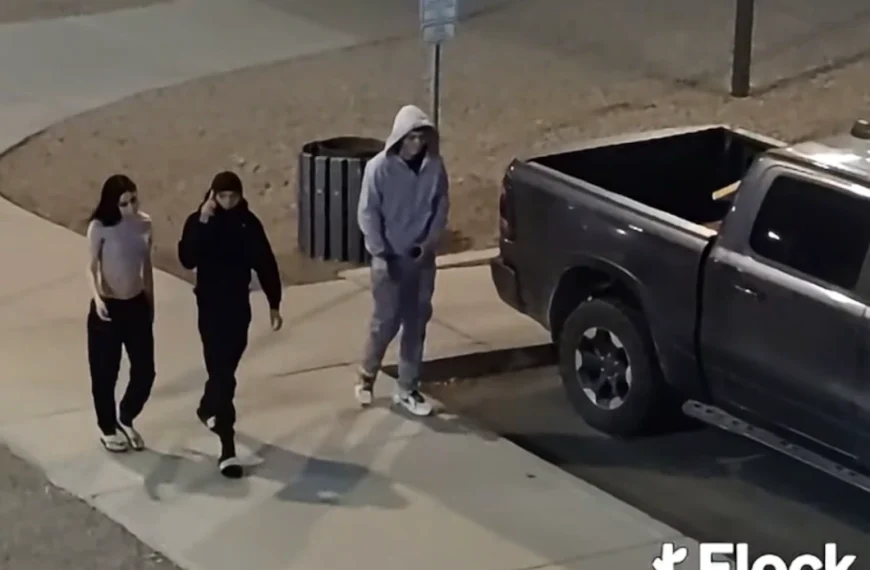
CASA GRANDE, AZ — The Casa Grande Police Department has rolled out a weekly news feature called Safe City Spotlight, designed to showcase real-world results from the Casa Grande Safe City Initiative. The launch comes after months of public concern over the city’s expanding Flock camera network, including residents speaking at council meetings, an organized petition effort, and a recent 7-0 council vote granting police limited access to elementary school cameras. CGPD said the series will highlight success stories, proactive enforcement efforts, and examples of how license plate readers, real-time video, and drone technology are being used. The first installment centered on the recovery of a handgun stolen from a local gun shop.
Inside the Gun Shop Theft Response
According to CGPD, two suspects walked into Casa Grande Tactical Gun Shop, took a handgun, and fled in a vehicle. Officers responded and gathered suspect descriptions from witnesses on scene. Meanwhile, officers inside the Real-Time Information Center, or RTIC, pulled up pan-tilt-zoom and license plate reader camera feeds to pinpoint the suspect vehicle and follow its route.
Patrol officers then located the vehicle and relayed its position to the RTIC. The center subsequently launched a Drone as First Responder to provide overhead awareness. Officers intercepted the car before it reached the area near the registered owner’s residence and executed a high-risk traffic stop. They arrested a 45-year-old local man at the scene, while a second suspect, 48, was eventually located and arrested. Additionally, the stolen handgun was recovered and will be returned to the business.
A Public Rollout Following Resident Concerns at Council
The new series arrives after resident Jacob Petrosky addressed the city council in January and April, and Michael Hanrion spoke at the April meeting. Together they raised concerns about warrantless surveillance, data security, and Flock’s perpetual license to captured data. Petrosky argued that the 30-day deletion policy offers limited protection because the system has already extracted patterns and identifying details from the images before they are removed. He called for an independent audit or a warrant requirement for system searches. Their remarks followed the council’s unanimous September 2025 approval of a 10-year, $10 million Flock contract. According to the city’s Safe City Initiative page, full deployment will include 100 LPR cameras, 100 PTZ cameras, and 31 gunshot detection systems. The earlier contract materials also included drone-as-first-responder systems and third-party camera integration equipment. (Read the full coverage at Pinal Post)
On May 4, the council voted 7-0 to approve an intergovernmental agreement giving police limited access to elementary school district cameras during emergencies, active calls, or community incidents near campuses. The vote also drew critical comments on local Facebook posts, with residents raising concerns about hacking risk, third-party access, and broader surveillance expansion. At the meeting itself, Petrosky, Hanrion, and other residents raised concerns about Flock employee access to camera feeds, vague contract definitions of “authorized users,” and the potential for AI to compile detailed profiles of children, including their routines, habits, and social associations, and to retain those profiles long after the underlying images are deleted. Petrosky has launched deflockcg.com to collect signatures opposing the program and is asking the city to tighten the agreement. (Read the full coverage at Pinal Post)
What Comes Next for the Initiative
CGPD said Safe City Spotlight posts will continue weekly, with the department pointing residents to its transparency portal, drone flight dashboard, and a camera registration option for property owners. The city’s Safe City Initiative page consolidates these resources, including crime statistics, success stories, and a map of where drones are deployed. Meanwhile, oversight policies for the expanded system are still being developed.