Key Points
- The Pinal County Planning and Zoning Commission continued the Siena development proposal to an undetermined date, pending a regional transportation study expected in early 2026.
- Siena would add 907 homes to 4,762 already entitled on the 1,431-acre site, for a total of 5,669 dwelling units.
- County officials presented data showing approximately 76,982 dwelling units approved or proposed in the west Maricopa area.
- Officials described the transition from rural to urban as likely over several decades.
- Staff reported approximately 50 items of written opposition. Residents who spoke at the hearing questioned the need for additional density given existing entitlements, and raised concerns about traffic, water, and loss of rural character.
The Pinal County Planning and Zoning Commission voted December 18 to continue a controversial 5,669-unit residential proposal southwest of Maricopa to an undetermined future date. The Siena development represents one piece of a much larger transformation officials say will reshape the rural landscape over the coming decades.
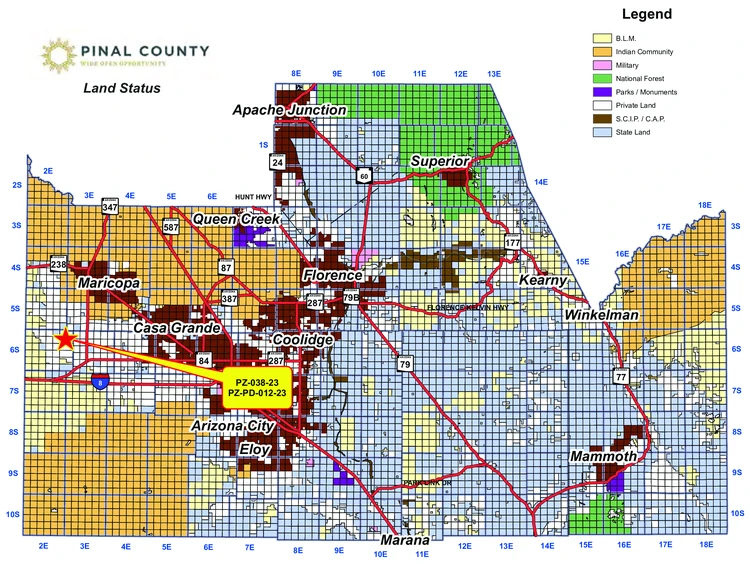
Multiple Hidden Valley and Thunderbird Farms residents spoke against the density increase. Their concerns center on traffic, water availability, and the loss of their rural lifestyle. County officials described urbanization as likely over the coming decades, driven by employment growth in western Casa Grande and regional population increases. Rising construction costs are pushing developers toward higher densities to spread infrastructure expenses across more units.
What the Siena Development Would Bring to Hidden Valley
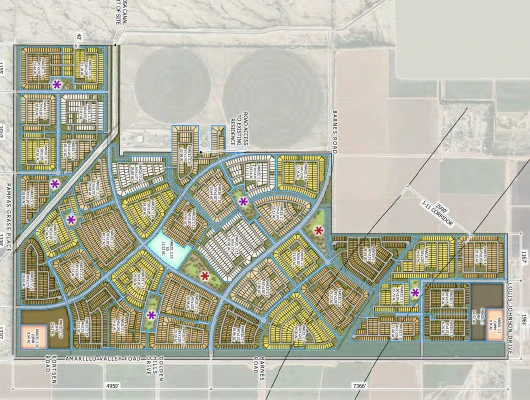
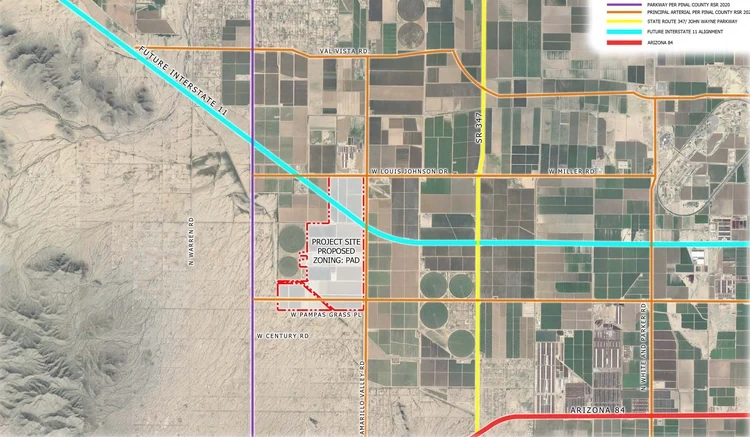
The Siena project sits on approximately 1,431 acres of agricultural land southwest of Maricopa. The property is currently zoned Single Residence (CR-3) and Local Business (CB-1). Landowner Harry Zeitlin seeks to rezone it to higher-density designations.
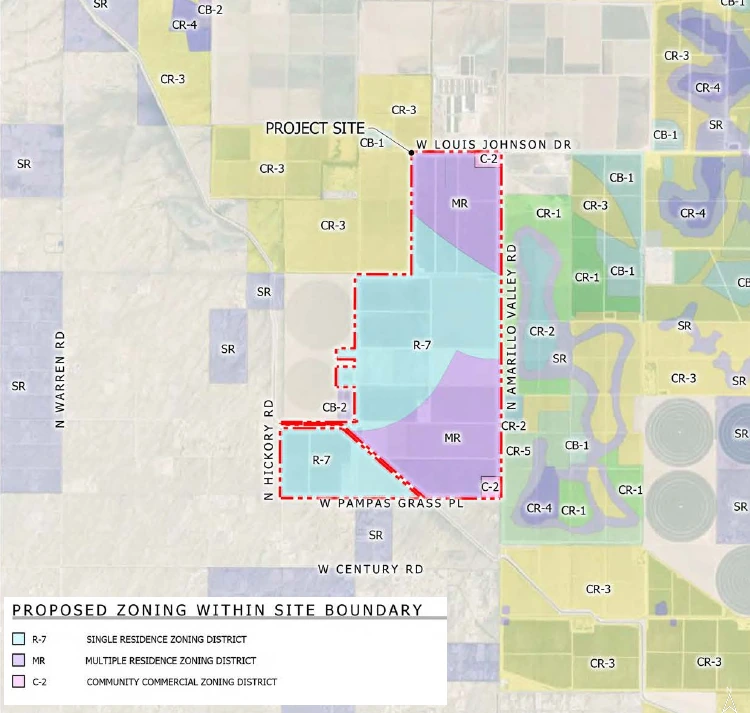
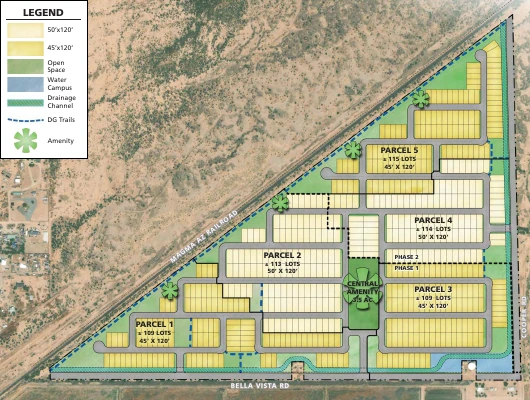
The proposal would create roughly 785 acres of Single Residence (R-7) zoning for single-family homes, 590 acres of Multiple Residence (MR) zoning that can include apartments and townhomes, and 33 acres of Community Commercial (C-2) for retail and services. The applicant placed the smallest lots along Amarillo Valley Road, citing its designation as an arterial street. Larger 80-foot-wide lots were placed near existing rural properties in the southwest portion of the site.
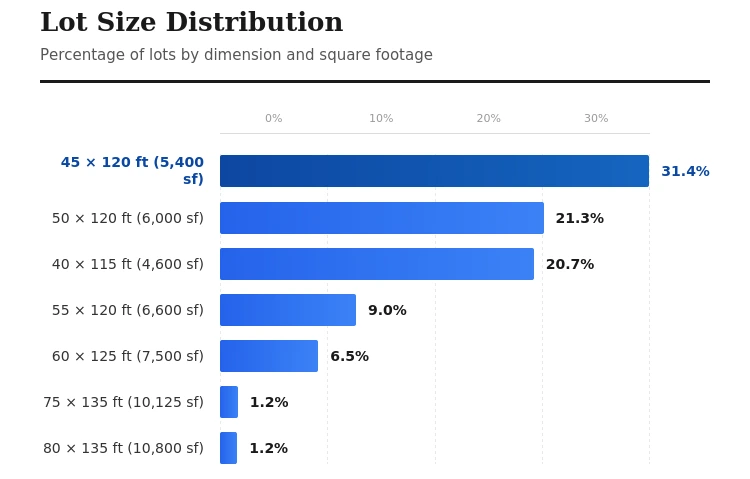
Lot sizes in the proposal range from 4,600 square feet to 10,800 square feet. Vice Chairman Klob noted that about 73% of the proposed lots measure 6,000 square feet or less, based on the applicant’s presentation. He observed that even the largest lots, at roughly 10,000 square feet, historically represent “first-time move up, maybe second-time move up level” homes. Klob advocated for greater housing diversity across the region, including executive-level housing to attract company leadership.
This development has existing entitlements dating to 2005 that already permit 4,762 dwelling units. The current request seeks to add approximately 907 additional homes to that total. Brennan Ray of Ray Law Firm, representing the landowner, requested the continuance to await a regional transportation study expected in early 2026 and to address document inconsistencies.
Broader Development Context Shows 76,000 Potential Units
The Siena project fits into a regional development landscape that officials described as massive. Planning Manager Harvey Krauss presented data showing approximately 76,982 dwelling units approved or proposed in the west Maricopa area.
| Subdivision Name | Lots |
|---|---|
| Red River | 35,000 |
| Stanfield Ranch | 7,518 |
| Siena | 5,669 |
| Pecan Ranch | 4,968 |
| Dugan Fields | 4,223 |
| Hidden Valley | 3,620 |
| Amarillo Creek | 3,057 |
| Midway | 2,934 |
| Santa Rosa | 2,296 |
| Rio Lobo | 2,100 |
| Rio Blanco | 2,089 |
| Terrazo | 1,500 |
| Maricopa Opus | 772 |
| Desert Garden | 692 |
| Verinda | 544 |
| Total | 76,982 |
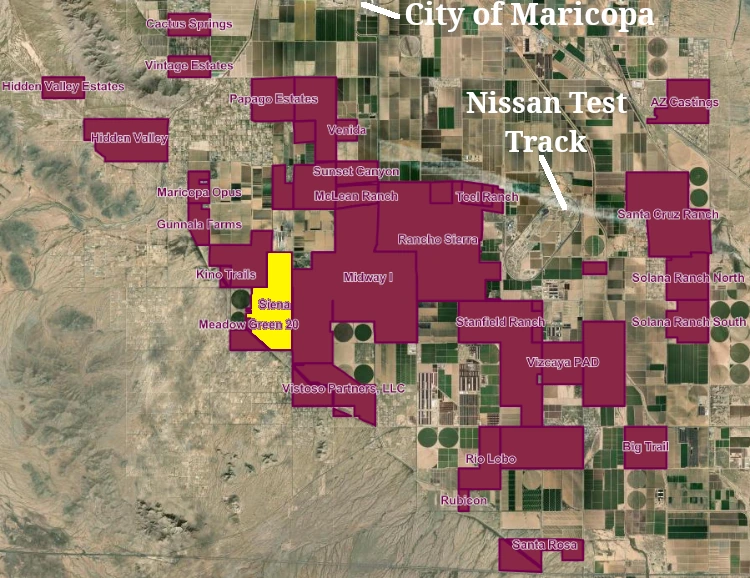
Krauss noted that developers request maximum density but typically lose 25-30% during platting for roads, open space, and drainage. He estimated actual buildout at roughly 54,000 homes. Krauss estimated this would translate to roughly 125,000 new residents at 2.3 persons per household.
Housing Affordability vs. Affordable Housing: What It Means
Commissioner Tom Scott asked the applicant to distinguish between housing affordability and affordable housing. Ray explained that affordable housing typically refers to government-assisted programs serving lower-income households, such as Section 8 and Section 42 vouchers.
Housing affordability, by contrast, addresses market pricing through supply and demand. Ray emphasized that a starter home costing $150,000 to $250,000 twenty years ago now runs $400,000 to $500,000.
Forces Driving Development in West Pinal County
Multiple factors are pushing development into this region. County officials and the applicant cited several drivers during the meeting.
Employment Growth in Western Casa Grande
Jobs represent the primary engine for housing demand. Krauss stated that significant housing growth will not occur without major employment sector expansion. Officials referenced job growth in western Casa Grande along the I-8 corridor, including data centers and industrial development.
The applicant’s presentation listed Casa Grande’s top employers for regional context:
| Employer | Employees |
|---|---|
| Pinal County Technology Park Medical Innovation Center | 2,819 |
| Lucid | 1,900 |
| Walmart | 850 |
| Hexcel Corp | 626 |
| Abbott Manufacturing Co. | 450 |
| Kohler | 425 |
| Tractor Supply Co. | 322 |
| Frito-Lay | 300 |
| Chang Chung | 209 |
| Kanto Corp. | 80 |
Ray noted that TSMC’s semiconductor investment in the Phoenix area is creating ripple effects. “I was surprised as anyone to hear that TSMC is impacting that far south,” he said. “But it makes sense because that is hundreds of billions of dollars investment that needs the support and that support will come down this far.”
Climate and Lifestyle Appeal
Vice Chairman Klob, who works in custom home design, noted that Arizona attracts people fleeing harsh winters elsewhere. “Whenever there’s a nor’easter, people call me,” he said. “They get 10 feet of snow. We don’t have that here. Can’t shovel sunshine.”
Rising Construction Costs
Infrastructure costs have increased dramatically, forcing developers to shrink lot sizes and increase density. Krauss explained that developers from 20 years ago are returning with requests for more units because they cannot make the original plans work economically.
“The reason the lots are shrinking and the number of dwelling units is because they gotta spread those infrastructure costs over a larger number of units,” Krauss said.
Supply Constraints
Ray noted there was unprecedented growth between 2010 and 2020 and said housing shortages were driving up prices.
Land Loss to Mining
Ray noted that mining operations can also affect housing capacity. If the Ivanhoe Electric Mine proceeds as planned, it could remove approximately 23,000 homes from Legends, a master planned community underlying the mine expansion area.
Infrastructure: Who Pays and When
The question of infrastructure financing dominated much of the discussion. County Engineer Chris Wanamaker outlined current mechanisms and their limitations.
Impact Fees Currently Very Low
Current road impact fees in this area total just $1,589 per home. Wanamaker called this “very, very low” and noted that a 5,000-unit subdivision generates only about $8 million—enough for roughly one mile of four-lane road.
The county is updating its impact fee structure with new rates expected by late 2026. Wanamaker said proposed fees will likely increase four to five times, bringing them closer to what Phoenix charges. He said officials sometimes negotiate arrangements where developers build infrastructure beyond their direct impacts in exchange for impact fee credits.
Transportation Study Underway
The West Pinal County-Maricopa Transportation Study, a partnership between the county, City of Maricopa, and Maricopa Association of Governments, is nearing completion. This study will identify and prioritize roadway projects for 2030 and 2040 timeframes.
Results will guide development review by ensuring individual traffic studies align with regional needs. An open house will present findings to the public once complete.
Urbanization: Lessons from San Tan Valley
Officials repeatedly referenced San Tan Valley as both a cautionary tale and a learning opportunity. Commissioner Karen Mooney, who moved to San Tan Valley in 2009, challenged the 40-50 year buildout projection.
“There was just under 60,000 people, and we’re at like 110, 120,” she said. “What can be done differently so that other areas in Pinal County don’t end up like the nightmare called San Tan Valley?”
Commissioner Daren Schnepf, who is also mayor of the newly incorporated San Tan Valley, explained the challenges. When the area was growing rapidly, 90-95% of residents traveled outside for work. Money left the community daily. The area outgrew the county’s ability to provide services.
“The town is now playing catch-up trying to get to the level of services that require for such a large populace,” Schnepf said.
Vice Chairman Klob drew comparisons to Chandler’s transformation. “Basically south of the 202 in Chandler there was, it was all farmland, dairy farms, cotton fields, what have you,” he said. “Now all those elements are basically gone. It’s all subdivisions. And so, growth occurs and we can fight it but it’s gonna happen.”
Krauss acknowledged the county is not equipped to provide municipal-level services. “This is urban development. This is city-type development that the county doesn’t really provide urban services. We provide county services. This should be served by a municipality.”
Annexation Possibilities
Ray noted that a path exists for the City of Maricopa to annex this area by working around the west side of the Ak-Chin Indian Community. Klob noted that Maricopa’s general plan area extends south of Interstate 8, but said annexation is “years down the road.”
Chairman Morris Mennenga asked if Maricopa would ever annex this area. Krauss said the county would not be opposed. “I think that would be good for the county and good for Maricopa,” he said.
Development Timeline: Decades, Not Years
Officials emphasized that buildout of the entire west Maricopa area will take 40 to 50 years. Several factors slow the process.
No Master Developers
Krauss noted the area lacks master developers who previously advanced infrastructure costs and enabled rapid growth. Without them, smaller builders will develop incrementally, slowing the pace.
Market Cycles
Krauss described Arizona’s housing market as cyclical. “We will have spurts, we will have downturns, but overall, it will grow over time,” he said.
Employment Prerequisites
Housing permits require buyers who can qualify for mortgages. Ray acknowledged that no builder is currently ready to break ground on Siena. The timeline depends on employment growth, infrastructure expansion, and market conditions.
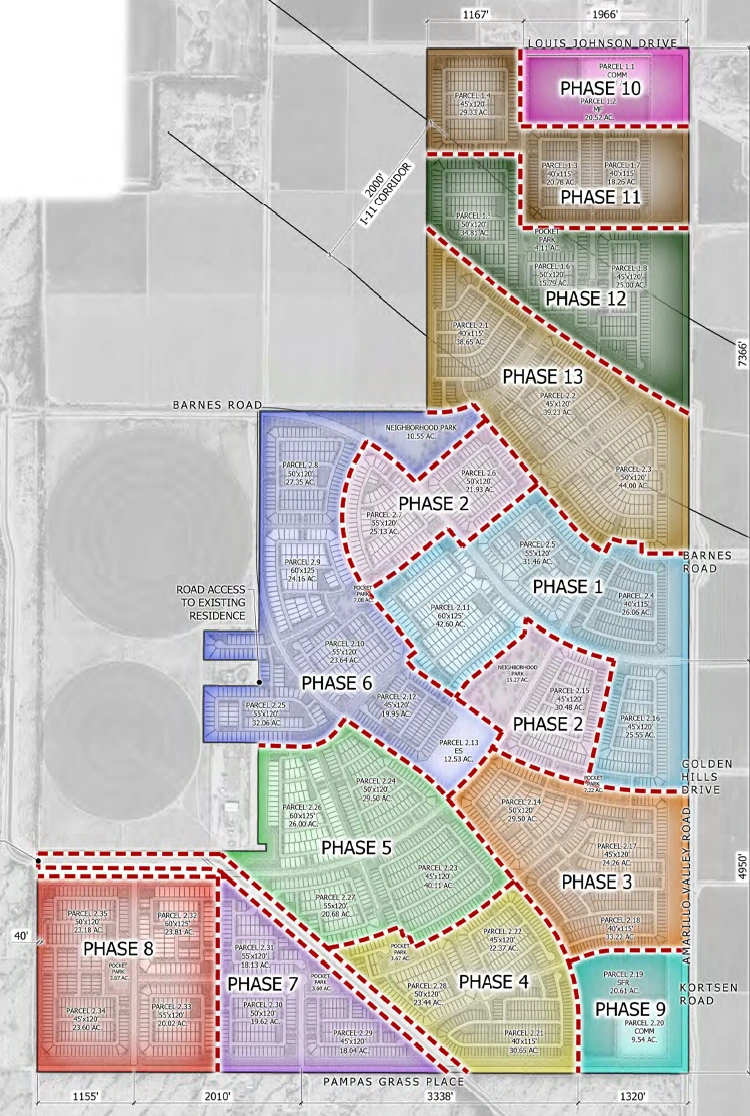
The phasing plan submitted with the Siena application stretches from 2026 to 2081.
| Phase | Dwelling Units (DU) | Density | Year |
|---|---|---|---|
| Phase 1 | 603 | 3.7 DU/AC | 2026-2031 |
| Phase 2 | 363 | 3.4 DU/AC | 2032-2034 |
| Phase 3 | 460 | 4.3 DU/AC | 2035-2039 |
| Phase 4 | 399 | 4.3 DU/AC | 2040-2043 |
| Phase 5 | 513 | 3.7 DU/AC | 2044-2048 |
| Phase 6 | 541 | 3.0 DU/AC | 2049-2052 |
| Phase 7 | 247 | 3.2 DU/AC | 2053-2055 |
| Phase 8 | 420 | 3.6 DU/AC | 2056-2059 |
| Phase 9 | 247 | 8.9 DU/AC | 2060-2062 |
| Phase 10 | 492 | 17.8 DU/AC | 2063-2067 |
| Phase 11 | 403 | 4.5 DU/AC | 2068-2072 |
| Phase 12 | 340 | 3.1 DU/AC | 2073-2075 |
| Phase 13 | 641 | 4.5 DU/AC | 2076-2081 |
| Total | 5,669 |
Public Comments Reflect Rural Lifestyle Concerns
Staff reported approximately 50 items of opposition by the time of the hearing. Several residents also spoke against the project. Common themes emerged from their testimony.
Laurie Fuller from Thunderbird Farms questioned why the developer needs additional density. “This developer already has 4,762 dwelling units. It’s not like we’re saying he can’t build anything out there. He’s got that. Why does he need another 900 units?” She argued that keeping the current CR-3 zoning—with 12,445 square foot lots—would actually provide greater housing diversity. The location near the mountains with views and wildlife, she said, warrants larger lots and could attract buyers seeking higher-end homes.
Robin Davis from Hidden Valley asked the commission to deny the additional 907 homes. “This one hits hard. Siena’s in the heart of Hidden Valley farmland. It puts city homes right in the middle of the country and will tear this neighborhood apart.”
Davis noted that Hidden Valley already offers affordable housing through manufactured homes on 1.25-acre parcels. “You’ve got your first time buyers, your couples with young kids. Under $300,000 and they get 1.25 acres. They’ve got chickens, some are selling eggs, doing a little homestead. That’s affordable housing.”
Kathy McNiven raised water security concerns. She questioned whether Global Water’s yearly allotment of 22,291 acre-feet could support the region at buildout and cited Colorado River allocation cuts. “Siena, as it stands, would use over 549 million gallons of water per year,” she said.
Wendy Reardon, who lives half a mile from the project site, said she moved to Hidden Valley specifically to avoid urban development. “We like living where you can see the coyotes, you can look up and see the stars at night. But if you put houses, 5,600 houses, I’m not gonna look up and see the stars. I’m gonna see a city.”
Maryeileen Flanagan opposed the proposed realignment of Barnes Road from a direct thoroughfare to a winding residential street. She also criticized the lot sizes, noting that only 9% of proposed lots meet the 7,000 square foot minimum under current CR-3 zoning.
Dorie Levy, a licensed realtor who specializes in the area, said new subdivisions are hurting existing homeowners. She noted that resale home inventory in Maricopa has grown from about 200 listings when the market was strong in 2022 to over 700 today. Average days on market increased from 79 at the end of 2024 to 105 now. “These subdivisions are taking money and equity out of the homes of the people that live in Maricopa,” she said.
Jim Stewart, a Hidden Valley resident of 12 years, referenced the county’s comprehensive plan language about preserving rural and equestrian lifestyles. The plan, he said, calls for densities to be based on adjacent properties and encourages promoting existing rural character.
Hearing Continued as Broader Policy Questions Linger
The commission voted to continue both the rezone (PZ-038-23) and the PAD amendment (PZ-PD-012-23) to an undetermined future date. This requires the applicant to republish public notices before the hearing resumes.
Ray indicated willingness to address concerns about lot sizes and commercial acreage before returning.
Commissioner Mooney raised broader questions about the county’s approach to preserving rural lifestyles outlined in the comprehensive plan. She requested a future discussion on how commissioners can balance development approval with comprehensive plan goals.
The commission will reconvene in January 2026 for its next regular meeting. The Siena case will require new public notification when a hearing date is set.



Let’s not forget that if this is approved and they wait the 50-70 years to build these phases, we are stuck with it. I say this should not move forward. I do feel people will want the rural Culture that is out here. Let’s not be a san Tan valley or a Queen creek. Slow the build – stop high density!
All I can see Is The bottom line Which is greed. Developers have only their own intrests In mind. The masses that have transferred to maricopa Do not unerstand Respect for The land wildlife or water conservation. Also the extra Garbage generated and the lack of respect on the Roads, nothing but a nightmare, developers go find somewhere else to dystroy