At a Glance
- Fire service still requires subscriptions — Taxes do not cover fire protection; only 37% of San Tan Valley households subscribe.
- Ambulance service — AMR operates under a state Certificate of Necessity.
- Average fire subscription: About $660 per year for mid-sized homes.
- Current resources: San Tan Valley has 3 fire stations (40+ firefighters, 4 chiefs) and 4 ambulances.
- Town options: Continue subscription-based fire service (no town funding), contract with Rural Metro using town funds, or build a municipal fire department.
- Growth limits: Rural Metro would like 6 stations but says this is not feasible with current subscription levels.
- Local experience: Both providers emphasize long-standing operations in Pinal County.
- No council action: Presentations were informational only.
SAN TAN VALLEY, AZ – San Tan Valley residents will continue paying for fire protection through subscriptions unless the newly incorporated town decides to fund services directly. At the December 3, 2025 Town Council meeting, representatives from Rural Metro Fire and AMR ambulance presented their operations and outlined service options for the community. No council action was taken, but residents learned key details about costs, response times, and future growth plans.
What This Means for Residents
The town’s incorporation has not changed how fire or ambulance services are funded. Rural Metro operates fire stations through a subscription model, meaning residents must pay annual fees for coverage. Currently, 37% of San Tan Valley households subscribe. The company said it would like to see that number increase, as subscription revenue directly determines available fire resources.
AMR provides ambulance services under a state-issued Certificate of Necessity (CON). The Arizona Department of Health Services regulates their operations and response times.
Residents confused about whether taxes now cover emergency services received a clear answer: they do not. A Rural Metro representative noted that residents are increasingly asking whether their tax dollars now pay for fire protection following incorporation. Council Member Daniel Oakes expressed concern about this confusion and suggested a public service announcement to clarify that subscriptions remain necessary.
Fire Service Costs and Fee Structure
According to Drew Kissling, Rural Metro’s Manager of Business Development, fire subscriptions are priced based on home square footage, including garages and outbuildings. He said the average annual subscription costs approximately $660 for homes between 2,600 and 3,200 square feet.
Fee increases generally occur annually, depending on business and community needs, Kissling said. Rural Metro implemented a 3% to 5% increase in Arizona and other markets last spring. A similar increase is expected probably around March 2026, though he said the exact amount remains undetermined until they complete their analysis.
According to a Rural Metro representative, labor accounts for roughly 70% of operating costs. The company’s unionized workforce operates under collective bargaining agreements that largely drive pricing adjustments. Firefighter and paramedic wages have almost surpassed general inflation in recent years, the representative said.
Current Response Times and Service Quality
According to AMR’s presentation materials, the company reported improving emergency response times. In 2024, emergency calls averaged 8 minutes 58 seconds. Through 2025, that average improved to 8 minutes 19 seconds. Non-emergency responses averaged 11 minutes 13 seconds in 2024 and 12 minutes 25 seconds in 2025. The presentation did not specify whether these figures were for San Tan Valley or Pinal County overall.
Rural Metro CEO James Wessel said the company’s average fire response time in San Tan Valley stands at 7 minutes 33 seconds. However, he noted this figure includes mutual aid calls to distant locations. Response times within the incorporated area are likely lower, he said.
Council Member Brian Tyler asked about regulatory oversight for fire services. Wessel explained that while AMR operates under the CON with state-mandated standards, Rural Metro has no enforcement agency setting minimum requirements. The National Fire Protection Association provides recommendations but lacks enforcement authority, he said.
According to AMR’s presentation materials, the company must meet specific performance standards set by the Arizona Department of Health Services. Depending on geographic area, requirements range from 99% of responses within 20 minutes to 99% within 45 minutes.
Service Coverage and Available Resources
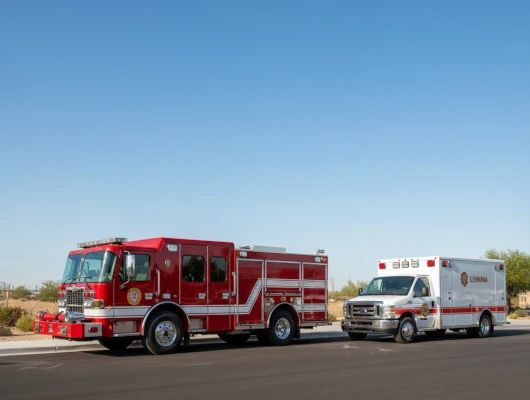
According to AMR’s presentation, the company currently deploys four Advanced Life Support ambulances in San Tan Valley, with additional units available as needed. AMR serves Pinal County with 22 ambulances and 135 full-time employees.
According to AMR’s presentation materials, the company can draw from 800+ employees and 200+ ambulances across Central Arizona. Statewide, AMR maintains over 2,000 employees and 300+ ambulances. All San Tan Valley ambulances are less than three years old, according to the presentation. The company noted that Pinal County recently received two newly designed ambulances built in Mineral Wells, Texas.
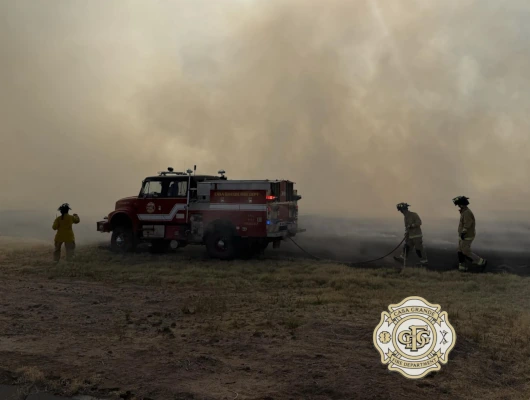
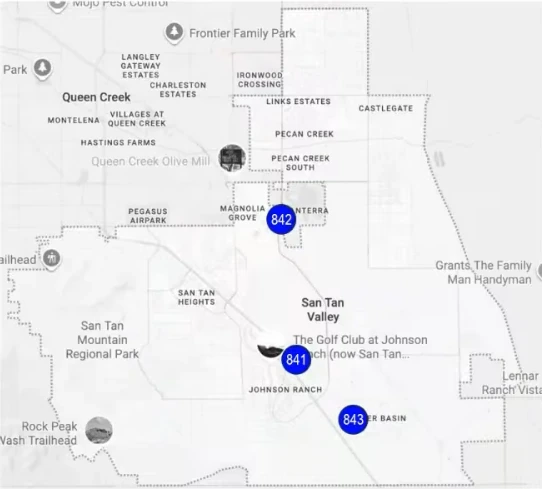
According to Rural Metro’s presentation, the company operates three fire stations in San Tan Valley with 10 vehicles including engines, tenders, and trucks, and more than 40 firefighters and four chiefs. The stations responded to approximately 8,300 calls over the past 12 months. Wessel said infrastructure in San Tan Valley represents over $20 million in value.
Options Before the Town Council
According to Rural Metro’s presentation, the company outlined three paths forward for fire protection:
Subscription Model (Current): Rural Metro continues selling subscriptions directly to residents. This requires no town funding but limits growth to subscription revenue. Rural Metro proposed the town sign a formal recognition agreement as part of this option.
Contracted Services (Outsource): The town pays Rural Metro through a master services agreement. Wessel said this gives the council more control over service levels and enables faster expansion.
Municipal Department (Insource): The town acquires land, builds stations, hires staff, and operates its own fire department. This represents the highest cost and longest timeline.
Wessel expressed preference for the subscription model with a formal agreement. He said such an agreement would clarify the company’s official status and provide confidence to make capital investments.
Station Locations and Growth Plans
Wessel said Rural Metro determines station locations using heat maps of call volume, traffic patterns, and geographic coverage analysis. The company knows where additional stations would improve response times but remains constrained by subscription revenue, he said.
In response to a question from Vice Mayor Tyler Hudgins about growth plans, Wessel said he would like to have six fire stations in San Tan Valley. Hudgins noted the current three stations are not enough for a community of 100,000 residents. However, Wessel said a 37% subscription rate makes six stations financially unfeasible.
Wessel said the company would like to construct one additional fire station and add a ladder truck. He said a formal agreement with the town would give Rural Metro confidence to make that capital investment. He noted neither improvement is inexpensive—pumper trucks cost approximately $1 million, while ladder trucks can reach $2 million. Fire stations cost several million dollars to build.
According to AMR’s presentation, Pinal County’s population increased 23% over the past decade. The company is exploring property for further investment and growth in the area. AMR noted that more than 30 of its employees live and work in San Tan Valley.
Company Ownership and Structure
According to AMR’s presentation, both providers have undergone significant ownership changes. Southwest Ambulance founded operations in 1982 before moving into Pinal County in 1984 with just two ambulances. Rural Metro acquired Southwest Ambulance in 1997. Then AMR purchased both companies in 2015.
However, fire services now operate under separate ownership. Brindlee Fire Services acquired Rural Metro from AMR in December 2024. Council Member Daniel Oakes noted that James Wessel, the CEO who presented to council, is also one of the company’s owners.
Wessel explained the cultural shift following the acquisition. Under AMR, fire operations represented less than 1% of the parent company’s business. This made it difficult to secure capital investments for expensive equipment like fire trucks and stations.
“Fire made up less than 1% of their business,” Wessel said. “It is very difficult to give the time and attention to less than 1% of your business.”
“It’s all I know. It’s all I do. I’m a fireman,” Wessel said. He encouraged residents with concerns to contact him directly or visit local fire stations to speak with crews about changes since the acquisition.
Local Leadership and Experience
Both providers emphasized deep local roots during their presentations. According to AMR, its leadership team represents over 150 combined years of EMS experience. Operations Manager David Jacobelli began his career in 1983 and has led Pinal County operations since 2010. Regional Director Todd Jaramillo oversees operations across Maricopa, Pinal, and Gila Counties.
According to Wessel, Rural Metro has served San Tan Valley since the 1960s. The company’s Arizona operations are entering their 78th year. Wessel said Brindlee Fire Services operates 90 fire stations across 32 states, making it the fifth-largest fire department in the nation by station count.
Integrated Response
Wessel noted that Rural Metro maintains three staffed stations where residents can visit and speak with on-duty crews. He said AMR crews also share space in Rural Metro fire stations, enabling integrated emergency response.
The council received these presentations for informational purposes only. No votes or formal decisions occurred. Council Member Oakes said the town wants citizens to know Rural Metro remains their go-to provider. Vice Mayor Hudgins asked what the council could do to assist Rural Metro, and Wessel offered to provide a list of actions other governments take to support subscription fire departments.
Residents can expect continued discussions as the newly incorporated town evaluates its emergency services options. The council may consider public service announcements to clarify that subscriptions remain necessary despite incorporation. Council Member Oakes noted that any transition would take several years to implement.