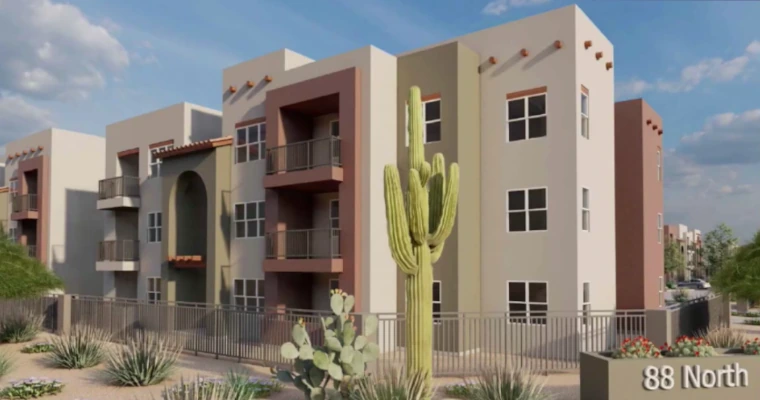
The developer behind the Roers 88 North apartments in Apache Junction returned to City Council on January 20 with revised plans. The council had delayed the project in December at the developer’s request to give Roers Companies time to address traffic questions, architectural design concerns, and operational issues raised in earlier meetings. At this presentation and discussion session, the developer presented a new Southwestern design, an updated traffic study, and a commitment to on-site management. No vote was taken. The council will hold a public hearing and vote on February 3, 2026.
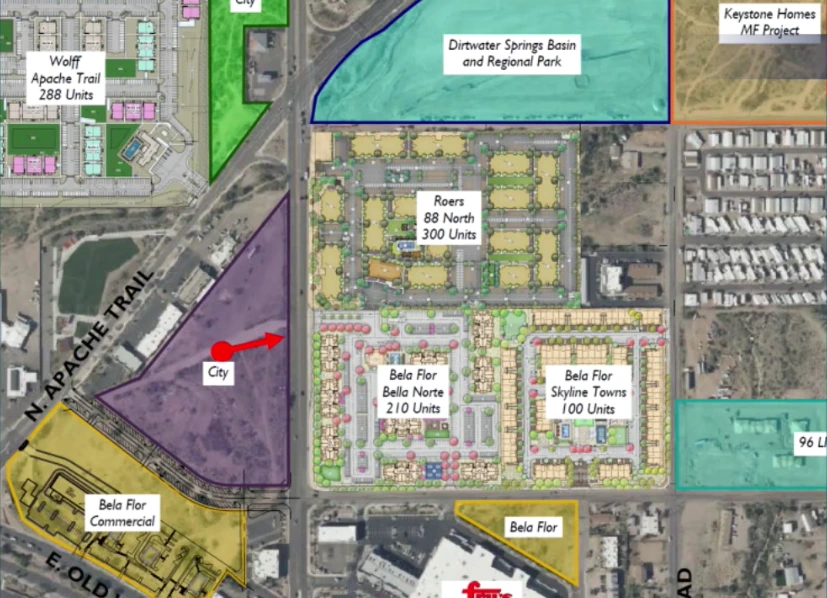
Roers Companies is developing the 300-unit income-restricted rental project on a 13-acre site near Idaho Road and Scenic Street. Bela Flor Enterprises, LLC owns the property. The project uses the Low-Income Housing Tax Credit (LIHTC) program. The property sits within the downtown core’s City Center (B-3) zoning district, which permits apartments with a conditional use permit. The zoning allows up to 40 units per acre and buildings up to 60 feet tall.
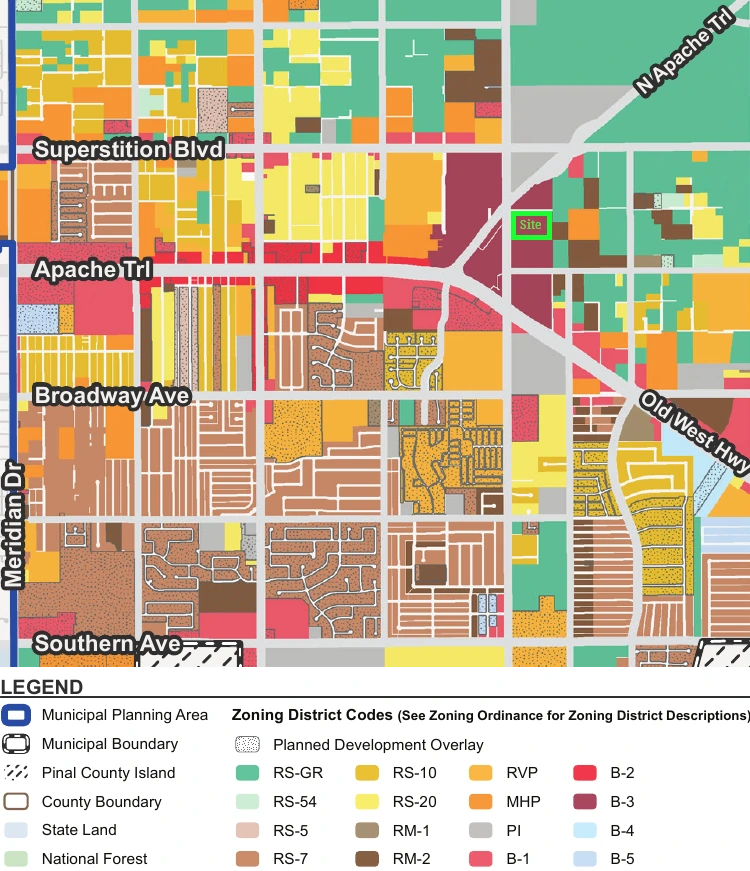
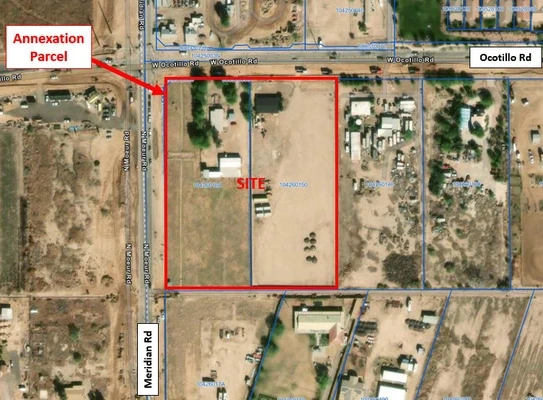
Interactive Map – Roers 88 North Apartment Complex Location
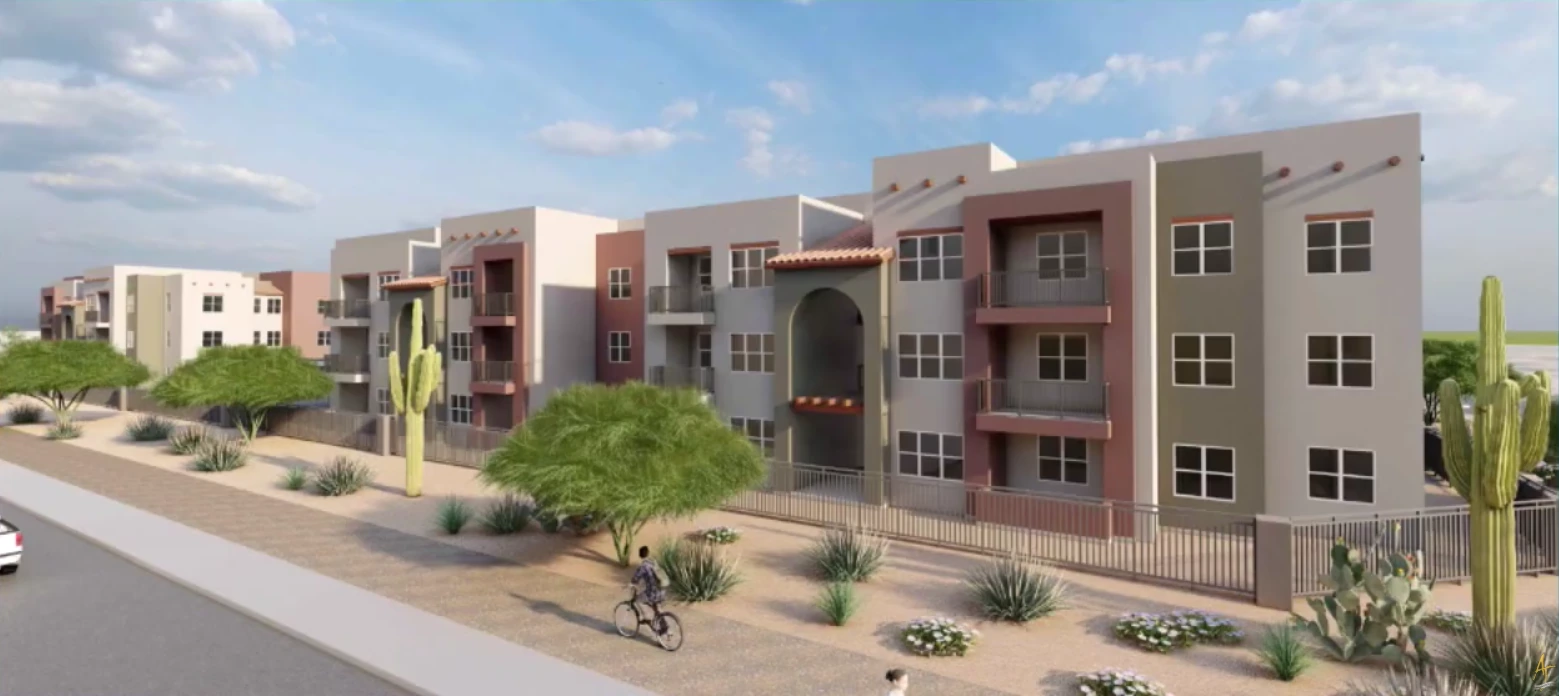
Revised Building Design Features Southwestern Style
The developer presented an architectural redesign at the January meeting. Council members had previously asked for buildings that reflect Apache Junction’s character.
“After that meeting we heard that this is nice but this doesn’t speak to Apache Junction,” said Greg Davis, the project’s land planner. “We want to see something more western, more southwestern that fits, that sets a precedent for our downtown core.”
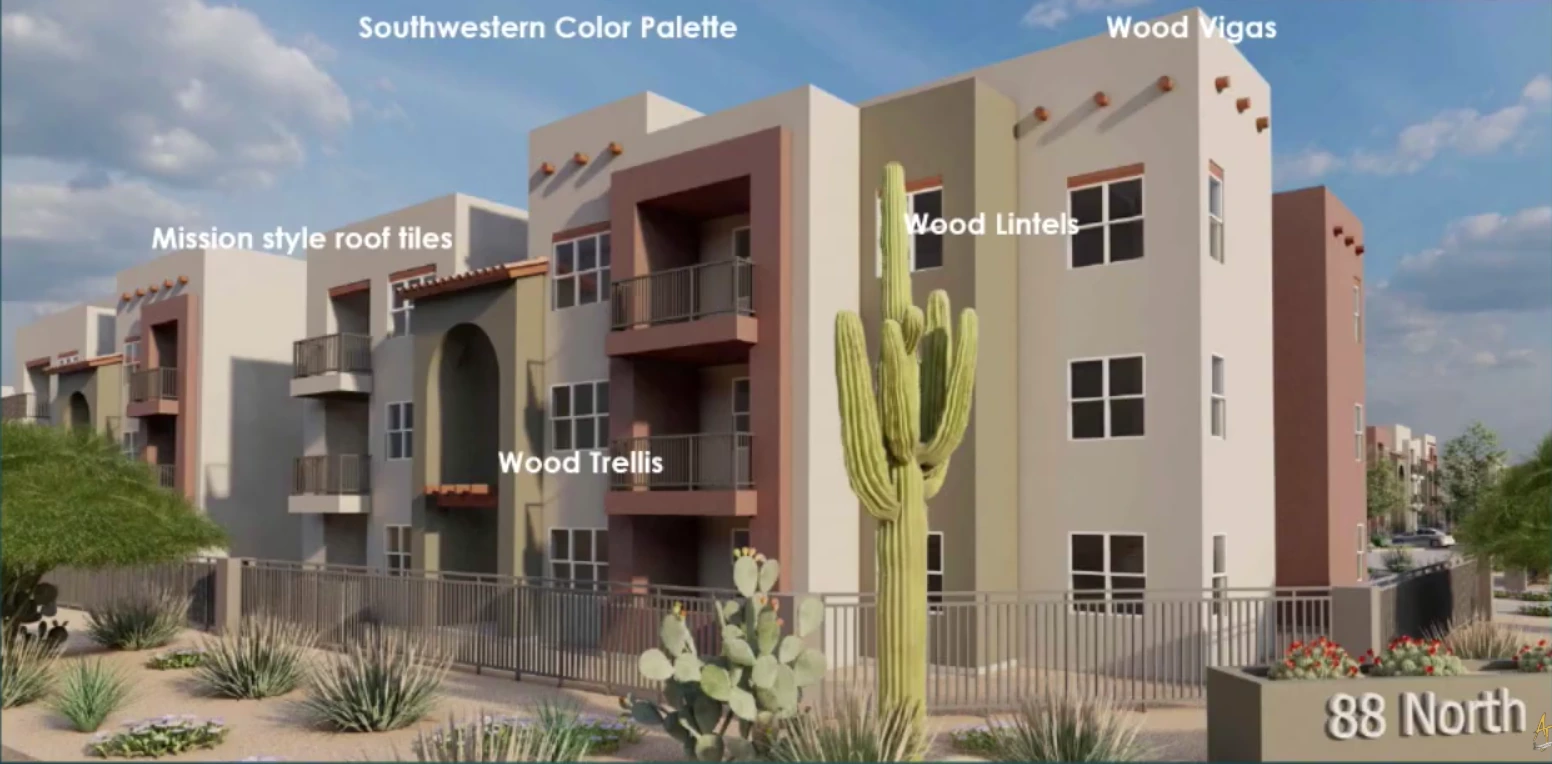
The new design incorporates several Southwestern elements. According to Davis, the new design includes a sage green and terracotta color palette, mission-style roofs over building entrances, wood lintels above windows, and vigas—the exposed wooden beams common in territorial architecture. According to Davis, a wood trellis at ground level breaks up the two-and-a-half-story entrance so it doesn’t feel overwhelming.
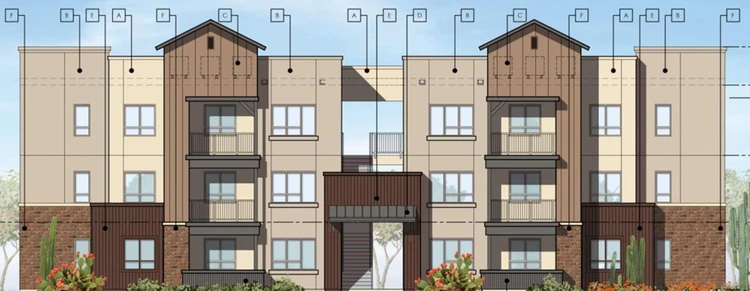
Davis said the varied colors differentiate the building’s massing. He noted one council member had observed the previous design “had good massing variety, but you really couldn’t tell because [it was] all the same color.”
Height Reduced to Address View Concerns
The developer also reduced the building height from 45 feet to 38 feet. This matches the height approved for the nearby Wolff project. The B-3 zoning allows buildings up to 60 feet by right.
Davis said height concerns “kind of took us by surprise.” He added, “Every government document that we look at not only supports height, but it promotes height.”
The developer created perspective renderings from the future downtown commercial area shown below.
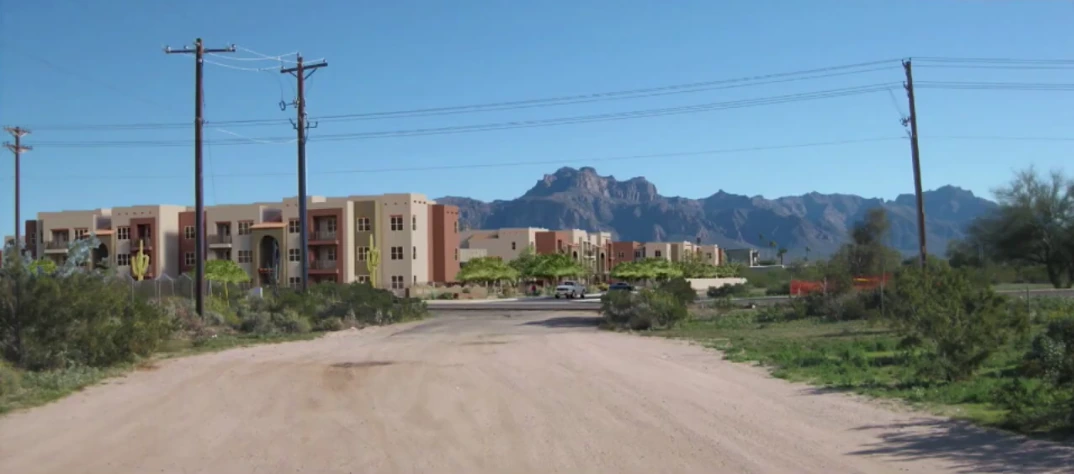
According to Davis, these mountain views would still be visible from most of the commercial parcel. The buildings are positioned in the northern portion of the site, away from the commercial parcel to the south.
“You can see that even though our project is three stories in height, there’s still good views of the mountains from most of the commercial parcel,” Davis said.
New Traffic Study Conducted in December
Councilmember Bambi Johnson said she appreciated the developer addressing height concerns and called the architectural changes “pretty dramatic.” However, she added, “I’m probably still not as satisfied with traffic.”
The developer commissioned a new traffic study to address council concerns. Data was collected on December 18, 2025. That timing captured winter visitors, school traffic, and pre-holiday shopping activity. Council members had questioned the previous 2022 study because it used summer data.
Davis said the new study examined seven intersections near the site. The analysis included cumulative traffic from 610 units across three projects: Roers 88 North (300 units), Bella Norte (210 units), and Skyline (100 units).
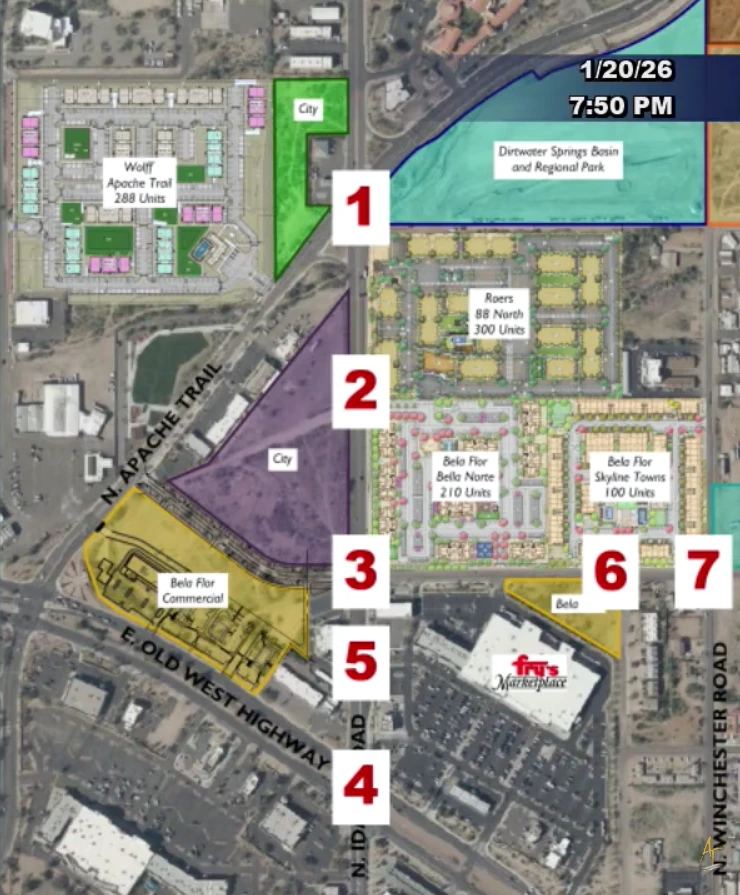
All intersections met level of service D or better. Davis explained that traffic engineers consider levels C and D adequate. “We’re not really shooting to be level of service A or B,” he said. “If you do so, then you’re actually robbing yourself because you’re over-engineering a road to operate more efficient than it needs to for that situation.”
Davis also compared traffic impacts from different land uses that could develop on the site. He said residential development would generate 65% less traffic than commercial use, 30% less than office space, and 70% less than medical facilities. These alternatives are permitted under the site’s current zoning.
Davis said high-density housing near downtown reduces driving because residents can walk to shops and services.
Developer Commits to On-Site Management
The council had previously asked whether the property would have live-in management. At the January meeting, Davis confirmed Roers Companies would commit to a dedicated residential unit for a live-in management employee.
“We did talk with the management and ensure that we can provide that, and so we are committing to that,” Davis said. He noted the developer had prepared language for the city to include in any conditions of approval.
What This Article Does Not Cover
This article focuses on the January 20, 2026, presentation and discussion. For background on the Roers 88 North proposal, including rent amounts, income qualification limits, amenities, and resident comments from earlier meetings, see the previous Pinal Post coverage. That article explains the Low-Income Housing Tax Credit (LIHTC) program, the project’s unit mix and pricing, and the Planning and Zoning Commission’s 4-1 recommendation for approval.
Public Hearing Set for February 3
No residents spoke during the public comment period at the January 20 meeting. One resident had signed up but chose to pass.
The Apache Junction City Council will hold a public hearing on February 3, 2026. Council members will discuss and vote on Resolution No. 25-24 at that meeting. Residents who wish to comment on the Roers 88 North apartments can speak during the public hearing.