Pinal County Breaks Ground on 32 Wireless Towers Near Schools as FCC Remains Under Court Order to Address Child Health Evidence
Pinal County is moving forward with its wireless tower deployment to schools, even as questions about radiation safety for children remain unresolved more than four years after a federal court ordered the FCC to address them. At a groundbreaking ceremony on January 14, 2026, on the grounds of Toltec Elementary School in Eloy, county officials celebrated the Final Mile 5G Project, which will install 32 wireless communication towers, most at schools. Chairman Jeff McClure and Supervisors Stephen Miller, Mike Goodman, and Rich Vitiello attended. Vice-Chairman Jeff Serdy was the only supervisor not present.
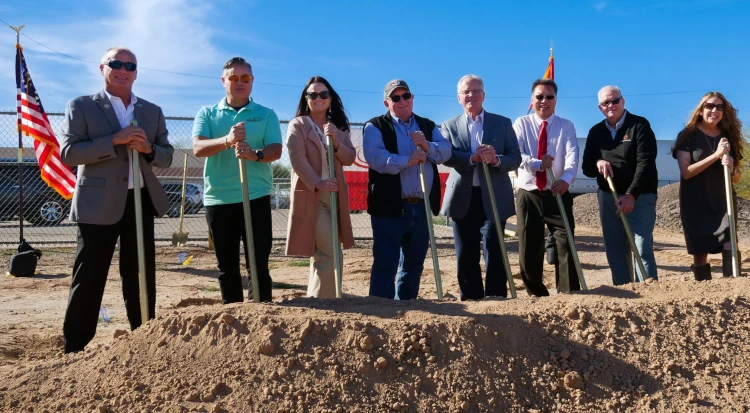
The first tower is now operational at the Arizona City Library. Doege Development is constructing the remaining 31 towers.
The project moves forward even as federal questions about wireless safety remain unresolved. A federal court ruled more than four years ago that the FCC failed to explain why it ignored scientific evidence on how wireless radiation affects children. The court took “no position in the scientific debate” but found the FCC’s process was flawed. It ordered the FCC to address impacts on children, long-term exposure, and environmental effects. The FCC has not provided the explanation the court ordered.
Project Details and Funding
The wireless network will provide 5G and LTE broadband to communities throughout Pinal County. The project is funded entirely with federal dollars, including American Rescue Plan Act (ARPA) funds and four congressional earmarks totaling $4 million.
County officials say the network could also support telemedicine, emergency management, and economic development.
Board Chairman Jeffrey McClure said that when he served on the Oracle School Board during the pandemic, the district parked buses with WiFi hotspots so students could connect for remote learning. “I chose to run to be a Supervisor to make a positive difference in our communities. And I’m proud and excited about the positive difference that this access can have to the lives of every one of our residents of our rural communities.”
The project builds on an existing $34 million fiber network that connects schools and libraries countywide. That network has excess capacity, which county officials plan to use to deliver “final mile” broadband service to residents.
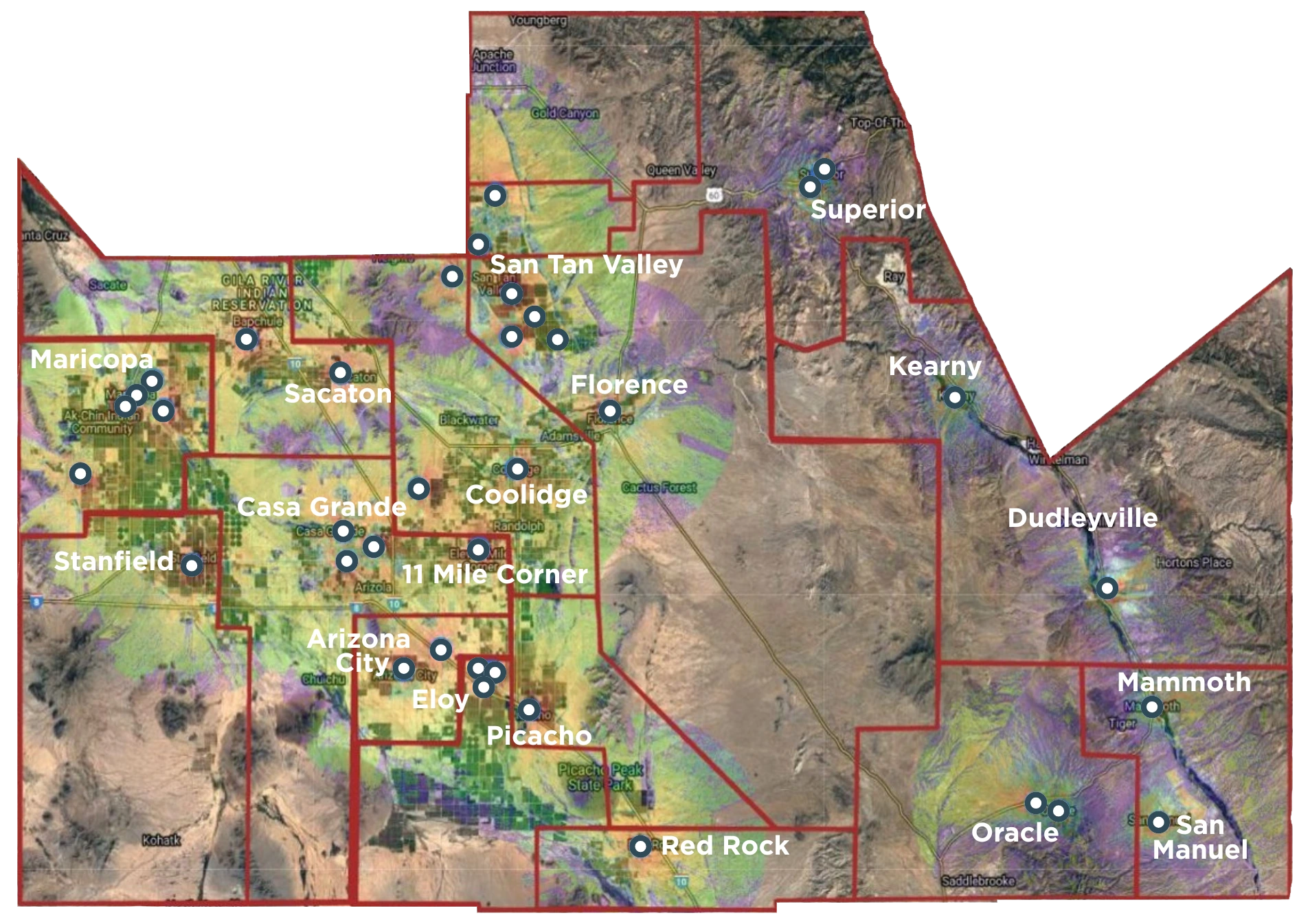
Pinal County and the Pinal County Superintendent of Schools office led the effort. The following school districts signed intergovernmental agreements for the project (ESD = Elementary School District, USD = Unified School District, HSD = High School District, ASD = Accommodation School District):
- Apache Junction USD
- Casa Grande Union HSD
- Coolidge USD
- Eloy ESD
- Florence USD
- JO Combs USD
- Mammoth-San Manuel USD
- Maricopa USD
- Mary C. O’Brien ASD
- Oracle ESD
- Picacho ESD
- Ray USD
- Red Rock ESD
- Stanfield ESD
- Superior USD
- Toltec ESD
Central Arizona College and the Town of Mammoth also signed agreements. The 32 towers will be placed at sites owned by these districts, the college, the town, and Pinal County.
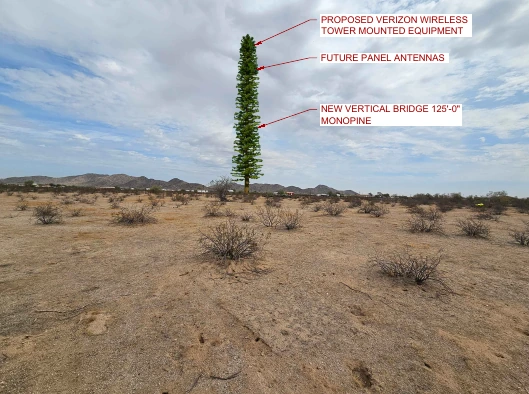
New towers will be under 50 feet in height. Some installations will be mounted on school building rooftops, including sites at San Manuel USD, Coolidge USD, Red Rock ESD, and Picacho ESD. Other radios will be co-located on existing towers up to 80 feet.
Approval Without Public Discussion
The Board of Supervisors approved the project on December 4, 2024. The agenda titled it intergovernmental agreements for a radio communications system, with the 32 towers detailed in the description. It appeared on the consent agenda—routine items approved with a single vote unless someone requests discussion. No one did.
The motion passed 5-0 with all supervisors in favor.
The agenda item cited the COVID lockdown as highlighting inadequate internet service.
Federal Court Ordered FCC to Address Child Safety Evidence
In August 2021, the U.S. Court of Appeals for the District of Columbia Circuit ruled the FCC’s decision to retain its 1996 wireless radiation guidelines was “arbitrary and capricious.” The FCC had collected public comments for six years before issuing its 2019 decision to keep the 1996 guidelines. The federal court found the agency failed to respond to evidence that radiofrequency radiation at levels below current limits may cause harmful health effects. The ruling addressed the FCC’s regulatory process—not whether RF radiation is harmful.
The federal court specifically ordered the FCC to address impacts on children. The American Academy of Pediatrics submitted comments stating that children are “disproportionately impacted by all environmental exposures” including RF radiation, and that FCC standards “do not account for the unique vulnerability” of children and pregnant women. The AAP noted the FCC had not updated its standards since 1996, when only 44 million Americans used wireless technology.
The federal court wrote that the FCC “failed to provide a reasoned or even relevant explanation of its position that RF radiation below the current limits does not cause health problems unrelated to cancer.” The ruling continued: this failure “renders its explanation as to the effect of RF radiation on children arbitrary and capricious.”
Federal Court Findings on Scientific Evidence
The federal court found the FCC failed to address substantial evidence in the record. Among the many organizations that submitted evidence, the federal court cited the American Academy of Pediatrics, the California Medical Association, the Council of Europe, the Cities of Boston and Philadelphia, over one thousand German physicians, and thousands of physicians and scientists who sent letters to the United Nations and European Union.
The Department of the Interior submitted comments stating that the FCC’s radiation limits “continue to be based on thermal heating, a criterion now nearly 30 years out of date and inapplicable today.” The federal court found the FCC “completely failed even to acknowledge, let alone respond to, comments concerning the impact of RF radiation on the environment.”
On technology changes and long-term exposure, the federal court ruled the FCC failed to adequately address “the implications of long-term exposure to RF radiation” and “the implications of technological developments that have occurred since 1996, including the ubiquity of wireless devices and Wi-Fi, and the emergence of ‘5G’ technology.”
Industry Lobbying and Local Control
The FCC’s delay in responding to the court order occurs against a backdrop of significant industry influence in Washington. During the 116th Congress (2019–2020), the 15 largest ISPs and trade associations spent more than $234 million on federal lobbying and elections, according to a report by Common Cause using data from OpenSecrets.org. That averages more than $320,000 per day.
For more information on federal proposals that would limit local control over wireless infrastructure, see Pinal County Residents Losing Local Control Under New State, Federal Laws.
What the Federal Court Ordered the FCC to Do
The federal court ordered the FCC to address the following before it can justify its current wireless radiation guidelines:
- Address the impacts of RF radiation on children
- Address the health implications of long-term exposure to RF radiation
- Address the ubiquity of wireless devices and other technological developments since the guidelines were last updated
- Address the impacts of RF radiation on the environment
More than four years later, these items remain unaddressed.