The Pinal County Board of Supervisors unanimously approved the Cactus Wren battery energy storage facility on December 10, 2025. This project can deliver up to 800 megawatts of power for four hours near Maricopa in unincorporated Pinal County. The project cleared its final zoning hurdle and can now begin the permitting process required before construction. Salt River Project, which serves over 90,000 Pinal County customers, confirmed the project is on their procurement short list. The utility anticipates 12% annual energy growth in Pinal County over the next decade and is in active discussions with the developer about a potential energy storage agreement.

Project Location and Site Conditions
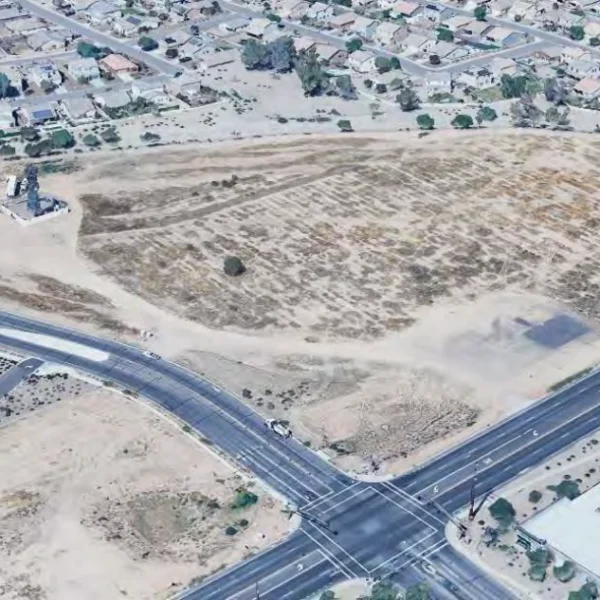
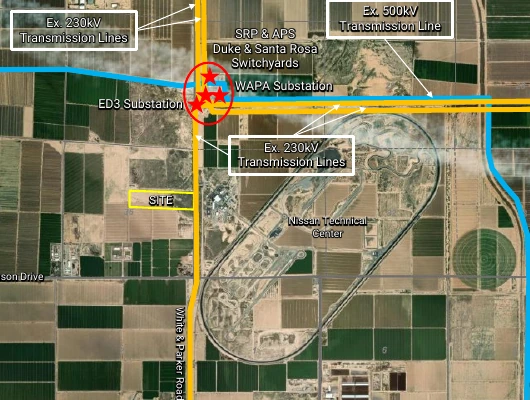
The 40-acre site sits approximately 0.3 miles south of the southwest corner of Teel Road and North White and Parker Road. The parcel is a mix of active and inactive agricultural land with a natural desert landscape.
The nearest residence is approximately half a mile south of the property. Directly across White and Parker Road to the east, the Nissan Technical Center operates under industrial zoning.
The facility will include 50-foot industrial buffers on all sides and seven-foot block walls surrounding the entire site.
How the Facility Works
Court Rich of Rose Law Group represented the applicant and explained how the facility saves money. Utilities can store electricity when prices are low and deploy it during peak demand. “That arbitrage allows them to essentially buy low and then deploy it at that price later when the price would have been higher, saving everybody money,” Rich said.
Batteries also respond faster than traditional power plants. “Batteries turn on instantly, where even the most reliable power plants, gas plants that are quick starting still take several minutes to get up to full speed,” Rich explained.
Arguments For and Against the Project
During Planning Commission and Board of Supervisors hearings, the following arguments were raised.
Supporters cited these benefits:
- Strategic location near four major substations (SRP, APS, WAPA, ED3) reduces energy loss during transmission.
- Battery storage prevents shortages that could lead to blackouts.
- ED3 will share infrastructure that esVolta constructs, benefiting local utility customers.
- The facility has no permanent employees. Maintenance workers will visit fewer than 10 times per year, generating minimal traffic.
- The facility saves approximately 200 acre-feet of water annually compared to residential development.
- Previous zoning allowed up to 140 homes, which would generate 1,300-1,400 daily vehicle trips.
- The project has a 20-year operational life with a decommissioning plan that preserves future land use options.
- The two closest neighbors wrote letters of support.
- Economic benefits include tax revenue and construction jobs.
Concerns raised about the project:
- Cumulative impact of energy development across the county.
- Effects on the desert landscape.
- Questions about tax revenue due to Arizona’s reduced assessment rate for battery equipment.
- Fire safety concerns following a battery fire incident in Peoria.
- Other battery projects planned nearby, including Horseshoe (159 acres) and Hazy Peak.
Community Input Updated
Staff received a total of 18 letters supporting the project. Supporters included the Pinal Alliance for Economic Growth, ED3, SRP, and area residents. Staff received two letters of opposition. No one spoke against the project during the public hearing.
Planned Area Development Restrictions
The Board approved a Planned Area Development overlay that limits the site to energy storage facilities only. This restriction prevents other industrial activities that the I-3 zoning would otherwise permit.
The maximum building height remains 50 feet for most structures. However, substation equipment may reach 90 feet to accommodate electrical poles that ED3 can share.
Utility Perspective on Grid Stability
SRP representative Buchanan Davis addressed the broader need for battery storage technology. He acknowledged interest in other energy sources like nuclear and natural gas. However, he emphasized the immediate need for battery storage.
“Even with that development, there’s a need right now, today,” Davis said. “This technology, like battery storage, is important in the immediate term to meet a growing demand and help with grid stability.”
What the Previous Article Covers
The Planning Commission approval article provides additional details not repeated here. That coverage includes:
- The $750 million project investment and tax revenue discussion
- Fire safety protocols and expert testimony
- Detailed explanation of how the battery system captures and releases energy
- The pre-annexation development agreement with the City of Maricopa
- Details about the 50-foot landscaped buffers with native desert plants and trees
- Public comment about notification concerns and other battery projects planned nearby
Before Construction Begins
The ordinances take effect 30 days after adoption. The applicant must split the 40-acre site from its larger parent parcel before receiving building permits.