SAN TAN VALLEY, AZ — Pinal County Engineer Christopher Wanamaker presented an overview of the San Tan Valley development pipeline to the Town Council on February 18, 2026.
According to his presentation, the San Tan Valley development pipeline includes 13,294 subdivision lots and 1,430 multifamily rental units. All 13,294 lots have already received zoning approval for residential development. The remaining steps include subdivision review, engineering, and construction. Here is where they stand:
- 3,021 lots — Subdivisions in Tentative Plat Review. This is the earliest stage of the subdivision process, involving a conceptual layout of roads and lots.
- 1,553 lots — Subdivisions in Final Plat Review. This stage involves detailed engineering plans for paving, grading, and traffic signals. Permitting and construction follow.
- 2,866 lots — Subdivisions Under Construction. Infrastructure such as roads and landscaping is still being built.
- 5,854 lots — Subdivisions in Warranty. Infrastructure such as roads and landscaping is complete. The county has accepted it and is monitoring for defects during a one-year warranty period. Home builders are constructing houses on individual lots.
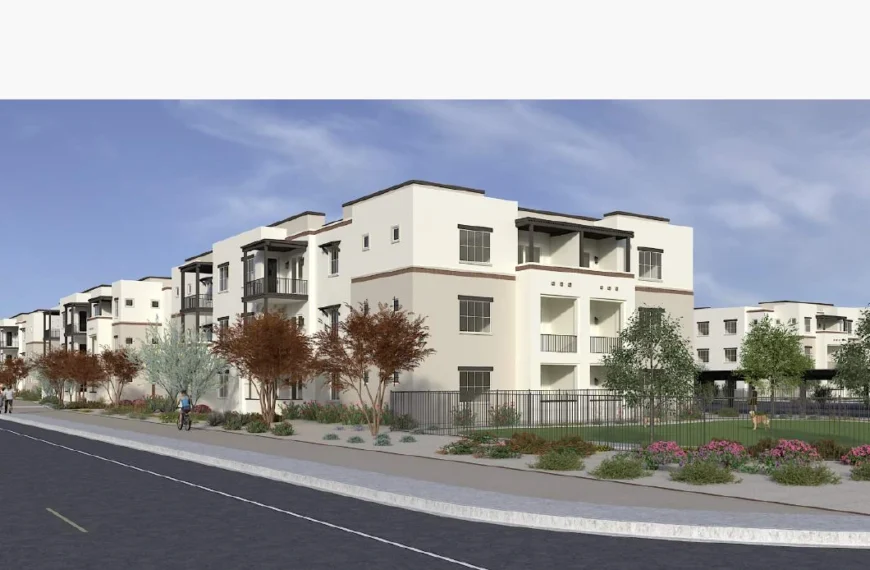
In addition, 1,430 multifamily rental units are planned across six projects. Five are under construction, including one that is nearly complete. One is in review.
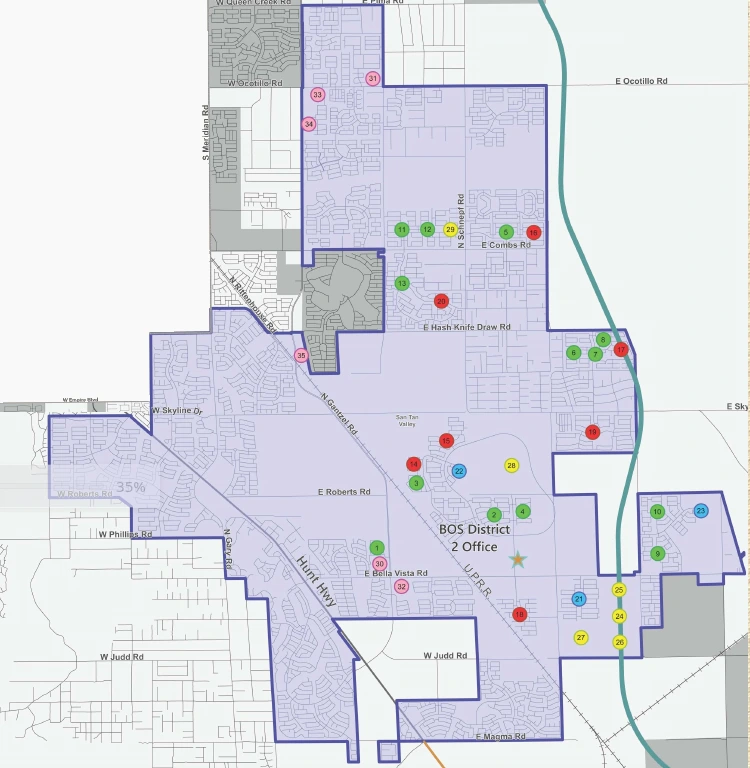
No council action was taken. However, council members raised questions about traffic congestion, development moratoriums, and the pace of road improvements.
How Subdivisions Work in Pinal County
Wanamaker began by explaining the subdivision process in Pinal County. A subdivision is a parcel of land divided into individual lots for home construction. A plat is the official map or plan that shows lot boundaries, road layouts, and drainage areas within a subdivision.
Developers must post a financial bond before construction begins. That bond is not released until all required infrastructure is complete. The county then monitors the infrastructure for one year. Developers must fix premature pavement failures, sidewalk lifting, or other defects at their own cost during this warranty period.
San Tan Valley Subdivision Trends
Wanamaker shared countywide plat approval numbers for the past three years. San Tan Valley accounted for the majority of approvals in 2023 and 2024.
| Year | Countywide Plats (Lots) | San Tan Valley Plats | % of Countywide |
|---|---|---|---|
| 2023 | 27 plats (2,167 lots) | 17 plats | 63% |
| 2024 | 55 plats (4,953 lots) | 40 plats | 73% |
| 2025 | 24 plats (2,757 lots) | 10 plats | 42% |
Wanamaker said 2024 set a record for plat approvals. Much of the construction residents currently see is a result of those 2024 approvals, he added.
Additionally, he said the average plat creates one mile of new roadway. The timeline from the start of final plat review to completion of construction averages two to three years. Wanamaker broke that down as roughly one year in plat review and one to two years in construction.
Subdivisions in Warranty: 5,854 Lots
According to Wanamaker, subdivisions in warranty have completed their infrastructure. Roads and landscaping are finished. Home construction may still be underway, but the county has accepted the infrastructure into its maintenance system.
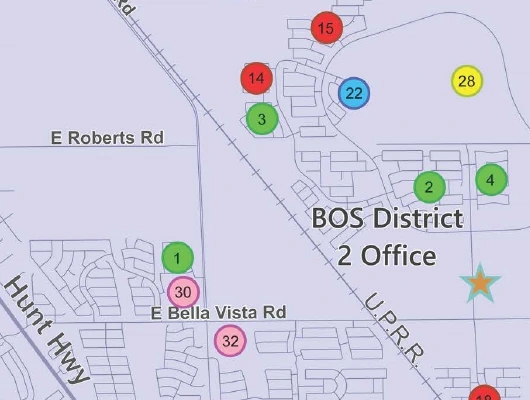
Wanamaker highlighted two projects by name. San Tan Gateway (items 9 and 10), also known as Wildera, is a recent community. Ware Farms (item 13), also known as Soleo, has mostly private streets, meaning the county does not maintain them. Additional Ware Farms parcels (item 20) are under construction.
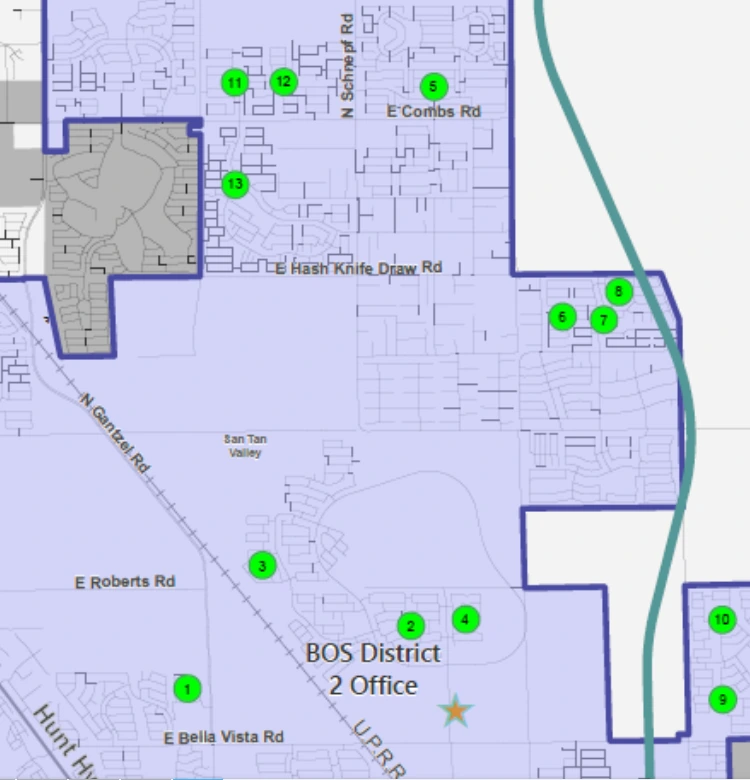
| # | Subdivision | Lots |
|---|---|---|
| 1 | Bella Camino | 133 |
| 2 | Bella Vista Farms C&D, Parcels 1–7 | 528 |
| 3 | Bella Vista Farms G&H, Parcels 1–4 | 555 |
| 4 | Bella Vista Farms Parcel U, Parcels 1–3 | 249 |
| 5 | Combs Ranch Unit 2 | 309 |
| 6 | Quail Ranch Parcel A1–A3 | 477 |
| 7 | Quail Ranch Parcel B1–B2 | 184 |
| 8 | Quail Ranch Parcel C1 | 101 |
| 9 | San Tan Gateway Unit 1A, Parcels 18–23 | 461 |
| 10 | San Tan Gateway Unit 1B, Parcels 34–38 | 545 |
| 11 | Wales Ranches Unit 1 | 709 |
| 12 | Wales Ranches Unit 2 | 504 |
| 13 | Ware Farms Parcels 1–4, 8B, 9–11, & 13 | 1,099 |
| Total | 5,854 |
Subdivisions Under Construction: 2,866 Lots
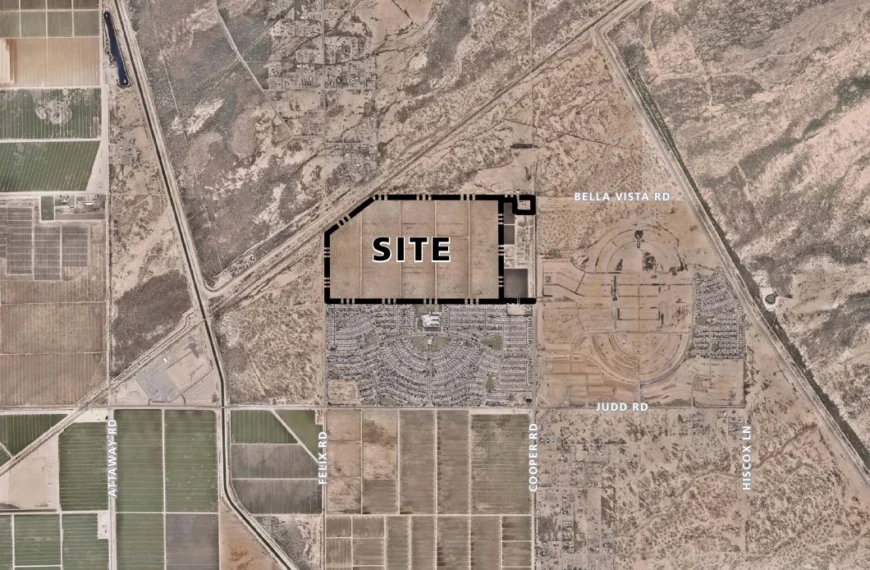
Wanamaker pointed out that two Vista Farms parcels (items 14 and 15), part of the broader Bella Vista Farms development located just north of the San Tan Valley County Complex, are under construction. He described Bella Vista Farms as a large multi-phase project with plans to build homes through 2035. The full buildout encompasses 5,149 units.
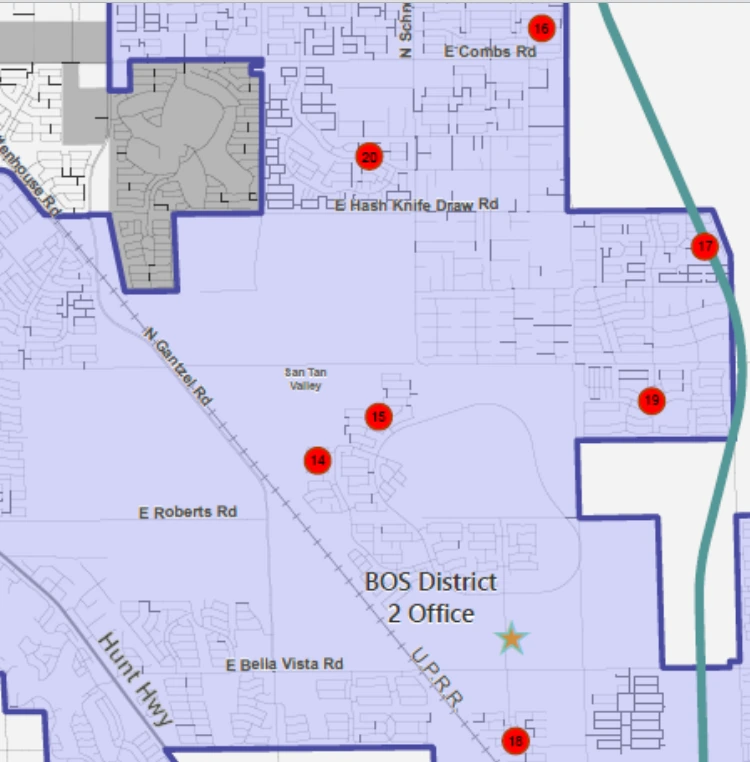
| # | Subdivision | Lots |
|---|---|---|
| 14 | Vista Farms G&H, Parcels 5–6 | 209 |
| 15 | Vista Farms Parcel K, Parcels 1–4 | 475 |
| 16 | Combs Ranch Unit 3 | 227 |
| 17 | Quail Ranch Parcel B3 | 193 |
| 18 | Sherwood Park Units 1–3 | 443 |
| 19 | Skyline Village Parcels 1–7 | 1,035 |
| 20 | Ware Farms Parcels 12 & 14 | 284 |
| Total | 2,866 |
Subdivisions in Final Plat Review: 1,553 Lots
Three final plats are currently under review in San Tan Valley. Among them, Fulton Homes at Terra Linda (item 21) covers 631 lots across units one through three, which include four phases. Wanamaker said this project is very close to final approval.
“They’re probably going to be starting construction here in the next few weeks. You’ll see some dirt moving here real soon,” he said.
Wanamaker said San Tan Gateway Unit 2B (item 23) is the next phase of the Wildera community. Bella Vista Farms I&J (item 22) is another 737 lots in the Bella Vista Farms development.
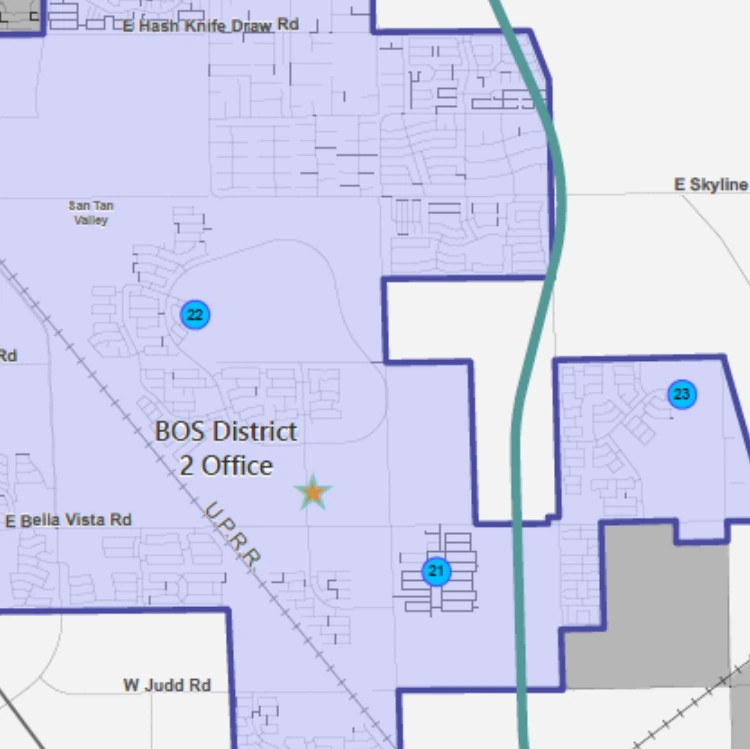
| # | Subdivision | Lots |
|---|---|---|
| 21 | Fulton Homes Terra Linda, Units 1–3 | 631 |
| 22 | Bella Vista Farms I&J, Parcels 2–7 | 737 |
| 23 | San Tan Gateway Unit 2B, Parcels 29 & 31A | 185 |
| Total | 1,553 |
Subdivisions in Tentative Plat Review: 3,021 Lots
According to Wanamaker, these projects are at the conceptual stage and must still receive Planning and Zoning Commission approval before advancing to final plat.
The largest group is Bella Vista 23, a future development southeast of the County Complex surrounding the Fulton Homes Terra Linda site. It is divided into four phases — East, Northeast, Southeast, and Southwest — totaling 1,715 lots. Wanamaker estimated it would be a couple more years before construction begins.
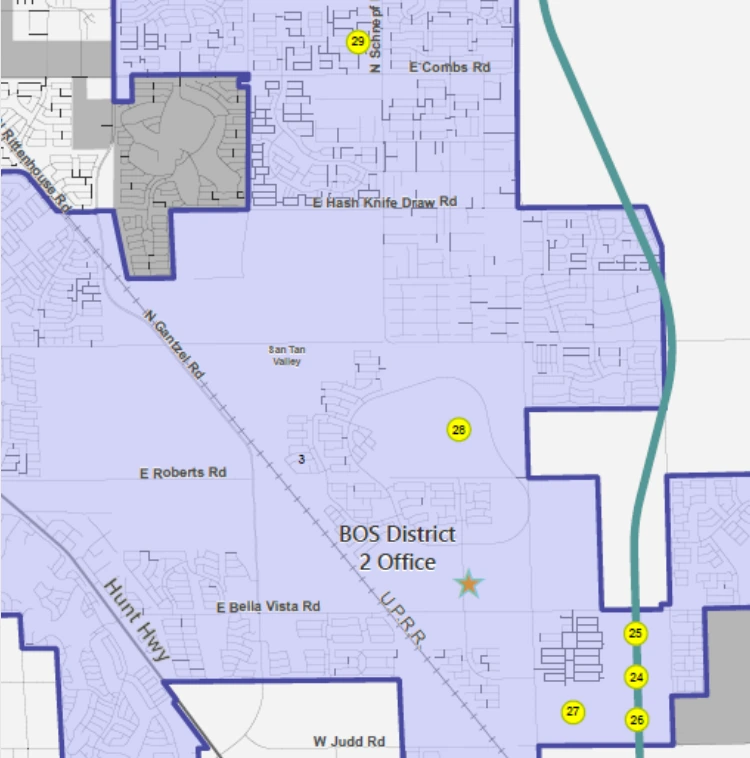
| # | Subdivision | Lots |
|---|---|---|
| 24 | Bella Vista 23 East | 575 |
| 25 | Bella Vista 23 Northeast | 306 |
| 26 | Bella Vista 23 Southeast | 314 |
| 27 | Bella Vista 23 Southwest | 520 |
| 28 | Bella Vista Farms Parcels O, R, S | 818 |
| 29 | Wales Ranches Unit 3 | 488 |
| Total | 3,021 |
Multifamily Projects: 1,430 Rental Units
Multifamily projects are not subdivisions. Instead, they are treated as commercial developments and follow a site plan review process, which Wanamaker described as administrative and typically faster. He said developers do not need to subdivide the land, record documents, or post financial assurances.
Councilmember Rupert Wolfert asked whether the multifamily projects are rentals or owned condominiums and townhomes. Wanamaker confirmed they are all rentals, not condominiums or townhomes. Wolfert then asked whether a separate process governs rental projects. Wanamaker said no — built-to-rent projects follow the same commercial site plan review. Mayor Daren Schnepf added that the townhomes in the area are also typically leased, not sold.
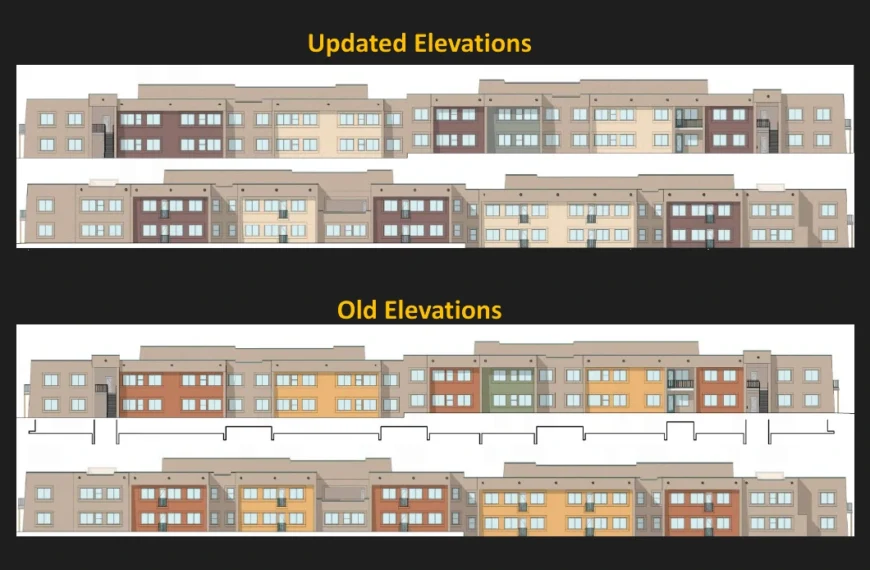
Wanamaker noted that several multifamily projects are clustered on the north side of the community. The Village at San Tan, near the center of town, is nearly complete, he said.
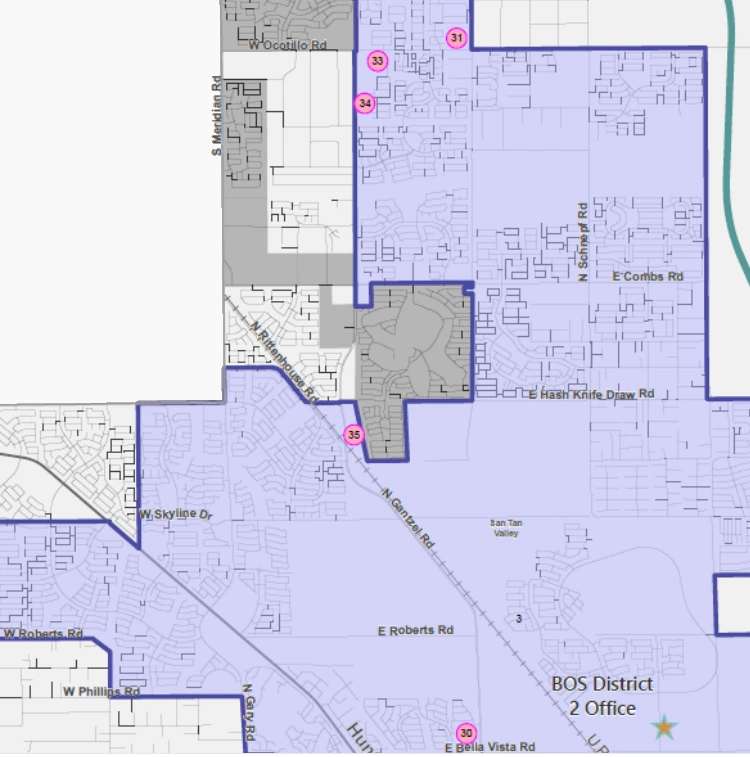
| # | Project | Units | Status |
|---|---|---|---|
| 30 | Avilla Bella Camino | 224 | Under Construction |
| 31 | Elux at Ocotillo | 226 | Under Construction |
| 32 | Rancho Bella Vista | 252 | Under Construction |
| 33 | Summerwell | 170 | In Review |
| 34 | Flatz 480 | 318 | Under Construction |
| 35 | Village at San Tan | 240 | Under Construction / Nearly Complete |
| Total | 1,430 |
Council Questions on Traffic, Moratoriums, and Road Funding
Councilmember Daniel Oakes raised concerns about the cumulative effect of developments on roads that remain two lanes without traffic signals. He asked whether the county could pause development approvals until wider lanes and signals are added.
Wanamaker said developers are required to conduct traffic impact analyses and fund infrastructure improvements to mitigate their project’s effects. However, regional impacts are harder to address because they involve many variables.
“Getting ahead of development is very difficult because the impact fees are collected at the building permit issuance level, then they have to accumulate before we can then use that money to actually build something,” Wanamaker said.
He also said that developing a roadway project can take three years from initial concept to construction, citing the design process and the challenge of coordinating with utilities and other stakeholders.
Oakes said this is the top complaint he hears, and that the current pace “feels like what we’re doing is prioritizing the developers over our citizens.”
In response, Wanamaker said: “We really do spend a lot of time scrutinizing these projects and making sure that they are contributing as much as we can require them to as far as what their half street improvements are, their general improvements, contributions to traffic signals.”
He also explained how traffic signal funding works. A single development may not generate enough traffic to warrant a signal on its own. However, four developments at an intersection collectively might. Determining which developer pays requires negotiation, often starting at the zoning stage. The county uses impact fees to supplement developer contributions and install signals earlier.
Councilmember Brian Tyler asked whether there is a threshold at which roads like Hunt Highway, Gary Road, and Gantzel Road cannot accept additional development. Wanamaker said the county evaluates roadway capacity and level of service. When a project would push a road beyond acceptable service levels, developers must provide mitigation — such as signal retiming, additional lanes, or alternative access routes.
Wanamaker said he does not believe the county can outright prevent development and said he was not familiar with whether the statute allows a moratorium. Mayor Schnepf briefly noted that a moratorium could, but the topic was not discussed further.